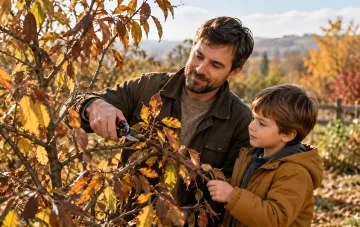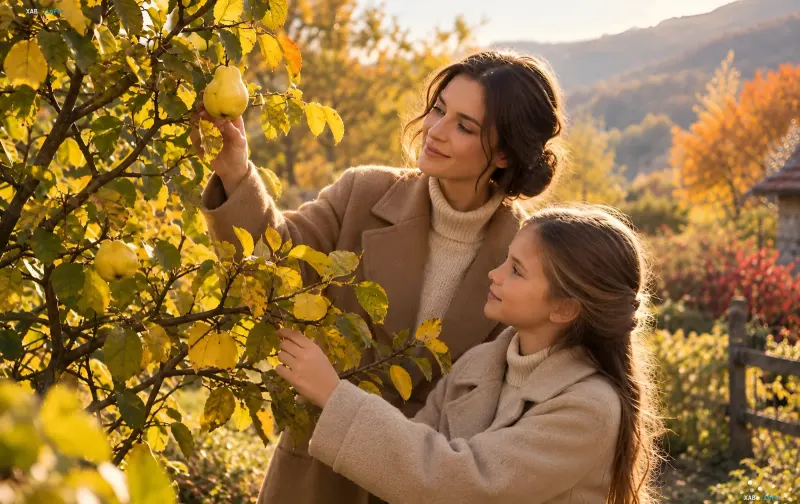
After harvesting quince (Cydonia oblonga) grown in the open, it is not advisable to rush into winter preparation. According to Royal Horticultural Society (RHS) guidelines, a mature established tree usually requires only light pruning, performed in winter while the plant is dormant. The main mistake pointed out by experts is pruning back last year's growth indiscriminately for a compact canopy: such shortening directly reduces future yields. The gardener's autumn task is to inspect the tree after leaf fall and remove only those branches that present a risk: dry, broken, diseased, or rubbing branches, and to thin out heavily congested areas. A broken branch that could fall at any moment should not be left until the planned pruning.
Watering: Check the Soil, Not the Calendar
An established tree's water needs are determined by soil condition, not by date. Specialists recommend checking the soil under the canopy at a depth of about 15–23 cm and watering slowly so the water can seep through, moisturizing the entire area under the canopy rather than just the basin at the trunk. After heavy rain, additional watering may be unnecessary. Pay special attention to young trees: in the first years after planting, they need watering during drought, and as experts from the University of Illinois note, soil moisture under them should be checked before winter and watered if necessary.
Mulch for Roots and Protection Against Sunscald
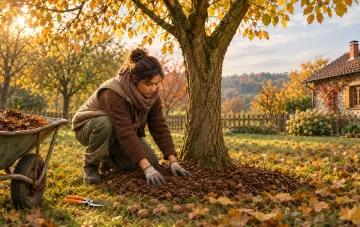
Mulch the ground around the plants without covering the trunk: spread shredded wood mulch in a layer of about 8–10 cm, leaving about 15 cm of free space around the bark. Such a layer softens soil temperature fluctuations; if mulch already exists, check its thickness before adding more, and do not mound the material against the bark. Young thin bark is additionally protected from winter sunscald — rapid heating by the sun followed by cooling: install a white tree wrap or guard in the autumn and remove it in the spring after the last frosts.
Protection Against Rodents and Rabbits
If the bark is damaged by mice or rabbits, install a wire mesh with holes of about 6 mm around the trunk, leaving about 15 cm of clearance. To protect against mice, bury the bottom edge of the mesh 5–8 cm into the ground, and the barrier against rabbits should extend about 50–60 cm above the expected snow level. These measures, according to specialists, are important for young trees with immature bark.
Leaf Spot and Fertilizing: What Not to Do
In the RHS guidance on quince leaf spot, experts remind us that the fungal disease pathogen can overwinter in fallen leaves and dead shoots; signs include numerous dark spots, premature leaf drop, and dieback of shoot tips. If such signs were present, collect fallen leaves from under the tree and do not leave them as fresh mulch under the same quince. At the same time, normal autumn yellowing is not enough for a diagnosis, and the cause of branch dieback or fruit damage should be verified before choosing a treatment agent. Regarding nutrition, specialists emphasize: with regular organic mulching, the quince may not need additional fertilizer at all, and the Society recommends applying fertilizers in early spring, choosing a composition based on the plant's actual needs and following the instructions. Fertilizing quince in autumn "at the end of the season" is unnecessary.