November is a period for the walnut tree when most routine gardening tasks either lose their purpose or become potentially harmful. The tree is completing its seasonal cycle, slowing down sap flow, and preparing for winter dormancy. At this point, improper pruning, excessive fertilization, or, conversely, parched soil can weaken the plant before frosts. We break down which procedures are truly necessary for a walnut tree in late autumn and which are best left until spring.
Pruning: Why November is not the best month, but not a taboo
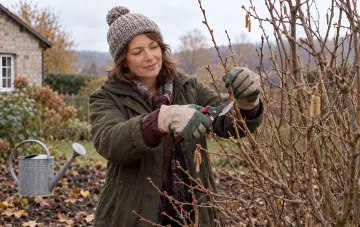
Walnut trees do not require heavy annual structural pruning. For mature trees, it is sufficient to remove dead or damaged branches, as well as crossing or interfering shoots. According to the Royal Horticultural Society (RHS), the most favorable periods for pruning are mid-summer and early autumn. The reason lies in sap flow patterns: in late winter and spring, sap can bleed intensely from fresh cuts, hindering wound healing. At the same time, Utah State University allows pruning until late autumn, while University of California specialists recommend conducting it during the winter dormancy period. Thus, November cannot be considered strictly unsuitable for working with the tree, but one should not rush with the pruners. It is especially undesirable to cut thick branches unnecessarily: large wounds heal slowly and become entry points for fungal infections. If a large branch has broken and threatens to fall, it must be removed safely — for work at heights, it is better to consult professionals.
Watering: When moisture is needed and when it is excessive
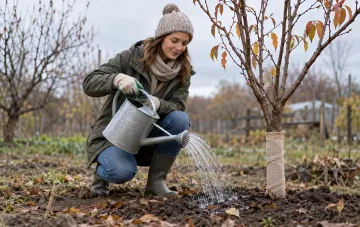
In November, a walnut tree consumes significantly less water than during its active growth phase. However, dry soil before winter is also undesirable: experts state that a lack of moisture in the ground exacerbates frost damage. If autumn has been dry, it is recommended to water the parched soil a few days before an expected cold snap. Before watering, it is important to check not only the surface but also the soil under the dry top layer: if the earth remains moist at depth, there is no need to rush with extra water. Watering should be done slowly so that moisture penetrates directly to the roots. Frequent surface watering is undesirable, especially for young trees.
Fertilization: Why nitrogen is the tree's enemy in autumn
In late autumn, the walnut tree typically does not need additional fertilizers. Fertilization is carried out in spring, when the tree starts growing actively. If the walnut looks healthy, develops normally, and yields a good harvest, additional fertilization may not be needed at all. In November, nitrogen fertilizers should categorically not be applied without a justified need: excess nitrogen at the end of the season delays shoot maturation, which is extremely undesirable before winter frosts. One should also not apply potassium or phosphorus fertilizers just because it is autumn. If the tree grew poorly during the season, or had small or unusually colored leaves, one should first determine the cause — such signs may be related not only to a lack of nutrients but also to growing conditions. A soil test will help determine if fertilization is truly needed and exactly which elements are required.
Mulching the root zone: A simple way to protect against frost
Mature, well-established trees usually handle winter cold better than young saplings. Shoots that have not finished growing before a sudden cold snap can be especially vulnerable. One accessible way to protect the root zone is to cover the ground with organic mulch, which helps retain moisture and reduce soil temperature fluctuations. The material is laid in a layer of about 5–7 cm on moist, but not frozen, soil. Weeds must be removed before mulching. Important: do not place mulch directly against the trunk. Constant contact of damp organic matter with the bark can contribute to its damage and the development of diseases.
Protection against sunburn: What to do with young trees
Young trees with thin bark can suffer from winter sunburn. These occur when the bark warms up in the sun and then cools down rapidly after sunset. For protection, a special light-colored tree wrap is used, which reduces bark heating under direct sunlight. The wrap should not cut into the trunk; it must be removed once stable warmth arrives. An alternative option is special whitewashing agents for fruit trees, designed to protect the bark from sunburn.
Cleaning up plant debris: Prevention of diseases and pests
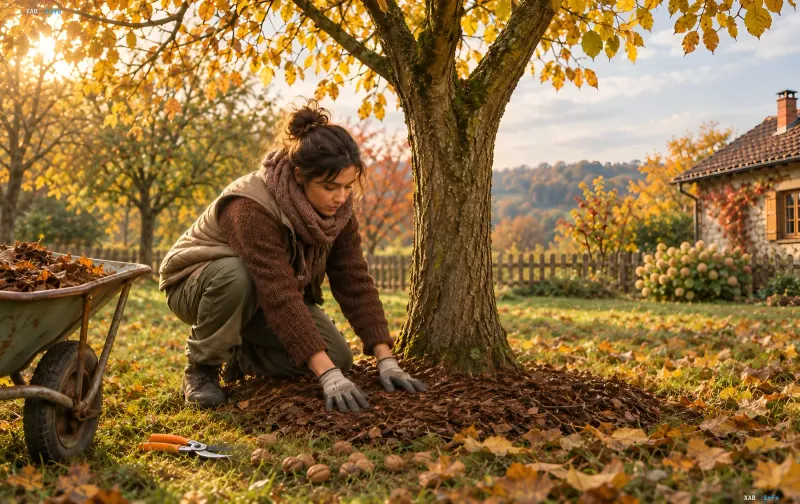
After harvesting is complete, special attention should be paid to plant debris under the tree. According to the Pacific Northwest Plant Disease Management Handbook, the causative agent of walnut anthracnose can overwinter in infected leaves, fruit debris, and affected shoots. However, spots on leaves do not necessarily confirm anthracnose — similar signs can arise for other reasons. If there were signs of fungal diseases on the tree during the season, the infected fallen leaves and fruit must be collected and removed from the plot. The same should be done with blackened or rotten nuts, in which larvae of the walnut husk fly (Rhagoletis completa) develop: they hide in the soil and overwinter there to spread again in the spring. Husks and leaves should also be cleared away. These remains must not be placed in the compost — it will become contaminated and unusable. Sanitary pruning of dry and damaged branches, which are clearly visible after leaf fall, is carried out in dry weather so that cuts heal faster and do not become gateways for infection.