In November, peach trees gradually enter a state of winter dormancy, yet several gardening tasks still need to be completed. Young trees require special attention, as well as peaches that suffered from fungal diseases during the season. The autumn period ultimately determines how successfully the tree will survive the winter and what next year's harvest will be like.
Canopy Inspection and Brown Rot Control
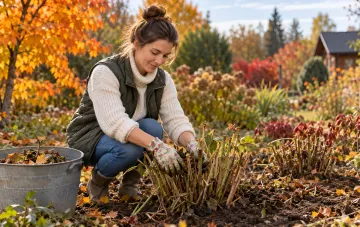
In late November, you should carefully inspect the tree and the ground beneath the canopy. Special attention is paid to any fruit remnants that may have been affected by fungal diseases. One of the most common peach diseases is monilinia, or brown rot. Affected fruits dry up directly on the branches and can remain there throughout the winter. According to the University of Connecticut, the brown rot pathogen is capable of overwintering in mummified fruits, fallen fruit, and infected branch tissues. Diseased fruits should not be left under the tree or placed in a regular compost pile unless proper pathogen eradication conditions are met. Branches with suspicious damage can be marked for further inspection, though major pruning in November is not recommended.
Leaf Curl Prevention
November can be an appropriate time for the prevention of peach leaf curl, a fungal disease that leads to the deformation, thickening, and reddening of young leaves in spring. An article by the University of Illinois emphasizes that once visible symptoms appear, stopping the disease effectively during the current season is extremely difficult. This is precisely why preventive treatments are carried out during the tree's dormancy period—in autumn after leaf fall or in late winter before buds swell. Copper-based fungicides are used to protect against leaf curl, and it is important to select only products registered for use on peaches against the corresponding disease. If the tree suffered from leaf curl in the spring, timely autumn prevention becomes especially important. At the same time, clearing away fallen leaves does not replace treatments, as the pathogen can survive on the bark and in bud areas.
Autumn Watering: When and How
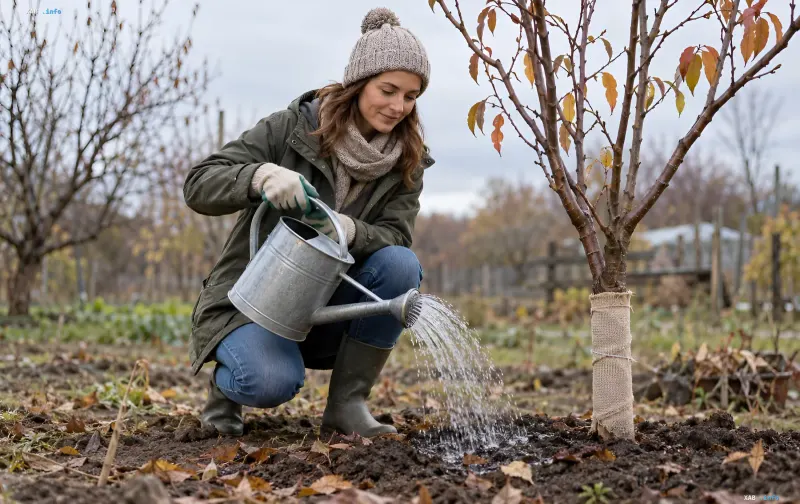
Autumn watering for a peach tree depends on the weather, soil type, and tree age. If November has been rainy, additional water is usually unnecessary for the peach. According to University of Maryland recommendations, before watering, you should check soil moisture at a depth of about 15 cm: carefully make a small indentation with a garden trowel and check the soil by touch. If the soil is dry and there has been no rain for a long time, the tree can be watered before the ground freezes. Water should be applied slowly so that it penetrates the root zone rather than running off the surface. In heavy clay soils, water may linger longer, so after heavy rains, watering must sometimes be skipped entirely. Watering a peach “just in case” should be avoided, as prolonged water stagnation can damage the root system.
Mulching the Tree Basin
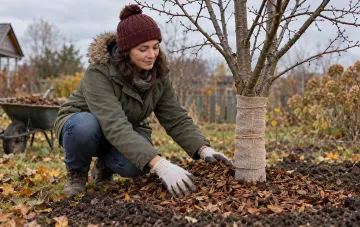
Mulching helps retain soil moisture, reduce temperature fluctuations in the root zone, and suppress weed growth. According to expert recommendations, a layer of organic mulch about 5–8 cm thick is suitable for stone fruit trees, including peaches. Wood chips or shredded bark are used as material. It is important not to pile mulch high against the base of the trunk: continuous moisture retention near the bark can promote damage. If the tree basin is already mulched, it is sufficient to check the layer thickness and add material if necessary.
Protecting Young Trees from Winter Injury
Young peach trees are particularly vulnerable to winter damage. The danger comes not only from frosts, but also from sharp temperature fluctuations between day and night. In sunny weather, the trunk can heat up and then cool rapidly after sunset. Such fluctuations sometimes lead to bark damage and frost cracks. November recommendations from the University of Minnesota suggest using light-colored protective wraps that reflect sunlight and reduce trunk heating. You should not tightly wrap the trunk in dark materials that heat up more intensely in the sun. Light-colored trunk protection helps reduce the risk of bark damage, but it cannot completely protect branches and flower buds from severe frosts, so when growing peaches, it is important to consider the frost resistance of the variety and the climatic conditions of the specific region.
Postpone Pruning Until Spring
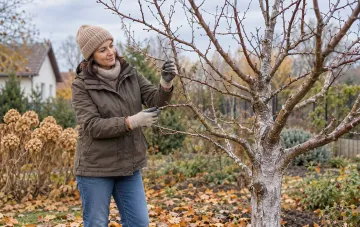
Unlike apple and pear trees, the main pruning of a peach tree is best done later, when the risk of severe winter frosts decreases. According to specialist recommendations, peaches are pruned last among common fruit trees—in spring when the buds begin to swell and turn a pink color. Therefore, in November, you should limit yourself to removing clearly damaged and dry branches, marking other problematic areas for spring work.