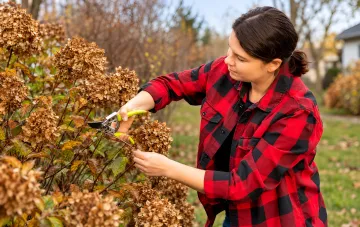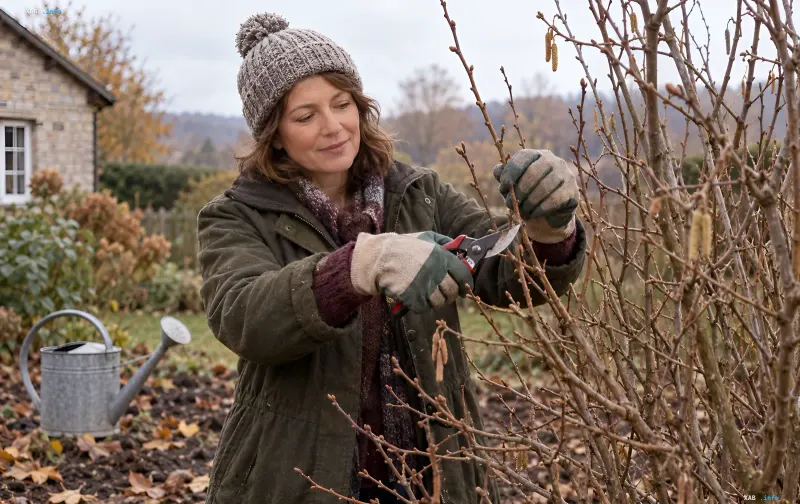
In November, hazelnuts gradually enter a dormant state, and this period lays the foundation for future shrub development and harvesting. Although the plant tolerates cold well, improper care in late November can negatively affect its condition. According to recommendations from the Royal Horticultural Society (RHS) and Oregon State University specialists, key tasks—pruning, mulching, and controlled watering—are best carried out mindfully rather than strictly «by the calendar». A detailed overview of autumn procedures is published in the lifestyle project Styler (styler.rbc.ua).
Pruning During Dormancy: What You Can and Cannot Do
The hazelnut is a deciduous plant, so the yellowing and dropping of leaves in autumn is a natural process, not a sign of disease. According to RHS recommendations, pruning can be done throughout the dormancy period, specifically after leaf fall. However, for shrubs grown for nuts, there is an important nuance: the main training and shaping prune is best done in winter when the catkins (inflorescences) shed pollen. Specialists emphasize that severe pruning can affect fruit production, so one should not shorten all young shoots unnecessarily.
Mulching and Root Protection
Mulching is especially beneficial for young bushes whose root systems are still developing. To protect the soil, well-rotted compost, leaf mold, or shredded bark can be used. Organic mulch should be applied in a layer of at least 5 cm, optimally around 7.5 cm. At the same time, it is important to avoid contact between moist mulch and the bark of the trunk, as this can promote rotting.
Watering: When It Is Needed and When It Is Harmful
Mature bushes generally do not require regular watering in November, especially if rains are frequent. The situation is different for young plants: if autumn is dry, soil moisture must be checked and bushes watered as needed until the ground freezes. Meanwhile, excess water is dangerous for the roots—hazelnuts tolerate prolonged waterlogging poorly. The plant develops best in well-drained soils, and water stagnation can worsen its condition and health.
Fertilizers and Planting in November
In late autumn, mature bushes do not require mandatory fertilization, and nitrogen fertilizers according to the usual spring schedule should not be used. According to Oregon State University, hazelnuts use accumulated nitrogen reserves to start spring growth, and the most efficient assimilation of nitrogen fertilizers occurs during active spring growth. The need for other nutrients is determined by the condition of the plant and soil test results rather than just the calendar. November can also be suitable for planting hazelnuts if the plant is already dormant and the soil is neither frozen nor waterlogged; when planting, it is important not to deepen the root collar, spread the roots, water the seedling, and mulch the soil. For Ukraine, local weather should be considered: if the soil is already frozen, too wet, or a sharp cold snap is expected, planting is better postponed until spring.