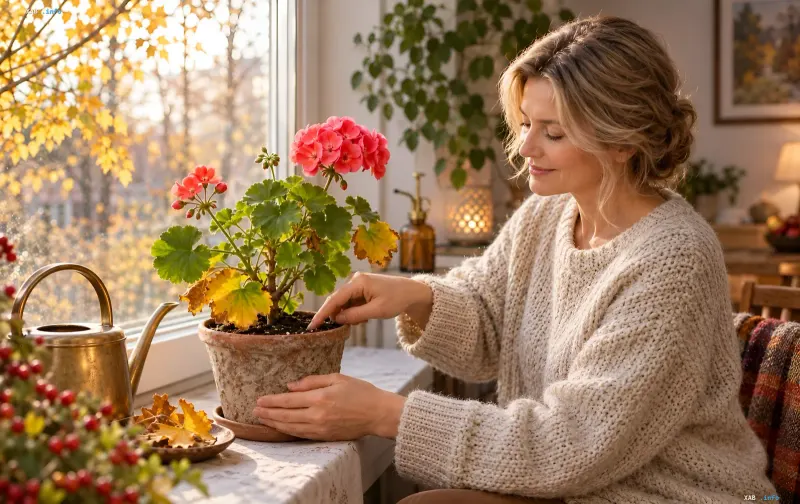
In autumn, indoor geraniums, or pelargoniums, often lose their usual decorative appearance: leaves turn yellow, edges dry out, and new buds stop appearing. However, as experts note, this does not always indicate a disease. In most cases, it is enough to change the plant's location or adjust the watering schedule for it to gradually recover. The XAB.info editorial team has gathered recommendations from specialized publications and university centers on caring for pelargoniums in November.
Light and Temperature: Two Key November Factors
The reduction of daylight hours in November means that geraniums receive significantly less sunlight than in summer. Because of this, growth slows down, shoots stretch toward the window, and flowering stops. According to recommendations from the Royal Horticultural Society (RHS), with the onset of cold weather, light-loving plants should be moved closer to southern or western windows. If natural lighting is still insufficient, an additional grow lamp can be used — this is especially relevant when shoots begin to stretch out.
The temperature regime is no less important. According to Iowa State University, indoor pelargoniums are comfortable at temperatures around 18–21 °C during the day and 16–18 °C at night. At the same time, the pot should not be placed flush against a hot radiator, and leaves should not touch cold glass. During ventilation, the plant should not be exposed to excessively cold air. Regions.ru adds that the comfortable range for pelargonium is +18…+26 °C, and both prolonged stay in a cool room and heat negatively affect the condition of the leaves.
Watering: How Not to Overwater or Underwater
In autumn, pelargoniums require less water than in summer; however, the watering frequency depends on temperature, lighting, and the rate at which the soil dries. Experts recommend watering the plant moderately, allowing the soil to dry out between waterings. A simple way to check moisture is to dip a finger a few centimeters into the soil: if the soil is still moist, watering can be postponed; if it has dried out, water it and let the excess water drain through the drainage holes. It is strictly not recommended to leave water in the saucer: constant waterlogging impairs air access to the roots and can lead to rotting.
Yellow Leaves: How to Distinguish Normal from a Problem
First of all, you should assess the scale. If only a few old lower leaves turn yellow, this is generally a natural aging process, and there is no cause for concern. Mass yellowing or wilting, on the contrary, requires checking care conditions. It is important to remember that identical symptoms can have completely different causes: leaves wilt both from a lack of water and from excessive watering.
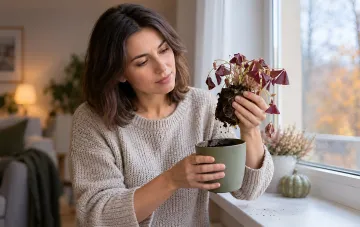
If the leaves are dry and the soil is parched, you need to water the plant, let the water drain, and move the pot away from the radiator. If leaves turn yellow in constantly wet soil, you should reduce watering and check drainage. If wilting continues, it is recommended to carefully inspect the roots: dark, soft roots indicate rotting, and in this case, repopulation into fresh, well-draining substrate may be required. With severe root damage, it is not always possible to save the plant. Pale leaves and stretched shoots indicate a lack of light, while spots, sticky residue, or small insects are a reason to inspect the underside of the leaves and stems and temporarily separate the plant from other pots.
Fertilizing and Repotting: When and How
If the geranium continues to actively grow and bloom, feeding does not need to be stopped completely: in autumn and winter, the frequency of fertilizer application is reduced to about once a month. For flowering pelargoniums, a liquid fertilizer with an increased potassium content is suitable, which should be used strictly according to the manufacturer's instructions. If the plant is barely growing and not producing new leaves, it is better to temporarily stop fertilizing. Fertilizing a geranium that is wilting due to improper watering or has damaged roots is also not recommended.
The most favorable time for repotting is traditionally considered to be spring; however, as University of Minnesota explanations show, houseplants can be repotted throughout the year if necessary. Changing the pot is not always required — sometimes it is enough to update the substrate. If the roots really lack space, choose a container slightly larger than the previous one and mandatory with drainage holes: a pot that is too large retains excess moisture and increases the risk of root rot. Completely dried leaves can be carefully removed, while mostly green ones should be kept, as they help the weakened plant recover.