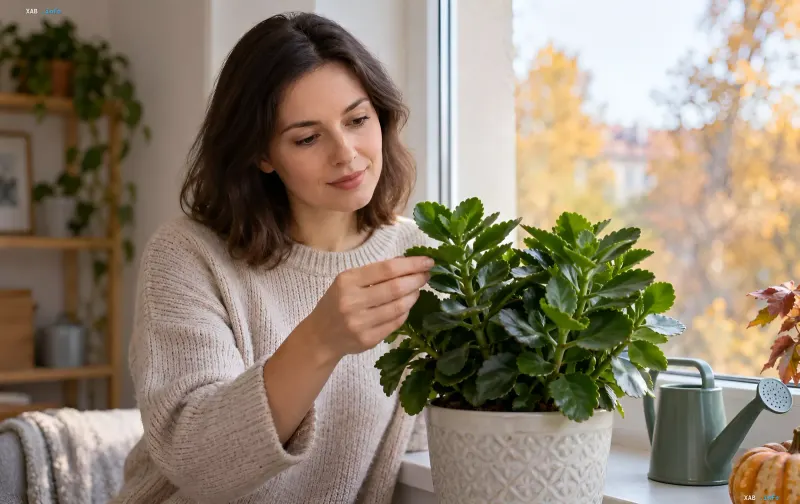
A green, well-cared-for Kalanchoe on a windowsill may go weeks without producing a single flower bud, even with regular watering and fertilizing. According to Iowa State University, the plant requires approximately six weeks during which daily darkness must last for at least 14 hours. This exact routine is the primary trigger for bud set, and disrupting it is the most common reason Kalanchoe remains 'evergreen' without blooming. Preparation for flowering can begin as early as October, but additional time passes before the inflorescences open, so the lack of flowers in November does not inherently indicate a diseased plant.
Six Weeks of Uninterrupted Darkness: The Main Condition
As experts at Iowa State University explain, Kalanchoe is a short-day plant, and to form buds it requires a stable dark period of at least 14 hours per day for about six weeks. Even dim light from a nightlight or a room lamp hitting the leaves during the dark hours can disrupt the required cycle and halt the flower initiation process. The New York Botanical Garden emphasizes that re-blooming can be stimulated by artificially shortening daylight hours, but during the blackout period, neither artificial nor natural light should reach the plant.
Temperature Regime and Daylight
In addition to night length, temperature and the quality of daylight significantly influence bud development. According to the University of Illinois, optimal conditions for flower formation are around 21 °C (70 °F) during the day and 16 °C (60 °F) at night; excessively warm air delays inflorescence development. During the day, Kalanchoe needs bright light: in a shaded location, stems stretch out, the plant weakens, and it loses its decorative appeal. Thus, the proper balance between long dark nights and bright daylight forms the basis for successful flowering.
Watering and Substrate: How Not to Rot the Roots
Overwatering is another common mistake. Constantly moist soil increases the risk of root rot, causing the plant's overall condition to decline even if the leaves look green and firm at first glance. North Carolina State University specialists recommend using a well-draining substrate and allowing it to dry out between waterings. Increasing fertilizer amounts to accelerate flowering is pointless: botanists believe it is far more important to ensure a correct lighting schedule and avoid waterlogging.
When to Expect Flowers: The Timeline from Darkness to Bud Opening
If Kalanchoe receives the required lighting regimen starting in early October, blooming may begin around January. When starting the darkness treatment in November, the appearance of open inflorescences will happen noticeably later. This means that in November, a plant in its sixth week of preparation may well show no buds yet—and this is a normal stage of development, not a sign of poor care. Kalanchoe blossfeldiana, the most common indoor species, naturally blooms in spring, but through artificial photoperiod control, it can be forced to set buds at any time of the year, which is what commercial growers do for New Year and Christmas.
Therefore, if a Kalanchoe is healthy but not blooming, the first step is to adjust the lighting regime: provide 14 hours of continuous darkness for six weeks, maintain moderate temperatures, and ensure bright daylight. Under these conditions, the plant will form buds and delight you with blooms on schedule.