Autumn care for garden blackberries determines not only the plant's ability to survive winter frosts successfully but also the volume of the future harvest next season. The gardener's main task during this period is to correctly identify the shoots that have completed fruiting and preserve the young branches of the current year. Mistakes in pruning can lead to the plant remaining without berries next summer.
Two-Year Development Cycle and Removal of Old Shoots
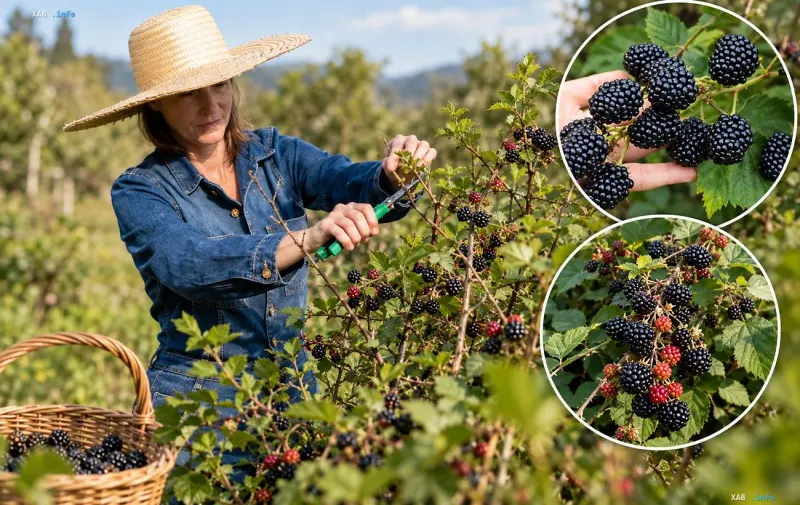
Regular garden blackberries are characterized by a two-year development cycle of the aerial part. In the first year, young green shoots form, gaining strength and overwintering, while in the next year, flowers and berries appear precisely on them. After fruiting is complete, the two-year-old branches gradually die off and no longer produce a harvest.
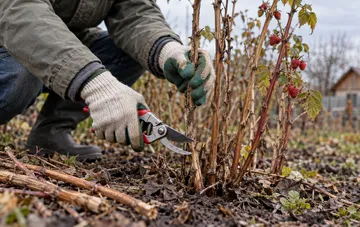
Experts recommend cutting old fruited shoots at the very base of the bush immediately after harvesting. This frees up space for young growth and improves overall plant ventilation. Such branches are easily recognized by their coarser dark bark, dry fruit stems, and leftover inflorescences.
Preserving Young Growth and Care for Everbearing Varieties
Young shoots of the current year must not be removed under any circumstances, as the next year's harvest will form on them. They feature a smoother surface and the absence of traces from last year's fruiting. However, relying solely on bark color is not recommended, as young branches in some varieties can also acquire a reddish or brown tint.
Everbearning blackberry varieties, capable of fruiting on current-year shoots, require special attention. Such plants can be cultivated using two schemes: cutting all shoots to the ground to get a single late harvest in autumn, or leaving some branches for wintering to collect berries the following year.
Preparing for Bending and Protection Against Frosts
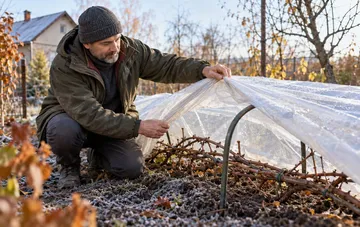
After completing the pruning, it is necessary to take care of protecting the bushes from winter cold. Blackberry shoots gradually lose their natural flexibility in autumn, so bending them to the ground should be done in advance, before stable frosts arrive. Erect varieties require special care to avoid damaging the rigid wood.
Final covering with breathable agrotextile or mulching is carried out later, focusing on weather conditions. Too early and airtight covering in warm, humid weather can cause condensation and plant death, so ensuring air circulation under the protective material is essential.
The Importance of Autumn Care for Garden Longevity
Proper preparation of blackberries for winter directly affects the productivity of the berry patch and plant health for many years. Timely removal of spent branches and correct covering protect bushes from freezing and infections. This comprehensive approach allows for harvesting generous yields of delicious and healthy berries every year.