Autumn raspberry pruning requires a careful approach depending on the type of shrub and the planned number of harvests, as improper shoot removal can leave gardeners without berries next season. According to agricultural experts, rushing the procedure is not recommended until vegetation and leaf drop are fully complete. Before starting work, it is important to understand the differences between summer and everbearing varieties of the crop.
Peculiarities of Caring for Summer Raspberry Varieties
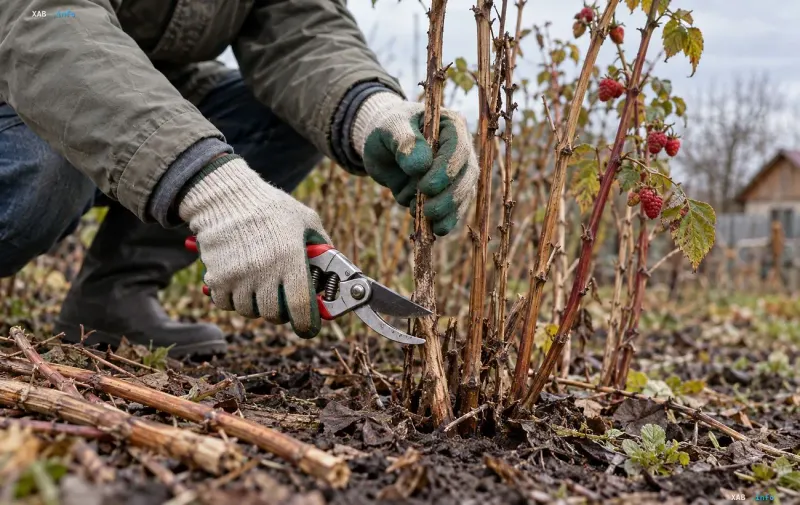
Regular summer raspberries bear fruit on second-year canes, after which they naturally die off. As experts note, old stems are easily recognized by the abundance of lateral fruit branches and dry remains of fruit clusters. Current young shoots have not yet yielded fruit, so cutting them off in autumn is forbidden; otherwise, there will be no berries next summer.
At the same time, experienced gardeners advise against rushing to remove spent stems immediately after harvesting, giving the plant time to pump nutrients into the roots. A practical guide for complete pruning is when the bush has completely dropped its leaves and entered a dormant state. If the work cannot be finished in autumn, it can be postponed to early spring before active sap flow begins.
Specifics of Working with Everbearing Shrubs
Everbearing raspberries are capable of bearing fruit twice: in autumn on the upper part of the current year's shoots and next summer on their lower part. The presence of a dry top with remnants of clusters does not mean the entire stem needs total removal. The Royal Horticultural Society (RHS) recommends building a pruning schedule based on whether the grower plans to get one or two harvests.
If the raspberry variety is not precisely established, specialists urge not to mow down the entire patch blindly before clarifying the plant's characteristics. Errors in determining the bush type often lead to a sharp drop in yield or complete loss of potential buds. Under any chosen care scheme, cut plant debris must be carefully removed from the patch to prevent the spread of diseases and the overwintering of fungal infections such as anthracnose.
The Importance of Competent Pruning for Future Yields
Proper and timely pruning of the shrub allows not only for the formation of a strong plant skeleton but also protects it from winter frosts and pests. Adhering to the biological development cycles of the crop guarantees stable fruiting for both traditional summer and modern everbearing varieties. Attentive care details save gardeners from common mistakes and ensure a rich berry harvest in the new season.