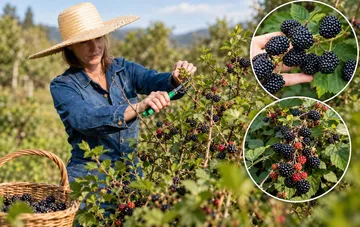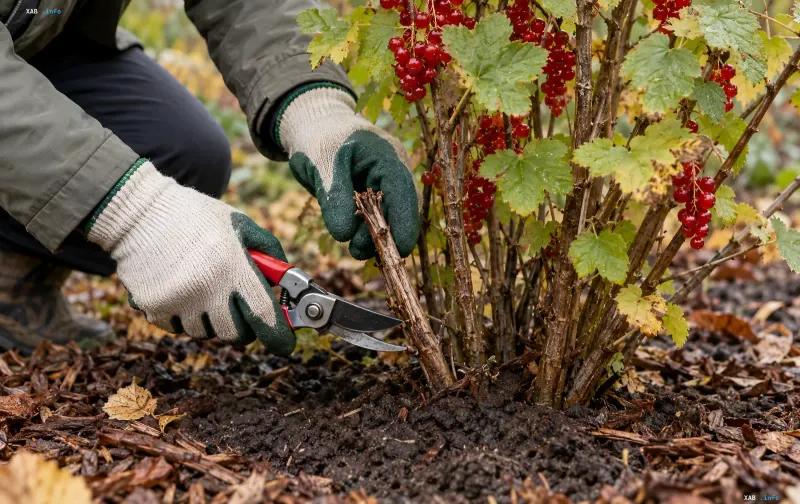
Autumn is not a time for radical decisions, but a period of evaluation. To ensure red currants fruit well next season, it is important to correctly determine the age of the branches, soil condition, and the plant's readiness for winter dormancy. At this time, it is acceptable to remove damaged and dry shoots, take care of soil moisture, and lay the groundwork for future shaping. However, gardeners recommend not rushing to carry out the main pruning just because of a calendar date: it makes more sense to do it when the bush has already entered a state of dormancy.
Why Red Currants Cannot Be Pruned According to the Black Currant Scheme
Red and white currants differ fundamentally from black currants in their fruiting habits. Their fruit buds form at the base of the previous year's shoots as well as on short fruit twigs of older wood. Therefore, during pruning, it is important to preserve not only young shoots but also the productive parts of older branches. According to recommendations from the Royal Horticultural Society (RHS) of Great Britain, main red currant branches can remain productive for several years, and the rule "the older the branch, the faster it should be removed" does not apply here. You must simultaneously consider the age, condition, and location of the branch, as well as the presence of fruit-bearing formations.
When to Perform Main Shaping Pruning
You should not tie main pruning exclusively to October or November: the timing depends on the region, weather, variety, and condition of the specific plant. For bush forms of red and white currants, the RHS recommends carrying out the main pruning in late winter or early spring, while the bush is dormant and buds have not yet begun to open. During this period, it is easier to assess branch placement and select those that need to be removed without damaging productive wood. If autumn has been warm and vegetation has not yet finished, large-scale pruning should not be performed based on a calendar date alone.
Sanitary and Rejuvenating Pruning: The Principle of Gradualness
The main task of any pruning is to maintain an open bush structure and gradually replace low-productivity wood with young shoots. Sanitary pruning aims to remove dry, broken, and clearly diseased branches, with the scope of work determined by the actual state of the plant. Rejuvenating pruning involves the gradual replacement of old branches that have lost their productivity: first, their age, growth vigor, condition, and presence of fruit-bearing formations are evaluated. Colorado State University Extension recommends maintaining shoots of all ages in a mature bush and gradually renewing older wood, rather than mechanically applying a universal scheme to every single bush.
Autumn Work and Winter Preparation
In autumn, it is permissible and useful to remove damaged shoots, cut away branches lying on the ground or excessively crowding the center of the bush, and take care of soil moisture before the cold sets in. It is important not to shorten the tips of productive branches unnecessarily — they may hold fruit buds — and not to remove a healthy older branch solely because of its age if it is still fruiting well. If the bush has not been pruned for a long time, do not change its entire structure all at once: first, assess the plant's condition and remove dry, broken, and diseased branches, carrying out rejuvenation gradually to preserve part of the harvest until new productive wood forms.
Connection to Autumn Planting and Common Mistakes
The autumn period is traditionally considered the time for planting currants as well: according to gardeners, the suitable window falls approximately between late September and mid-October, when it is important to finish three to four weeks before frosts so that seedlings can take root. By late October, this window generally closes, meaning care and sanitary work take priority over planting. Among typical mistakes are trying to immediately give the bush an ideal symmetrical shape, evaluating branches solely by age, and cutting away healthy wood "just in case." In the first years after planting, it is more important to form a strong framework of strong, well-positioned shoots growing in different directions without overcrowding the center of the bush.