An abnormally warm autumn often presents gardeners with unpleasant surprises, causing winter garlic to release green shoots long before steady cold weather sets in. This situation causes anxiety among many gardeners, but there is no need to panic and take radical actions. Experts from specialized publications and agronomic universities explain what measures will help protect planting beds and save the future harvest.
Why Garlic Sprouts Ahead of Time
Winter garlic is traditionally planted in the autumn period so that the cloves have time to form a strong root system before the soil freezes. The optimal planting time is considered to be about three to four weeks before steady cold weather begins, when the soil cools down to five to seven degrees Celsius. Nevertheless, a prolonged and soft autumn provokes the active development of not only roots, but also the above-ground part of plants. Planting cloves in warm soil too early or experiencing abnormally high temperatures in October leads to the appearance of green feathers directly above the soil surface.
What Absolutely Not to Do with Early Sprouts
Faced with the appearance of greenery, gardeners often make typical mistakes that only worsen the situation. Experts strongly recommend refraining from pruning the appeared green shoots, as they participate in the plant's natural nutrition, and their removal will not protect the underground part from frost. Also, you should not try to dig up or replant sprouted garlic, as this will inevitably injure the already formed roots. It is strictly forbidden to use airtight films to cover the beds, because condensation accumulates under them, provoking dangerous rotting of the cloves. Unfounded application of nitrogen fertilizers before the onset of winter is also contraindicated, as nitrogen stimulates undesirable growth of green mass.
How to Properly Protect Sprouted Beds from Cold
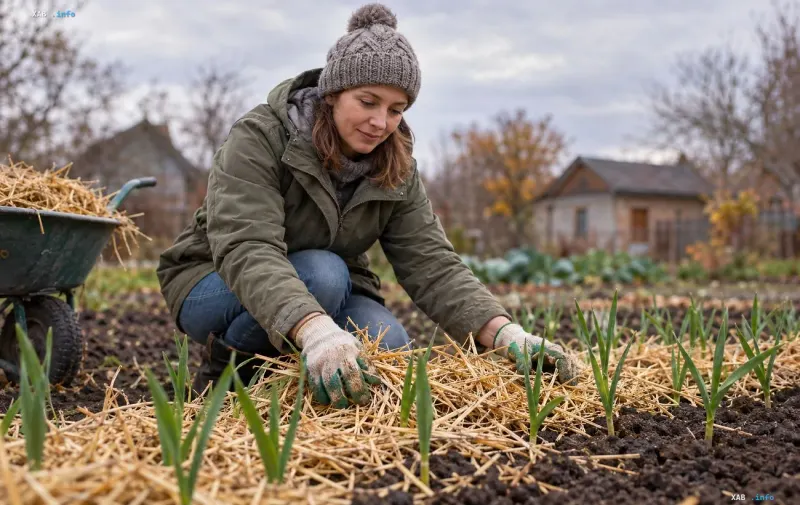
The main tool for saving garlic in conditions of premature germination is timely and competent soil mulching. Before the onset of stable frosts, it is recommended to cover the bed with a layer of clean straw or dry healthy leaves about three to five centimeters thick. Such a protective layer effectively smooths out sharp temperature fluctuations, retains moisture, and reduces the risk of frost damage to above-ground elements. The emergence of greenery in autumn does not mean the one-hundred-percent death of the crop, because even if the leaves are damaged by cold, the underground bulb often retains viability and continues vegetation in the spring.
Significance of Timely Care and Spring Forecasts
The described agrotechnical measures make it possible to minimize risks and help winter garlic successfully survive the unfavorable winter period. The final result depends on a combination of factors, including the varietal characteristics of the culture, planting depth, soil moisture, and the severity of the upcoming winter. Experienced agronomists advise being patient and waiting for stable spring warmth before assessing the state of plantings. Even if some of the above-ground greenery suffers from frosts, there is no need to rush to remove the plants — with the onset of spring, the garlic should release new shoots.