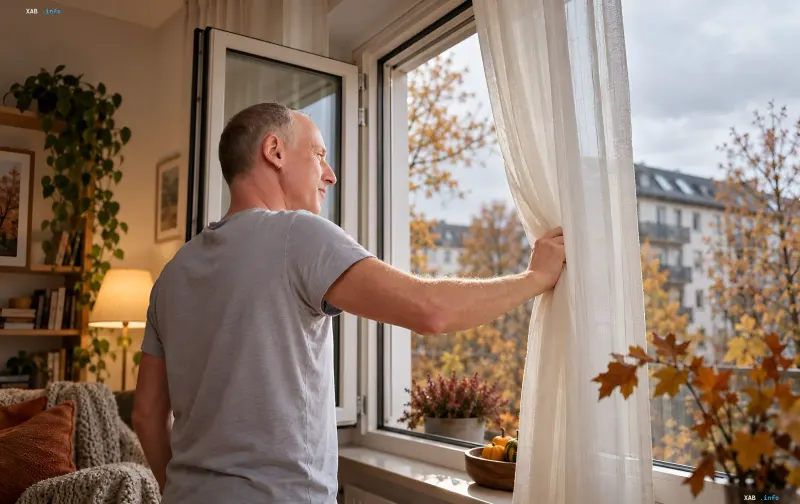
In winter, even a few minutes with an open window can feel like unnecessary heat loss, so many residents prefer to keep their windows tightly closed. However, a complete lack of ventilation leads to a buildup of moisture and pollutants, resulting in condensation on glass, frames, and walls. Specialists from the British organization Energy Saving Trust recommend opening windows at least two to three times a day for about five minutes, even in cold weather, to ensure a fresh air supply without significantly cooling the room.
The Intensive Ventilation Method
According to experts, the most effective way is to open windows wide for a short time. If the apartment layout allows, it is worth opening windows on opposite sides of the home so that air flows through the rooms more quickly. This method is known in Germany as Stoßlüften, or intensive ventilation: instead of leaving a window slightly cracked for hours, active air exchange is provided for a few minutes. At the same time, five minutes is a guideline rather than a strict rule—the duration depends on outside temperature, wind strength, room size, and the number of people at home. In severe frosts, it is important to prevent the room from overcooling, and in adverse weather or hazardous outdoor air quality, the ventilation method must be adjusted.
Why Short Opening is Better Than a Cracked Window
The main advantage of intensive ventilation is that a significant portion of the air can be refreshed in a short time without having time to heavily cool the walls, floor, and furniture. Heat in a house is stored not only in the air but also in building structures and interior items: when a window is open for just a few minutes, warm air partially escapes outward, but most surfaces remain relatively warm, and after closing the windows, the room quickly returns to a comfortable temperature. If, however, you leave a window slightly cracked for several hours, cold air constantly flows inside, causing the walls and slopes adjacent to the window to cool down. Experts advise giving preference to windows on the sunny side of the house when possible, as the air near them is sometimes warmer than on the shaded side. It is impossible to completely avoid heat loss—the goal of proper ventilation is to provide a sufficient amount of fresh air without excessively cooling the apartment.
When Ventilation is Especially Important
Two to three ventilations a day may not be enough if a lot of moisture or pollutants accumulate in the apartment. Key moments: after sleep, when carbon dioxide and moisture from breathing accumulate in the bedroom behind closed windows; during cooking, when boiling water, frying, and gas stoves worsen air quality (turn on the extractor hood, or ventilate the kitchen if you don't have one); after a shower or bath, when hot water increases humidity; while drying laundry, as moisture from items passes into the air; and after using household chemicals, some products of which emit substances that degrade air quality. Energy Saving Trust specialists recommend leaving the extractor fan in the bathroom or kitchen running for about 15 minutes after bathing or cooking.
Ventilation Valves and Grilles
Sometimes residents tape over ventilation grilles or block small valves in window frames to prevent cold air from entering the apartment, but this worsens ventilation and contributes to moisture accumulation. Small ventilation openings in modern windows are designed for controlled fresh air intake, and Energy Saving Trust experts advise usually leaving them open even in winter. Such valves should not be confused with a regular open sash: they let in less air and are part of the ventilation system. It is especially important not to block ventilation in rooms with gas appliances, as insufficient air inflow can create dangerous conditions for their operation. If a mechanical ventilation system is installed in the apartment, the manufacturer's recommendations must be followed—in such housing, the need to open windows may differ.
Condensation as an Indicator of a Problem
Condensation occurs when moist air comes into contact with a cold surface. In winter, this is most noticeable on glass, window frames, and slopes. Regular short ventilation, the operation of the extractor hood, and the absence of actions that block ventilation help maintain moisture balance and reduce the risk of condensation and mold while retaining heat in the main structures of the room.