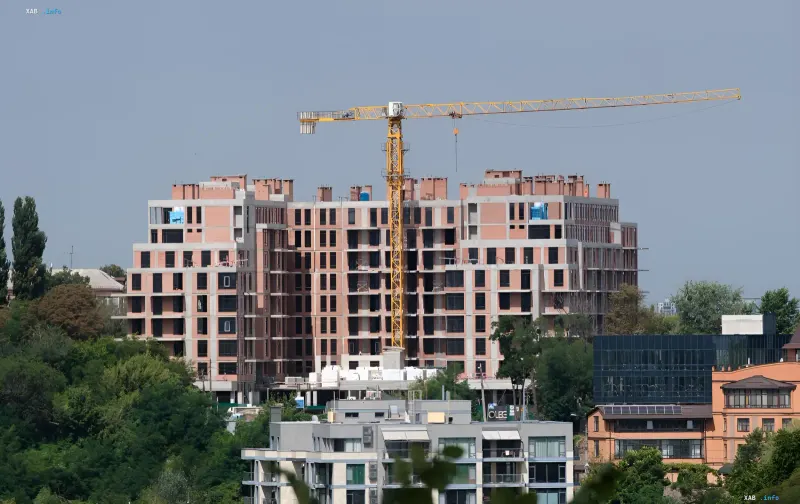
Amidst the full-scale war, the National Bank of Ukraine has imposed strict currency controls, effectively banning the direct transfer of capital abroad. However, the paradox of the situation is that leading Kyiv developers continue to successfully launch large-scale projects in Europe and Asia. How does the business manage to finance construction abroad without violating the law, and why do foreign banks conduct thorough due diligence on Ukrainian companies?
Legal financing schemes: lawyers' experience
Petr Bilyk, a partner in the IT and Technology practice at the law firm Juscutum, highlighted several working models that allow for navigating these restrictions in a comment to RBC-Ukraine.
The first and most common scheme is the use of foreign companies or holding structures that were established before 2022 and already had capital or assets outside of Ukraine. This allows for the legal management of funds located in another jurisdiction.
The second model involves attracting local bank or project financing directly in the country where construction is taking place. In this case, money is not transferred out of Ukraine but is raised on-site.
The third strategy is the creation of joint ventures with local partners. Companies can also sell future apartments through instruments permitted by local law: escrow accounts, staged payments, reservation agreements, or other mechanisms that protect the buyer's interests.
Market practice: from «Creator-Bud» to Stolitsa Group
These theoretical models are working successfully in practice. At «Creator-Bud», they confirmed that their foreign project is implemented through a Polish legal entity. Agreements with investors are concluded in Poland, and settlements are made in zloty or euros through local banking institutions. This approach fully complies with current legislation.
Companies «Intergal-Bud» and Stolitsa Group do not officially disclose the financial models of their British and Hungarian projects. However, experts assume that their work is structured on a similar scheme: construction is carried out through specially created local firms opening a specific project. This allows for raising funds directly in the country of construction and minimizes corporate risks for the parent company in Ukraine.
Strict control: why foreign banks do not trust the brand
Despite the existence of schemes, entering external markets is fraught with serious challenges. Petr Bilyk notes that a strong brand in Ukraine and a quality presentation are not enough to pass financial monitoring in foreign banks.
Banking structures conduct a deep audit, checking:
- UBO (Ultimate Beneficial Owner);
- Source of funds;
- Tax history and financial reporting;
- Sanctions risks and reputation;
- Group structure and related parties;
- Loan agreements and capital accumulation history;
- Economic rationale of the transaction.
Advantages of globalization for Ukrainian business
Despite compliance difficulties, Ukrainian developers gain significant advantages from entering foreign markets. Artur Mkhitaryan, CEO and founder of Taryan Group, notes that scaling the business abroad expands the human potential within the company. International presence opens access to new competencies and partnerships that cannot be obtained in the conditions of the local market.
Furthermore, working abroad capitalizes Ukrainian brands. According to Taryan Group, up to 30% of investors in their Kyiv projects are foreigners attracted by the company's reputation, confirmed by international case studies.