
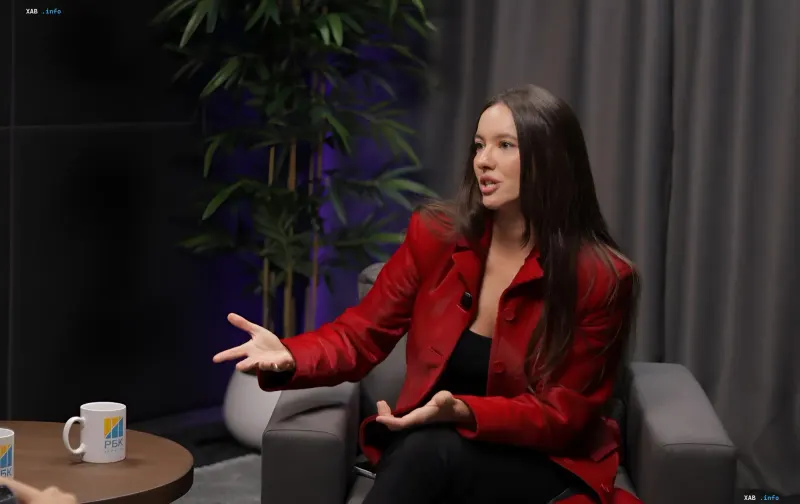
The full-scale war that began in 2022 has touched virtually every sphere of Ukrainians' everyday lives — from logistics and the economy to the most intimate habits, including how people dress and what they buy. Personal stylist Olha Halushka, in an interview with the lifestyle project WAVE (RBC-Ukraine), described a lasting shift in her clients' behavior: Ukrainians have become noticeably more demanding and selective when building their wardrobes. In her observations, the transformation spans several dimensions at once — from the shopping budget to the very number of items a person is willing to keep at home, and from practicality to the emotional attachment to individual pieces of clothing.
Reassessing the budget: from impulse buys to conscious priorities
The first and, perhaps, most tangible change Halushka points to is the rethinking of financial priorities. People have started to think about exactly what they are spending the money allocated for clothing on. “We understand that, for example, we can redirect this money to something else,” the stylist explained. This is not so much about total frugality as about a change in logic: every purchase now undergoes an internal “check” for its purpose. The wardrobe budget competes with other needs, and clothing must justify its price not only with aesthetics but also with functionality in conditions where circumstances can change quickly and unpredictably.
Abandoning the endless accumulation of things
The second noticeable trend Halushka identifies is doubt about the very need for a large quantity of clothing. The habit of constantly expanding the wardrobe, characteristic of the era of mass production and fast fashion, is gradually losing its meaning for Ukrainians. “And, perhaps, the culture of crazy consumption is also not so close to us now,” the stylist noted. This is not a temporary tightening of spending due to a lack of funds but, in her assessment, a deeper rethinking: people are beginning to ask themselves “why do I need so many things?” and are increasingly answering that question honestly, reducing the volume of their purchases.
Compactness and portability as new criteria
The practical aspect of the changes, which Halushka singles out separately, is linked to the need for a wardrobe that can be quickly packed and taken along. “Perhaps we need a wardrobe that we can quickly pack, gather, and have such a small wardrobe that will be sufficiently compact and portable,” she said. This request reflects a reality in which moves, temporary relocations, and the need to be ready for a change of setting have become part of everyday life. Clothing is ceasing to be an exclusively “home” attribute and is turning into a mobile resource that must fit into a suitcase and not lose its look after several days on the road.
Emotional value: things that stay with a person
At the same time, Halushka emphasizes, the shift toward compactness does not reduce to pure utilitarianism. In parallel, items that stay with a person longer and carry an emotional charge are coming to the fore. “And these will be things that will also stay with us longer and in which great emotions will be embedded,” the stylist added. Thus, the new approach to the wardrobe that she describes is built on two pillars: practical mobility and a deep personal attachment to individual items. Mass, one-off purchases are giving way to a more conscious choice, in which each item must be either easily portable or truly meaningful to its owner.
Olha Halushka's observations, published as part of the lifestyle project WAVE, provide a cross-section of how prolonged crisis conditions are restructuring consumer habits at the micro level. If the wardrobe was previously seen primarily as a means of self-expression and following trends, it is now increasingly perceived as a tool of adaptation: compact, functional, and filled with personal meaning. The expert makes no predictions about how long these changes will last after the end of active hostilities, but notes that the shift has already become a lasting trend rather than a temporary reaction to stress.