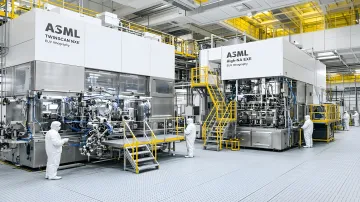
Tech giant Huawei has reached a milestone by shipping over 100 million smartphones powered by its proprietary Kirin processors since its triumphant return to the premium market in 2023. Despite severe US sanctions that stripped the company of access to advanced lithography equipment, the Chinese developer has managed to not only restore supply chains but also implement innovative architectural solutions.
Technological Breakthrough: LogicFolding Architecture
The key to success was the new proprietary LogicFolding architecture implemented in the current flagship Kirin 9050 chips. This technology allowed the integration of over 50 million hybrid interconnects, providing a 53.5% increase in transistor density. According to Xu Songyu, director of Huawei's semiconductor division, the successful mass production of these chips was made possible by consolidating the efforts of Chinese electronics suppliers, despite skeptics' predictions regarding yield rates.
Market Competition and AI Accelerators
In parallel with its mobile division, Huawei is actively strengthening its position in the artificial intelligence sector. In the first half of 2026, the company shipped 572,000 Ascend accelerators, capturing 28% of the Chinese domestic market. While Nvidia still leads with 34%, its share has significantly declined compared to last year, demonstrating the effectiveness of China's import substitution policy under sanctions pressure.
Conflicting Data
There are differences in assessments of the company's prospects. While Huawei's official reports confirm the successful testing of next-generation chips for a 2027 release, some Western analysts express doubts about the long-term scalability of LogicFolding technology when transitioning to finer process nodes without access to deep ultraviolet (EUV) lithography equipment.