In the Huliaipole direction, combat operations have acquired a specificity characteristic of the autumn-winter period: Russian units are using weather conditions—specifically fog—as a tactical tool for covert maneuvering on automotive and motorcycle equipment. On November 20, 2026, the RBC-Ukraine outlet reported this, citing operational data from the 7th Rapid Reaction Corps of the Air Assault Forces of the Armed Forces of Ukraine. According to the military, since the beginning of November, the enemy has repeatedly attempted to advance into the depth of Ukrainian defenses, covering the movement of equipment with dense fog, which significantly limits the range of optical detection and the effectiveness of reconnaissance.
Tactics of Individual Infantrymen and Maneuvers on Motorcycles
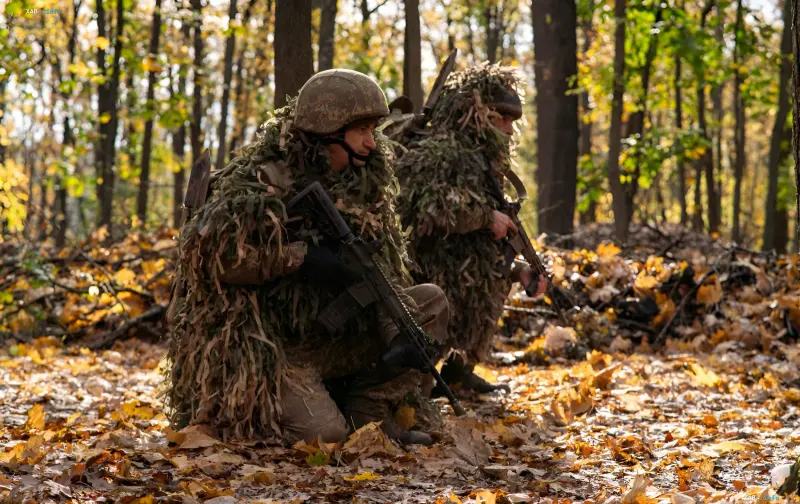
In addition to group mechanized assaults, in adverse weather conditions, Russian military forces are increasingly employing individual infantrymen, who are significantly harder to detect in the fragmented forest-field landscape. Ukrainian units, according to the 7th Air Assault Corps, are consistently thwarting these attempts and inflicting losses on the enemy. Since the beginning of November, according to the provided data, the defense forces have destroyed and damaged about 1,000 units of Russian equipment—this list includes cars, motorcycles, ATVs, artillery guns, multiple launch rocket systems, and armored vehicles. Such a volume of equipment losses in a short period points to the intensity of combat clashes in this section of the front.
Strikes on the Rear: Zaporizhzhia Under Fire from Aerial Bombs, Missiles, and Drones
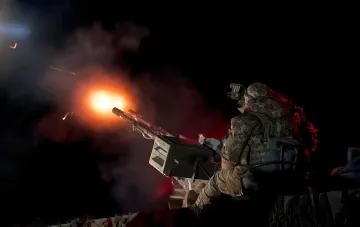
Against the backdrop of failures on the battlefield, the enemy, according to the assessment of the Ukrainian military, is intensifying strikes on rear infrastructure and logistical hubs, striving to create conditions for potential movement toward Zaporizhzhia. The city itself and surrounding infrastructure are being subjected to attacks by guided aerial bombs, ballistic and cruise missiles, and strike drones. The Ukrainian military emphasizes that the enemy is combining the destruction of military targets with psychological pressure on the civilian population. Air defense units of the 7th Air Assault Corps, in turn, are conducting active interceptions: recently, they have destroyed more than 20 jet-powered "Shahed" type drones.
A Wide Front: From Dobropillia to Kupyansk
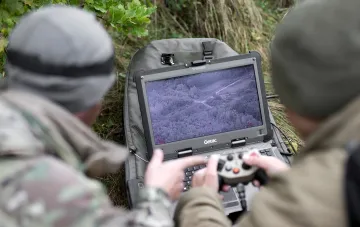
The Huliaipole direction is not isolated. Recently, Russian troops have been attempting to intensify assault actions on several sections of the frontline, however, they are facing a steady repulse. Specifically, in the Donetsk region, mechanized attacks have been intensified in the area of Dobropillia and Kostiantynivka, where the enemy is utilizing armored vehicles and light transport in an attempt to push through the defenses. At the same time, as analysts note, Russian units are not achieving significant advancement: Ukrainian forces are conducting counterattacks in three directions simultaneously—in the areas of Kupyansk, Lyman, and Orikhiv. The Ukrainian military is not only containing the pressure but also actively destroying enemy equipment, limiting its mobility with the use of unmanned systems.
What This Means for Future Dynamics
The combination of factors described—the use of weather conditions for camouflage, massive equipment losses, the shift in focus to strikes on the rear, and simultaneous counterattacks by the Armed Forces of Ukraine on several axes—indicates that the enemy is unable to ensure a sustainable breakthrough in the Huliaipole and adjacent directions. The strategic task of Russian commanders—preparing conditions for an offensive on Zaporizhzhia through systematic suppression of logistics and infrastructure—is not currently being realized to the stated scale. The Ukrainian side, on the contrary, is demonstrating the ability to simultaneously defend the front, inflict damage on equipment, and intercept aerial threats, which makes further advancement by the enemy extremely difficult in current conditions.