In the fifth year of the full-scale war, Ukrainian business and the media industry are operating under conditions that do not fit the crisis communication standards of peacetime. This was stated in a column for RBC-Ukraine by Oksana Plakhova, Communications and Government Relations Director at Kernel. According to her, missile strikes, forced production shutdowns, and daily shelling require a fundamentally different approach to the information field than the one that existed before 2022. "We live in a war economy, and it operates under one basic rule of maturity: everyone is responsible for their own actions and words," Plakhova stated.
What businesses are doing under fire
Plakhova emphasizes that Ukrainian businesses under daily strikes are making extraordinary efforts to retain teams, pay salaries, maintain production facilities, and contribute to the state budget. When critical assets are hit by missile and drone strikes, companies, she says, do their part: they save employees' lives, document the damage, adjust expenses, and support the domestic market and exports. At the same time, businesses "honestly report to the public what can be spoken about and what is necessary to know," but are not obliged to disclose sensitive operational details under pressure from editorial inquiries.
'A Ready-Made Intelligence Report': Why some editorial questions are dangerous
Plakhova's central argument is built around specific examples of editorial questions that, in her view, become a tool for enemy intelligence. She lists: requests for the exact number of stopped enterprises, assessments of damage to equipment and storage tanks, disclosure of inventory volumes and depletion timelines, the share of alternative export routes, and investment plans for asset protection. "This is a ready-made intelligence report for the enemy," the Kernel Communications Director claims. Publishing such data, she says, allows the enemy to evaluate the effectiveness of previous attacks and calibrate subsequent strikes on facilities where employees work.
Panic, inflation, and credit trust
Plakhova also draws attention to the economic consequences of sensationalist headlines. Headlines about "completely destroyed factories," "brands disappearing from shelves," or an inevitable price surge, she argues, directly provoke consumer panic and inflationary pressure, despite the fact that the domestic market consumes significantly less than total production volumes and is well-stocked. A separate block of her argument is dedicated to the reaction of international financial institutions, Western banks, creditors, and insurers, who, according to Plakhova, monitor the Ukrainian information space daily. The spread of "apocalyptic scenarios" about "the total shutdown of everything" and "catastrophic losses" hits credit trust, company risk profiles, and the cost of capital for the entire Ukrainian business sector.
The 'Do No Harm' principle in wartime journalism
Plakhova formulates the key question that she believes a journalist should ask themselves before publishing any material: "Does this provide the enemy with additional information and does it pose a direct danger — from the business to a specific individual?" She appeals to the Hippocratic oath principle — "refrain from causing any harm or injustice" — and asserts that media work in wartime goes far beyond the battle for traffic and views. At the same time, Plakhova emphasizes that systematic business is not asking for "hothouse conditions" and is ready for professional discussion about the market based on verified facts. "Information silence regarding sensitive operational details during the war is a basic tool of physical and economic security," she summarizes.
Division of responsibility: Neither 'we were given the facts' nor 'we are looking for a hot angle'
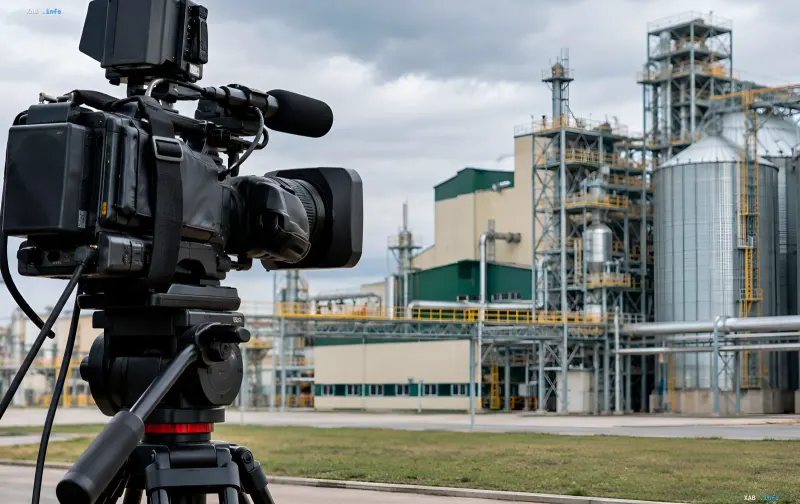
Concluding the column, Plakhova insists on a simple division of responsibility: business and its communication teams do their part, while journalists and editors must realize and evaluate what they release into the public space and in what form. In a war economy, she says, there is no full control over the information field by one business alone, but there is also no excuse for phrases like "we were just given the facts" or "we are looking for a hot angle." The column was published against the backdrop of ongoing strikes on Ukraine's industrial infrastructure and discussions about the role of the media under martial law.