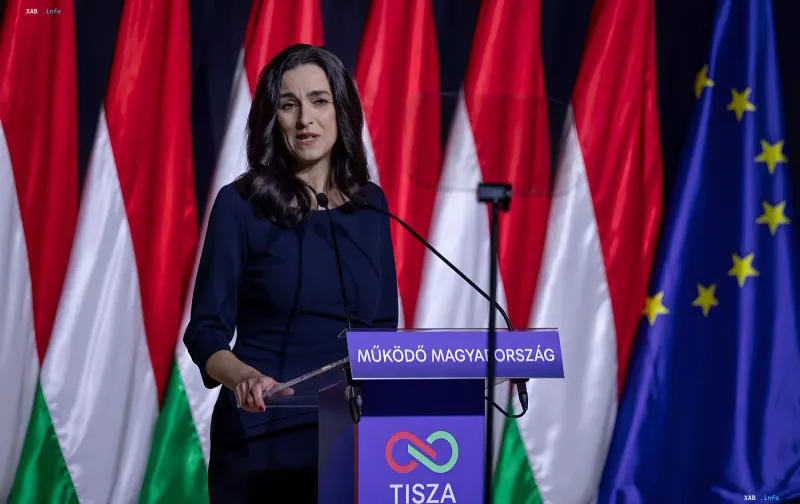
Hungary has decided to expel ten staff members of the Russian embassy in Budapest. This was announced on 8 September 2026 in a Facebook post by Anita Orbán, the official spokesperson for the Hungarian Ministry of Foreign Affairs. According to her, at her instruction the relevant senior official at the Hungarian foreign ministry informed the Russian ambassador in Budapest of the decision concerning ten representatives of the Russian side. In this way, within a single day Hungary stripped accreditation from a record number of Russian diplomatic personnel for the bilateral relationship.
Justification: Violation of the Vienna Convention
The Hungarian side explained the decision by stating that, in the assessment of national authorities, the aforementioned ten staff members of the Russian mission "carried out activity in Hungary that, under the Vienna Convention, is not permissible for diplomats." Budapest did not publicly disclose specific episodes or the nature of the alleged violations, limiting itself to a reference to the norms of international diplomatic law. The official statement emphasised that the step was taken "in order to protect the security and sovereignty of the country." Hungary also cited the need to comply with the established rules of diplomatic representation.
Severance of Relations Not Foreseen
In Budapest it was specifically noted that the expulsion of ten Russian representatives does not mean a severance of diplomatic relations between the two states. "Hungary intends to continue maintaining the necessary dialogue on the principles of mutual respect and compliance with the rules," stated Anita Orbán. Thus, formally the channels of diplomatic communication between Moscow and Budapest remain intact, although their scope and nature will likely be reconsidered in light of the reduction of the Russian diplomatic corps.
Moscow's Reaction: A 'Harsh and Painful' Response
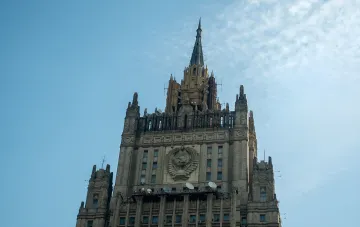
The Russian side reacted promptly to Budapest's decision. The official spokesperson for the Russian Foreign Ministry, Maria Zakharova, stated that Moscow would respond to the expulsion of ten Russian diplomats. "The response to the Russophobic lobby in Budapest will be harsh and painful," quoted her words the Ukrainian edition of RBC. Specific retaliatory measures were not named in Zakharova's statement, however the rhetoric indicates Moscow's intention to mirror or proportionally limit the presence of Hungarian diplomats on its territory or to apply other pressure measures.
Political Context: The New Course of the Magyar Government
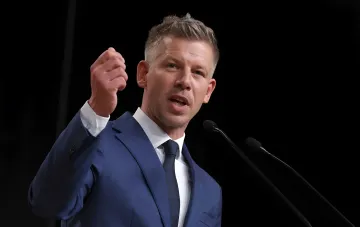
The expulsion decision fits within a broader review of Hungarian foreign policy. Earlier, the government of Prime Minister Péter Magyar officially stated that Russia poses a threat not only to Hungary but to the security of Europe as a whole and to the international order. Budapest also condemned the Russian military operation against Ukraine, affirmed its support for the sovereignty and territorial integrity of Kyiv, and recognised Ukraine's right to self-defence. These statements mark a sharp turn from the previous Hungarian line, which for several years had blocked a number of EU decisions against Moscow. In the photo accompanying the publication, Anita Orbán is speaking at an event of the TISZA party under the slogan "Működő Magyarország" ("A Working Hungary"), indicating the party affiliation and the political framework within which the foreign-policy decision is being made.
Contradictory Data
No significant discrepancies were found in the provided sources on the key facts — the number of expelled diplomats (ten), the justification (the Vienna Convention), Moscow's reaction, and Budapest's position on maintaining diplomatic relations. All four sources (RBC-Ukraine, 24tv, RFI, Euronews) agree on the main details. The only point that remains unclear is the specific list of actions that Hungarian authorities classified as impermissible, since none of the sources provides a detailed list of incidents.