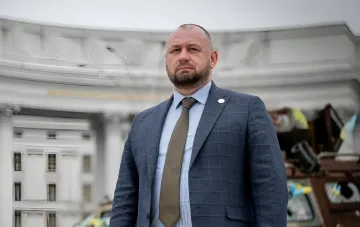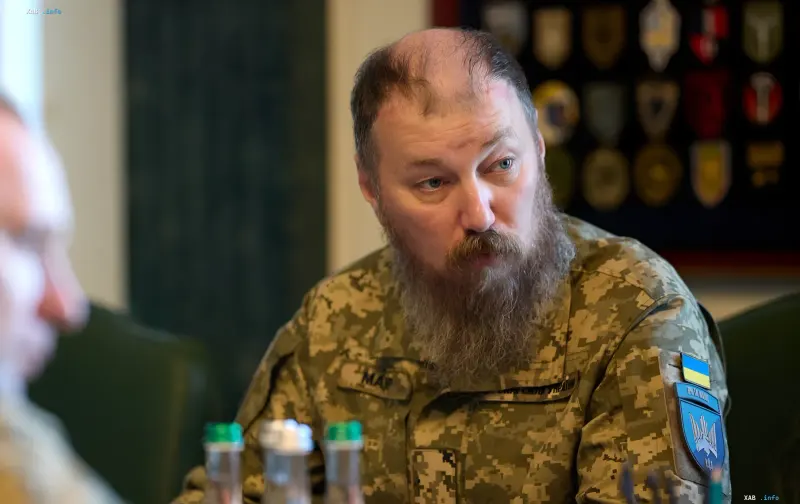
Hungary has lifted a three-year entry and residence ban for Ukrainian citizen Robert 'Magyar' Brovdi, commander of the Unmanned Systems Forces of the Armed Forces of Ukraine. This is reported by RBC-Ukraine, citing the Hungarian publication Magyar Hang. According to the outlet, Hungary's National Directorate-General for Aliens Policing has already removed the ban from its system; relevant notices were published on November 18. The document states that the three-year ban for the Ukrainian citizen has been revoked and the warning removed from the migration registry.
How the revocation mechanism works
Magyar Hang journalists requested clarifications from several ministries; the response was provided by the Hungarian Ministry of Interior. They explained that both the ban itself and its revocation can be initiated by the Constitution Protection Office, provided that the security threat no longer exists. This requires an assessment by the Information Office: if circumstances have changed significantly, the migration service has the right to cancel the ban or shorten its duration. Thus, lifting the restriction on Brovdi formally means that Hungarian agencies have reassessed the threat associated with him.
Context: from 'Druzhba' to Hungarian roots
The ban itself was introduced in August 2025 by then-Hungarian Foreign Minister Péter Szijjártó following attacks on the 'Druzhba' oil pipeline. The minister stated that the commander of the unit responsible for the strikes would be banned from entering Hungary and the entire Schengen area. Brovdi is the highest-ranking military officer of Hungarian descent within the AFU; a Russian court sentenced him in absentia to life imprisonment. He reacted sharply to the imposed ban, stating that such sanctions are inappropriate and accusing the minister of protecting his own interests rather than Hungary's sovereignty, while Hungarian officials, according to him, profit from cheap sanctioned raw materials.
Kyiv's mirror measures
In response to the ban against Brovdi, Ukraine banned entry to three Hungarian military officials. Foreign Minister Andrii Sybiha noted at the time that every act of disrespect from Hungary would receive a response. Thus, the lifting of the restriction in Budapest takes place against the backdrop of an already completed exchange of mirror measures between the two countries.
Chronology: decision made before Transcarpathian meeting
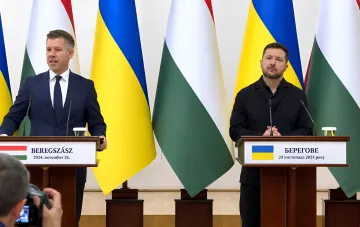
The publication draws attention to the fact that the decision to lift the ban was made even before Hungarian Prime Minister Péter Magyar met with Ukrainian President Volodymyr Zelenskyy in Transcarpathia. This meeting took place on November 24: the Hungarian prime minister visited Ukraine in his official capacity for the first time, and generally arrived in the country for the first time since 2015.
Negotiation outcomes and further steps
Following the talks, Magyar stated that Ukraine's EU membership must be earned and that no expedited introduction mechanism exists. Later it became known that Hungary will join the coalition for the return of Ukrainian children. Zelenskyy, in turn, reported on agreements reached in the spheres of politics, energy, and infrastructure. Lifting the ban on Brovdi in this sequence looks like one of the steps within the framework of general easing of bilateral relations.