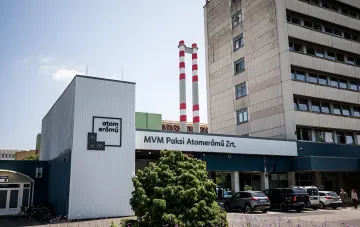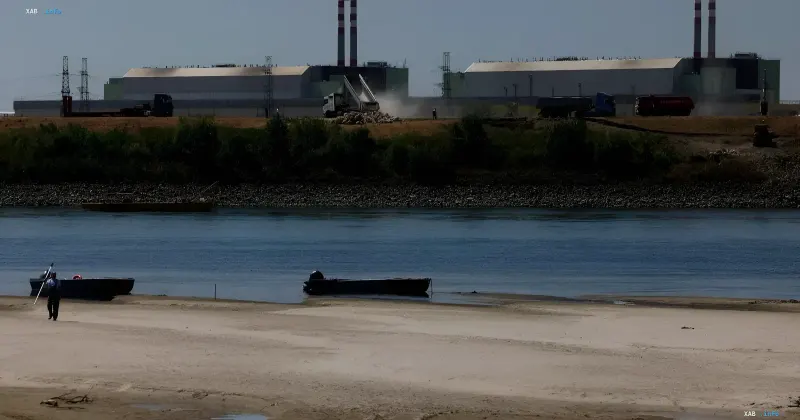
Budapest, August 15, 2026 (XAB.info) — Amid an unprecedented drought sweeping the Danube River basin, the Hungarian government has been forced to resort to radical measures to ensure the operation of its national nuclear energy sector. Prime Minister Péter Magyar officially confirmed the decision to sink two barges near the Paks Nuclear Power Plant. According to the head of government, this operation is a temporary solution designed to artificially raise the river level and ensure reactor cooling.
Emergency Maneuver: Barges as Artificial Dams
According to the Prime Minister's statement, two barges, each 80 meters long, will be intentionally sunk in the Danube waters in close proximity to the Paks Nuclear Power Plant. The goal of this operation is to create additional resistance to the water flow and locally raise its level. This is necessary to allow two of the plant's turbines to continue operating for several weeks. During this period, the construction of an underwater water discharge system is planned to be completed, which should become a long-term solution to the problem of water intake during low river levels.
Currently, the Paks NPP is functioning at only 25% of its design capacity. The plant, like most hydro and nuclear facilities in the region, is critically dependent on the Danube, which serves as the source of cooling water. Due to an abnormally hot summer and lack of precipitation, the river's water level has dropped to historic lows, making it impossible for all reactors to operate in normal mode.
Critical Threshold and Threat of Complete Shutdown
The situation in Hungary is on the verge of a crisis. Mr. Magyar warned that according to current hydrological forecasts, the water level in the Danube will drop to a dangerous mark by the early morning of August 17. Without the measures to sink the barges, one of the two remaining operating turbines would have been forced to shut down, leading to an even greater reduction in the country's electricity generation.
"The Danube is drying up. Soon, the controlled sinking of barges will begin," summarized the Prime Minister, emphasizing the inevitability of these actions. Experts note that this is an unprecedented case in the region, where floating vessels are used as artificial obstacles to save the operation of energy infrastructure.
Regional Crisis: The Example of Romania
The problem of low water levels in the Danube is transboundary in nature. Neighboring Romania, facing similar climatic challenges, has already decided to shut down its last operating nuclear reactor on August 13. This decision was made due to dangerously low water levels, which did not allow for the safe cooling of the reactor.
Events in Hungary and Romania raise sharp questions about the future of nuclear energy in Central and Eastern Europe in the context of a changing climate. Engineers and regulators are forced to find new ways to adapt infrastructure to increasingly severe droughts, which are becoming the norm in the region.
Contradictory Data
While the Hungarian government emphasizes climatic reasons and the need for emergency measures, discussions continue in the expert community and political circles regarding the long-term development strategy of the Paks NPP. Earlier, in July 2026, Prime Minister Magyar stated an intention to review the agreement with Russia on the "Paks 2" project (Source ID 2). Some analysts link the current vulnerability of the plant not only to the drought but also to delays in infrastructure modernization, which may have been caused by geopolitical factors and contract reviews. However, there is no official confirmation of a link between the current sinking of barges and political disagreements with Russian partners; authorities insist exclusively on the climatic nature of the crisis.