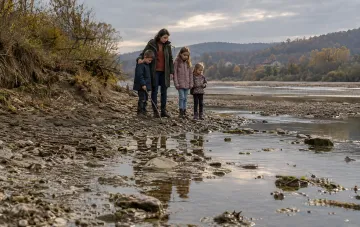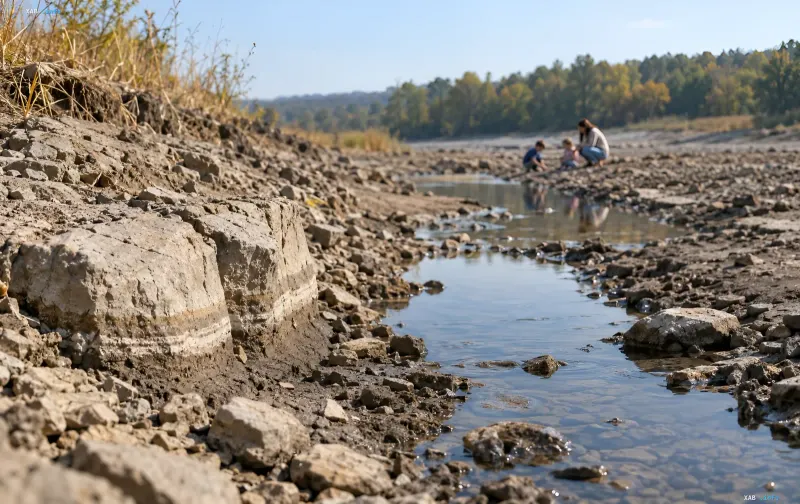
A large-scale hydrological drought has been recorded in Ukraine this year, affecting many of the country's water arteries. Throughout September, the low-water situation not only persisted but even intensified in certain areas. This is evidenced by operational data from the Ukrainian Hydrometeorological Center, whose specialists regularly monitor the water content of major rivers to assess risks and identify threats in a timely manner.
River Water Content Analysis: From Anomalous Excess to Deep Deficit
The assessment of average water discharges for September 2026 at active hydrological posts, conducted by UkrHMC experts, is based on the official Regulation on the procedure for assessing and informing about low water (hydrological drought) on land water bodies in Ukraine. Based on the collected data, the situation across regions is extremely heterogeneous. Thus, on the Inhulets River (Kryvyi Rih post), water content significantly exceeding the norm at 430% was recorded during the first month of autumn. At the same time, a catastrophic deficit of moisture was observed in other water bodies.
Critical Indicators and Risk Regions
Significantly below normal — within 30% to 48% — water content was observed in September across a number of key rivers, placing a severe burden on regional water resources. Water content close to critical low-water criteria (23-27% of normal) was noted in certain basin areas. Moreover, experts state an intensification of low water throughout September 2026 according to the main evaluation criterion, and on some water arteries, even a complete absence of river runoff was observed, threatening the stable functioning of ecosystems.
Contradictory Data
Despite the general trend toward deep low water and the establishment of historical anti-records in certain reservoirs and rivers, such as the Dniester, official data demonstrate a certain dualism in the situation. On the one hand, the Hydrometeorological Center records water drops below ecological runoff values, which is critical for river ecosystems. On the other hand, the Inhulets River showed an anomalous water excess (430% of normal) during the same period, which experts attribute to local anthropogenic factors or specific meteorological conditions of that particular basin.
Consequences for Economy and Ecology
The complex hydrological situation, associated with maintaining river water content below ecological runoff values, directly affects the operation of water-dependent economic sectors, agriculture, and the energy complex. In conclusion, specialists emphasize that such climatic challenges require a review of approaches to managing Ukraine's water resources amidst global climate change, accompanied by frequent heatwaves and precipitation deficits.