Regardless of the numbers displayed on gas station price boards, hybrid cars continue to hold the crown for fuel efficiency among all powertrain types. A quarter of a century ago, dual-propulsion vehicles entered the market as a greener alternative to pure fossil-fuel cars: they were claimed to consume less fuel and, consequently, emit fewer harmful substances into the atmosphere. At the same time, hybrids were perceived as a transitional link between gasoline cars and electric vehicles, toward which consumers of that era showed considerable skepticism. While the consumer qualities of the early hybrids were frankly dubious, from a technical standpoint, their logic was transparent and consistent.
How Hybrid Drives Work: From Regeneration to Parallel Layout
Engineers designing the first hybrids had to engineer a transmission capable of connecting either motor to the wheels, along with a charging system for the electric motor's battery. The key element here is the generator, driven either by the gasoline engine or by regenerative braking energy—when the car coasts. This latter nuance is fundamentally important: the electric drive can also operate in "reverse." When the vehicle slows down, kinetic energy is returned to the battery rather than dissipated as heat into the atmosphere, heating up the brake discs as happens in conventional fuel cars. Over the course of further evolution, hybrid vehicles changed some of their initial principles to become even more efficient without losing dynamics and driving comfort.
Three Main Types of Hybrids: HEV, PHEV, and MHEV
Over time, several different types of dual propulsion emerged in the industry, each emphasizing specific operating conditions. The conventional hybrid (HEV) is a configuration where the gasoline engine works alongside an electric motor: both motors can drive the wheels simultaneously or separately, and the battery is charged while driving from the ICE and during braking via regeneration. This is the most versatile type, featuring extremely efficient models alongside aggressive, all-wheel-drive cars. The plug-in hybrid (PHEV) features a large battery that can be charged from an outlet, allowing for about 40–100 km of purely electric driving; in a number of countries, such vehicles are formally recognized as electric cars. Finally, the mild hybrid (MHEV) is the most affordable of the three: a small electric motor merely assists the main engine during takeoff and short accelerations, and the car practically never runs on pure electricity alone.
Why Conventional Hybrids Are the Optimal Choice for Ukrainian Conditions
Considering the specifics of the Ukrainian market and real operating conditions, the first type—the conventional hybrid (HEV)—is of greatest practical interest. These cars are in highest demand not only in Ukraine but worldwide: according to data cited in the article, they account for 34.5% of the new car market in the European Union. The reason is simple: HEVs allow for substantial fuel savings without forcing owners to change their usual car usage habits—no power outlets or special charging stations required. At the same time, designers have developed several different HEV subtypes, each optimized for a specific usage scenario.
Series Hybrid Layout: Nissan X-Trail e-POWER as a Benchmark of Efficiency
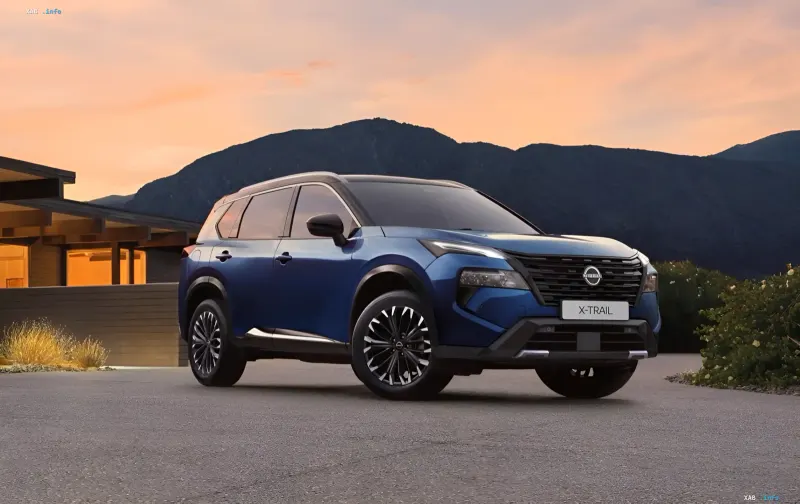
A clear example of rational layout is the popular Nissan X-Trail e-POWER crossover, which has a fuel consumption of about 6.0 l/100 km. It utilizes a so-called series hybrid layout, the fundamental difference being that the gasoline engine has no mechanical connection to the wheels and always operates in the most efficient mode for fuel economy. The ICE functions solely as an electricity generator, while the car moves on electric traction. Thus, the car gains all the advantages of an electric vehicle—high efficiency and smooth traction control—while lacking its main drawbacks: limited driving range and dependence on charging infrastructure. In fact, it is an electric car equipped with its own onboard compact power plant, ensuring continuous power supply without needing to plug into an external grid.
Compactness and Reliability: What Has Changed in 25 Years
Over the quarter-century since the appearance of the first serial hybrids, designers have learned to make hybrid powertrains compact and reliable, which used to be one of the main problems. While early models suffered from bulky batteries and complex, not always durable electronics, modern units fit into the standard dimensions of crossovers and sedans, matching the lifespan of pure gasoline equivalents. This makes hybrids, especially HEV and Series Hybrid setups, practically the default choice for those seeking maximum efficiency without compromises in daily use.