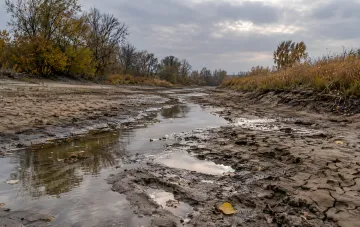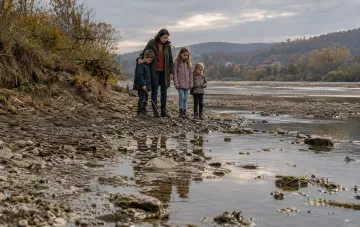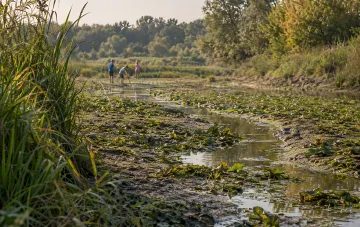
In the first half of November 2026, water deficits persisted across the majority of Ukrainian rivers. During an operational assessment of the water content in major rivers for the first 15 days of November, the Ukrainian Hydrometeorological Center (UkrHMC) recorded that runoff is practically absent on certain water arteries. According to experts, this situation is critical for the functioning of river ecosystems and poses a direct threat to the water supply of the population and the operation of water-dependent economic sectors.
Assessment Methodology: How UkrHMC Determines Low Water Levels
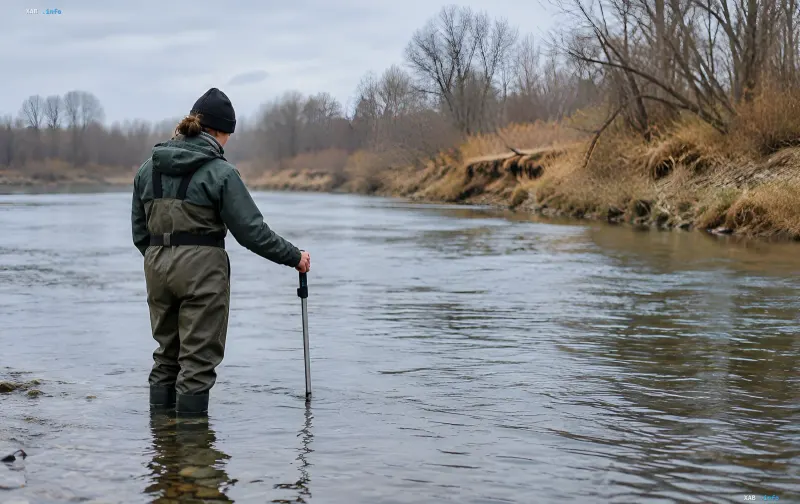
Specialists at the Hydrometeorological Center continuously monitor the state of rivers and assess their water content at active hydrological monitoring stations. The purpose of these measurements is to determine whether low water conditions—namely, a hydrological drought—have occurred or if there is a real threat of their onset. The average water discharge of each river is evaluated in strict accordance with the Regulation on the Procedure for Assessing and Informing about Low Water (Hydrological Drought) on Land Water Bodies of Ukraine. It is this regulatory document that defines the criteria by which the onset or threat of low water is recorded and establishes thresholds below which water content is considered abnormally low.
Three Deficits Levels: From Near Normal to Critical
The operational assessment for the first 15 days of November 2026 revealed three main water content ranges. In some rivers, water content remained close to normal, amounting to 87–112% of the long-term average. In a significantly larger number of water arteries, water content was below normal, ranging from 51–76%. The most alarming picture emerged in rivers where water content dropped to 32–49% of the long-term average—a substantially lower norm indicating a profound water deficit.
Comparison with the Lowest-Water Month: Where It Is Even Worse
In addition to the primary assessment criterion, experts applied an auxiliary one by comparing the current water level in rivers with the long-term averages of the lowest-water month of the year. It turned out that water content exceeding the norm or remaining within the norm of the driest month was observed only in a limited number of rivers. In the remaining water bodies, whose hydrological regime directly affects the operation of water-dependent economic sectors and drinking water supply, the monthly water content proved to be lower than the long-term average of the lowest-water month. This means that, in fact, the rivers are in a worse condition than what is statistically considered the driest period in the entire history of observations.
Ecological Discharge Exceeded: Threat to Ecosystems
Separately, UkrHMC recorded a difficult hydrological situation associated with river water levels remaining below ecological discharge values. In a number of water bodies, the current runoff constitutes only an insignificant fraction of the minimum volume of water necessary to maintain the vital activity of aquatic organisms, preserve biodiversity, and ensure river self-purification. Center specialists emphasize that this situation is «critical for the functioning of river ecosystems». The absence or sharp reduction of runoff leads to the degradation of benthic communities, the death of fish stocks, and the disruption of food chains in aquatic ecosystems.
Context: Weather and Outlook
The situation with the water regime of rivers in November 2026 is unfolding against the backdrop of a general climatic trend which, according to experts, intensifies the frequency and duration of hydrological droughts in Ukraine. At the same time, forecasters warn that in the coming days, rains in certain regions may cause local flooding, creating a contrasting picture: excess water in some areas and a continuing acute deficit in others. UkrHMC's monitoring of river water content will continue, and updated data from hydrological stations are published on the center's official channels.