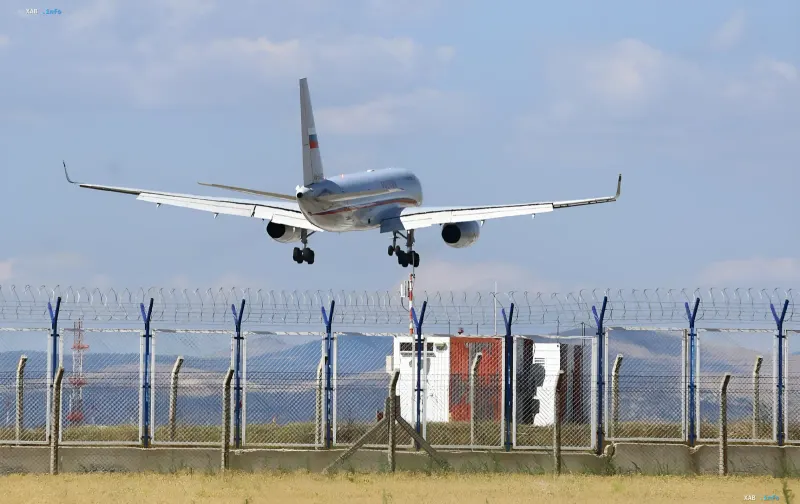
The International Civil Aviation Organization (ICAO) issued a statement noting a significant increase in risks to passenger flights amid active hostilities. According to RBC-Ukraine, the organization stated that civil aviation has been placed under heightened threat due to the use of modern long-range weapons, the mass deployment of unmanned aerial vehicles, and advanced air defense systems. It is in this context that the official warning fits, which, according to Ukrainian Foreign Minister Andriy Sybiha, Kyiv sent to ICAO on Wednesday, September 2, regarding the closure of Russian airspace.
Heightened threat to civil aviation
ICAO emphasizes that the combination of long-range weapons systems, drones, and air defense complexes creates conditions under which a civilian aircraft could come under crossfire or be mistakenly identified as an enemy target. The organization notes that while the aviation industry can quickly reroute flights around conflict zones, each state is obliged to continuously and independently assess the level of threat over its own territory. This, in effect, shifts part of the responsibility for passenger safety onto national authorities, not just international bodies.
Radio interference and navigation failure
A separate and, according to ICAO's assessment, serious problem has been regular radio-frequency interference that blocks the operation of the global satellite navigation system. For civil aviation, which is critically dependent on precise positioning, such failures mean not just discomfort but a direct threat to flight safety: pilots lose a reliable navigation reference in conditions where airspace is already crowded with military objects and drones.
State obligations and military-civilian coordination
The international organization called on UN member states to promptly exchange intelligence data on any potential risks to aviation. In addition, ICAO demands a significant improvement in coordination between civilian and military authorities to eliminate cases where the military mistakenly identifies a passenger aircraft as an enemy target. In this connection, it is reported that ICAO has already begun updating its official instructions and guidelines for assessing risks to civil aviation in conflict zones and near them.
Ukraine's position and Russia's reaction
Ukrainian Foreign Minister Andriy Sybiha stated that Kyiv provided ICAO with an official warning about the closure of Russian airspace, explaining this by the fact that Russian airspace is dangerous for civil aviation due to increased military activity. According to him, Russia is deliberately ignoring the existing threats resulting from its aggression against Ukraine, which has already led to several incidents in recent years. In response, according to Russian media, Rosaviatsiya stated its readiness to cooperate with ICAO in connection with Ukraine's appeal.
Contradictory data
Available sources contain a discrepancy regarding the stage at which the Ukrainian appeal to ICAO stands. On the one hand, according to Minister Sybiha (September 2), Ukraine has already provided an official warning about the closure of Russian airspace. On the other hand, the Ukrainian agency Interfax-Ukraine frames the situation as the preparation of an appeal to ICAO regarding Russia's violation of the convention on international civil aviation. Thus, one version speaks of a completed notification, the other of a document still being drafted. Moreover, the Russian side's position (Rosaviatsiya's readiness to cooperate) effectively does not acknowledge the validity of Ukraine's warning, but merely records the fact of its receipt, creating a discrepancy in how the situation is interpreted by the parties.
The totality of ICAO's and Ukrainian authorities' statements indicates that the issue of civil aviation safety over territories adjacent to the conflict zone is becoming one of the central items on the international aviation agenda. The updating of ICAO guidelines and the intensification of the diplomatic dialogue between Kyiv and Moscow over airspace will likely develop in the coming weeks, and the final wording of international instructions on risk assessment will become a key reference for airlines when planning routes.