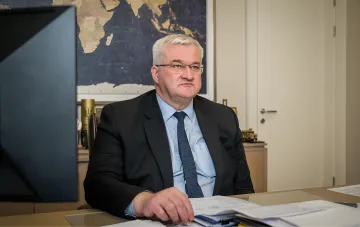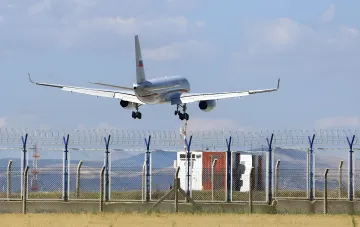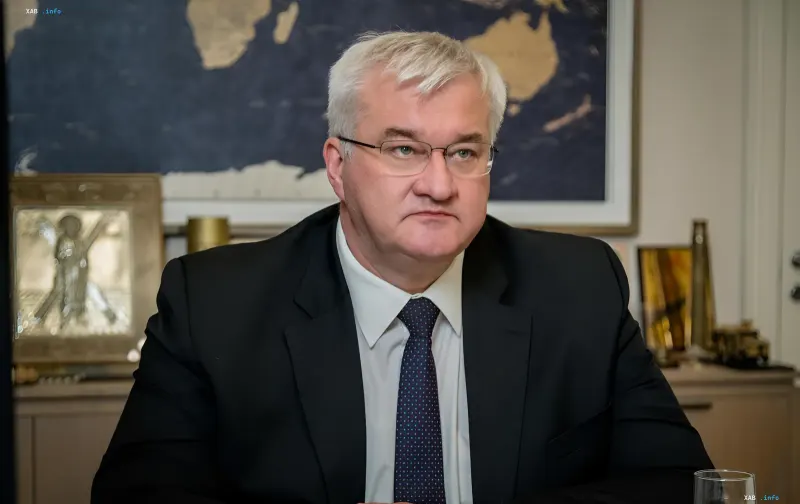
Ukraine has sent an official warning to the International Civil Aviation Organization (ICAO) stating that Russian airspace has become unsafe for civil aviation. This was announced by Foreign Minister Andriy Sybiha on the social network X, according to RBC-Ukraine. In his words, the sky over the Russian Federation is dangerous due to intensified military activity, and Kyiv is taking steps to prevent possible incidents involving civilian aircraft.
Official warning to ICAO
Sybiha emphasized that Russia "deliberately ignores existing threats as a result of its aggression against Ukraine," which has already led to a number of incidents in recent years. "Against the backdrop of a sharp escalation of terror by Russia against Ukraine, Russian airspace is becoming increasingly dangerous," the minister stated. He explained that Ukraine is sending caution notices "even if Russia refuses to fulfill its obligation to provide such information," since the goal is to "prevent unintended incidents." In his words, the war is "coming home, to Russia," and Kyiv is acting within the framework of the inherent right of self-defense under Article 51 of the UN Charter.
Context: Zelensky's address and the position of the Office of the President
As RBC-Ukraine previously reported, on September 1, President Volodymyr Zelensky addressed all airlines using Russian airspace, as well as insurers working with key Russian airports. He stated that "Russian airspace is becoming completely dangerous" and open to Ukrainian drones. Head of the Office of the President Kyrylo Budanov, for his part, noted that Ukraine will "respond proportionally and firmly to Russia's aerial terror" and that the Russian sky "will cease to be safe."
Moscow's reaction
In the Kremlin, Kyiv's reaction was criticized. Vladimir Putin called Zelensky's statement about the "closure" of the sky over Russia a "claim to state terrorism." Thus, the positions of the two sides on the same step diverge: for Ukraine it is a measure of security and self-defense, for Moscow — a provocation.
Contradictory data
In the publications and statements of the parties there is an inconsistency in terminology and in the assessment of the step itself. On the one hand, the word "closure" of airspace over the Russian Federation is used in headlines and in Kyiv's rhetoric, however, legally Ukraine has no right to close another country's airspace — in fact, an official warning (a caution notice) has been sent to ICAO and partners. On the other hand, the positions of the parties diverge in meaning: the Ukrainian side characterizes the step as preventing incidents and exercising the right of self-defense, while the Russian side (Putin's statement) interprets it as a "claim to state terrorism." Both versions are set out above; there is no independent verification of the very mechanism of "closure" in the provided sources.
What this means for carriers and insurers
According to an informed RBC-Ukraine source in the authorities, the statement was made precisely so that civilian aircraft would not be in Russian airspace: "While various companies are flying there, we will see how it develops further." Ukraine, he said, is warning all partners and stating that "there is no safe sky in Russia." For airlines and insurance companies, this means an elevated level of risk when planning routes through or to Russian airports.