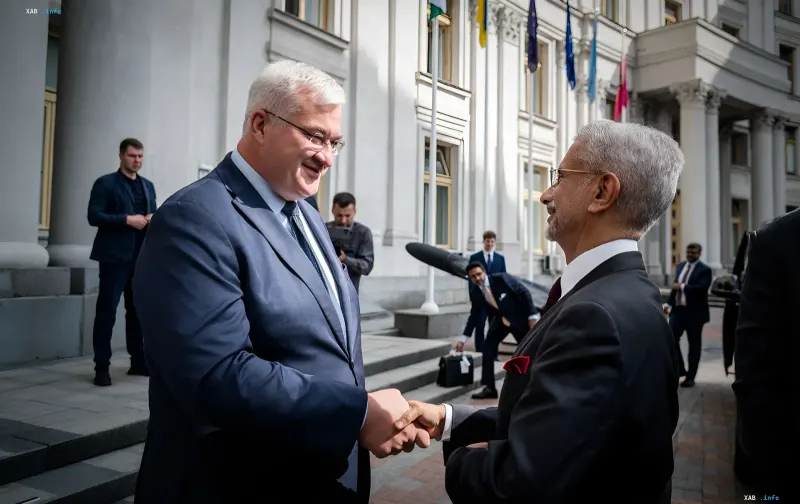
On September 3, 2026, the foreign ministers of Ukraine and India met in Kyiv. Following the meeting, the head of the Indian Ministry of Foreign Affairs, Subrahmanyam Jaishankar, stated that New Delhi intends to join the efforts to end Russia's war against Ukraine, should India's assistance truly be needed. This is reported by RBC-Ukraine. The meeting took place against the backdrop of escalating Indian diplomatic activity around the Ukrainian conflict and became one of the key events of the Indian diplomat's visit to the Ukrainian capital.
Modi's Appeal and New Delhi's Position
At the briefing, Jaishankar recalled a recent public statement by Indian Prime Minister Narendra Modi, who a few days earlier had called on Russian leader Vladimir Putin to stop the war against Ukraine. "We must move from an endless war to the end of the war," Modi addressed the head of the Kremlin. According to Jaishankar, the Indian authorities fully understand that every day of Russian aggression brings more deaths and destruction. At the same time, the minister emphasized, New Delhi recognizes that it is Kyiv and Moscow that must find a way out of the current situation. "But if India can help in any way, we are ready to do so. And that was the main topic of my conversation today with Foreign Minister Sybiha," Jaishankar stated.
Attacks on Merchant Ships and the 'Global South' Crisis
In the Kyiv talks, the parties discussed a number of specific aspects of the conflict. The focus was on the issue of attacks on merchant ships flying various flags. The Indian foreign minister noted that this poses a serious challenge for many countries of the 'Global South,' primarily due to shortages of fuel, fertilizers, and food. "Therefore, we exchanged views on these and related issues," Jaishankar summed up. Thus, the Indian side positions itself not as a mediator between Kyiv and Moscow, but as a potential helper in solving specific humanitarian and economic problems caused by the war.
Context: India Reduces Its Dependence on Russia
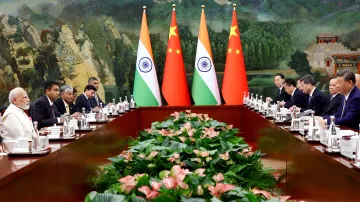
Jaishankar's statements came against the backdrop of a series of changes in Indian policy. It recently became known that India is reducing its imports of Russian oil and actively seeking alternative sources of energy resources. Analysts also note that India, along with Azerbaijan and Botswana, is increasingly distancing itself from Russia. Earlier, RBC-Ukraine reported in detail on the course of the Putin–Modi meeting, at which, according to reports, the situation around Ukraine was discussed. Meanwhile, according to Russian media, as part of a diplomatic tour, Jaishankar held a separate conversation with Russian Foreign Minister Sergey Lavrov, in which he expressed concern over the safety of Indian seafarers and discussed bilateral ties between the two countries.
Contradictory Data
No significant contradictions were found in the provided sources regarding the factual content of Jaishankar's statement. However, it is worth noting a difference in emphasis: the Ukrainian side (RBC-Ukraine) presents the visit as a demonstration of India's readiness to help end the war, whereas Russian outlets (TASS, Kommersant, Mail.ru) focus on Jaishankar's separate contact with Lavrov, where the safety of Indian seafarers and bilateral relations were discussed. This is not a contradiction but a reflection of different angles of the same diplomatic cycle; however, it is important for the reader to understand that the statement on readiness to help Ukraine was made at the briefing in Kyiv, not during the talks with the Russian side.