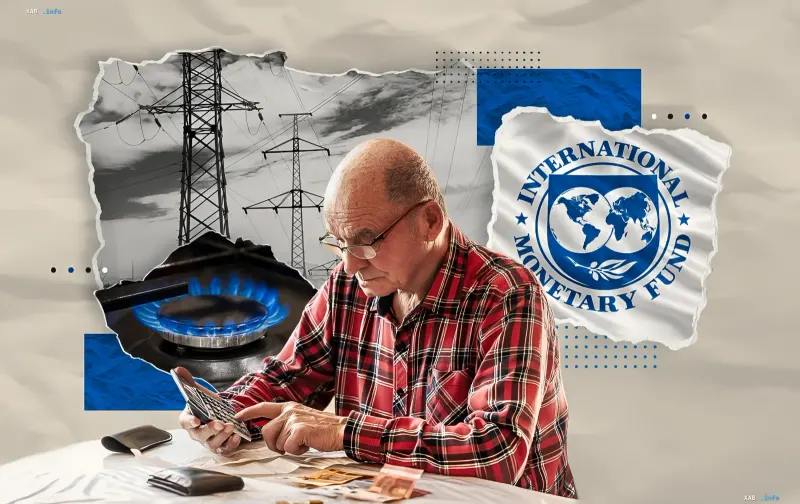
The International Monetary Fund has once again raised one of the most socially and economically sensitive issues before the Ukrainian government: the level of electricity and gas tariffs for households. Within the framework of the current Memorandum between Ukraine and the IMF dated July 2, 2026, the fund published a "Technical Report: Assessing Budgetary Spending on Energy Subsidies and Reform Options" on October 30, 2026, proposing a phased increase in tariffs throughout 2027–2029. According to the IMF, current prices for households cover only 41% of the costs of electricity generation and delivery and 49% of gas, implying massive state subsidization of the sector.
How Much "Cheap" Electricity and Gas Costs the Budget
Fund experts estimated the total general government expenditure associated with public service obligations (PSOs) and similar measures at 3.7% of GDP annually on average for 2024–2026. The largest shares are electricity subsidies (1.8% of GDP) and gas subsidies (1.4% of GDP), with another 0.3% of GDP allocated to subsidized heat supply and 0.2% to purchasing renewable electricity. The PSO mechanism allows state-owned companies—primarily Energoatom and Naftogaz—to sell energy resources to the population below market prices and buy green electricity above market prices, fulfilling a social function at the expense of the budget.
Two Reform Scenarios: From 1.5- to 3-Fold Growth
The IMF report presents two options for transitioning to market prices. Scenario "A" envisages a more radical 2–3 fold growth: the electricity tariff should rise from 4.32 to 9.67 hryvnias per kilowatt-hour, and gas from 7.96 to 22 hryvnias per cubic meter by the third year of the reform. Scenario "B" is more moderate, with a 1.5–2 fold increase, raising electricity to 6.09 hryvnias per kilowatt-hour and gas to 17.2 hryvnias per cubic meter. In both scenarios, the fund proposes a gradual phase-out of public service obligations on the gas and electricity markets. Budgetary savings from the full reform package are estimated by the IMF at 3.2% of GDP under Scenario "A" and 1.5% of GDP under Scenario "B".
The Fund's Arguments: Restoring the Energy Sector After Attacks
The IMF justifies the need for reform by noting that Ukraine's energy sector, damaged by Russian attacks, requires significant capital investments. "Energy tariffs are not keeping pace with the growth of supply costs, which has reduced the resources available for repairs and investments," the fund commented in response to an RBC-Ukraine inquiry. At the same time, the IMF emphasizes that tariff increases must be accompanied by "carefully calibrated" support measures for vulnerable populations, and their design should not rely on outdated statistical data on citizens' social status.
Kyiv's Position: A Moratorium and "Roadmap" Instead of Sharp Price Hikes
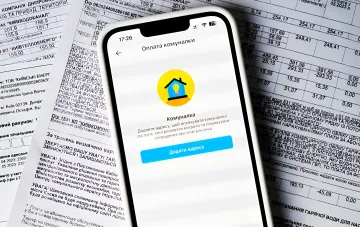
The Ministry of Energy of Ukraine reacted with restraint to the IMF recommendations. The agency stated that raising electricity and gas tariffs for households is not currently under discussion, the moratorium on their increase remains in force, and any changes under current legislation are only possible after martial law is lifted. The Ministry of Energy noted that it has reviewed the fund's recommendations, but the final decision rests with the state. The ministry calls the implementation of an effective targeted family support model its priority: a long-term "Roadmap" for energy sector reform is being developed, as well as a single online platform based on a "single utility bill" principle integrated into state registers via the Diia app, concentrating all accounts and state support in a single window.