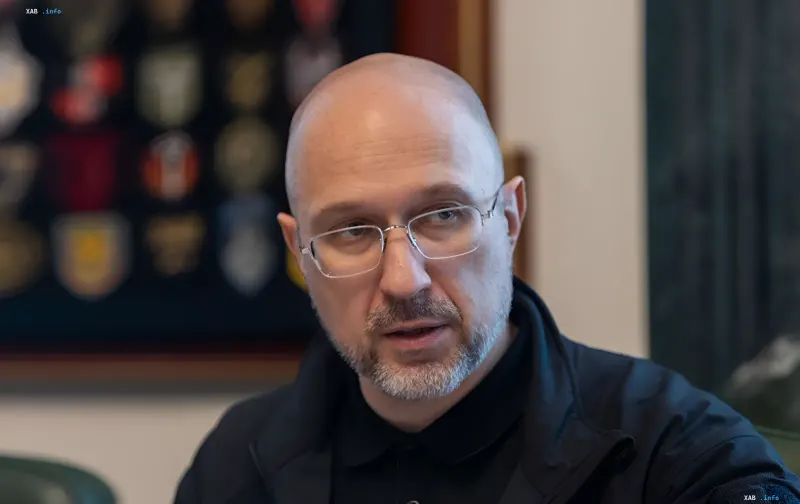
First Deputy Prime Minister — Minister of Energy of Ukraine Denys Shmyhal, during the question hour to the government in the Verkhovna Rada, stated that electricity tariffs for residential consumers in the country will remain unchanged. According to him, the price for the population is fixed by the state and will remain in effect for at least until the next heating season. Thus, in the coming months, Ukrainians should not expect an increase in the amounts in their utility bills for electricity.
Fixing tariffs for the population
The Minister explained that for people, the price of electricity is a fixed amount that the state consciously keeps at an unchanged level. "For people, the price is fixed. This is, accordingly, not violated, the amount fixed by us until practically, I think, this heating season, until next year, our electricity prices will remain unchanged for people," Shmyhal noted. The wording with the proviso "I think" and the link to the heating season indicates that this is a current political decision, not a long-term legislative freeze.
Market conditions and integration into ENTSO-E
In his speech, the head of the Ministry of Energy emphasized that Ukraine today is part of the European energy market and a full voting member of the European ENTSO-E system. Under these conditions, according to his logic, the country lives in a market environment: for business, the price of electricity is formed by the market, since electricity is a market product. This is why the tariff fixation applies exclusively to residential consumers, and not to industry and the commercial sector, which purchase energy at market rates.
Water issue and infrastructure protection
Separately, Shmyhal commented on water tariffs, reminding that they are formed by local authorities, are of a market nature, and include all components of the cost of water supply and sewage. In the context of the resilience plan, the Minister stated the need to protect water supply, water treatment, and sewage stations, emphasizing that in conditions of hostilities, the priority becomes concentrating resources on protecting this infrastructure from enemy strikes.
Memorandum with the IMF and reform roadmap
The Minister's statement came against the background of discussions on the conditions of the memorandum with the International Monetary Fund, where the possibility of Ukraine's gradual transition to market pricing in energy after the end of martial law is being considered. Among the discussed directions of reforms is the phased change of tariff policy. At the same time, earlier the Ministry of Energy refuted the widespread information about an allegedly fixed increase in tariffs for gas and electricity from 2027, explaining that the document provides for the preparation of a roadmap for reforming the energy sector only by the end of 2026 — that is, planning and analytical work, and not making decisions to change the cost of utility services.
Contradictory data
Available sources show discrepancies in the interpretation of the timing and content of agreements with the IMF. On the one hand, Shmyhal verbally linked the fixation of tariffs for the population to "this heating season" and "until next year," using indefinite formulations. On the other hand, the memorandum with the IMF talks about preparing a reform roadmap by the end of 2026 and a phased transition to market pricing after the end of martial law. Earlier, the public sphere also featured a version of a fixed tariff increase from 2027, which the department officially refuted. Thus, there is currently no unequivocal answer to the question of when and to what extent tariffs may change after the current heating season: the government's position boils down to the fact that in the coming months, prices for the population will remain unchanged, and further dynamics will be determined by the results of analytical work and the end of martial law.
To summarize, the Ukrainian government confirms that in the current heating season, residential consumers will not face an increase in electricity tariffs. At the same time, the question of the long-term pricing trajectory remains open, which, according to the conditions of interaction with the IMF, should be enshrined in the reform roadmap by the end of 2026.