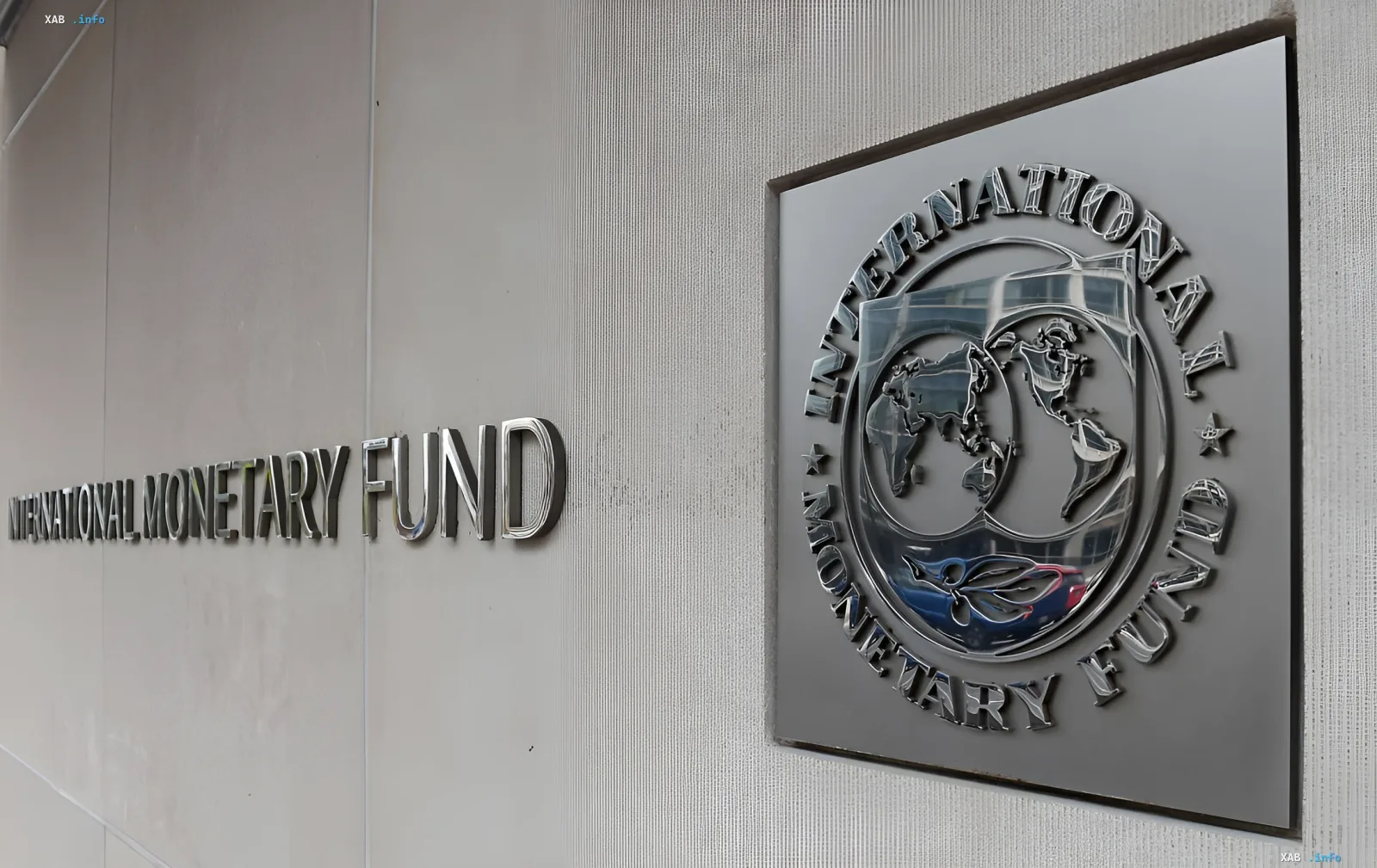
The International Monetary Fund mission led by Gavin Gray has begun working meetings with representatives of the Ukrainian authorities and other stakeholders. This was reported by RBC-Ukraine, citing the IMF's representative office in Ukraine. The visit marks the latest stage of Kyiv's engagement with the Fund under the existing Extended Fund Facility (EFF) program and is aimed at assessing the current state of the economy, the progress of reforms, and the preparation of key financial documents for the medium term.
Talks Agenda: From Macroeconomics to Structural Reforms
During the visit, IMF representatives intend to assess the outlook for the Ukrainian economy and discuss Kyiv's compliance with its commitments under the EFF program. The parties will pay particular attention to the macroeconomic and structural transformations that Ukraine has committed to carrying out as part of its cooperation with the Fund. The discussions cover a wide range of economic policy issues — from fiscal discipline to institutional reforms, without which a sustainable economic recovery is impossible amid ongoing external shocks.
The 2027 Budget Draft: The Key Financial Document on the Table
Another key topic of the working sessions will be the draft state budget of Ukraine for 2027. The parties will review the main parameters of the upcoming financial document and the related economic issues. For Kyiv, this is a particularly sensitive moment: the 2027 budget will be formulated in conditions where military spending remains the dominant line item, and the volume of aid from international donors and credit institutions directly depends on progress in reforms. The IMF typically requires borrowers to clearly link budget parameters to macroeconomic forecasts and to establish automatic mechanisms for stabilizing the deficit.
Context: First EFF Review and a $690 Million Disbursement
The working visit by Gray's mission comes against the backdrop of the recently completed first review of Ukraine's Extended Fund Facility program. Following this review, the country is set to receive an additional $690 million, bringing the total amount drawn under the EFF to $2.2 billion. This disbursement is critical for covering the state budget deficit and servicing external debt in conditions of Kyiv's limited access to international capital markets.
Contradictory Data
Nevertheless, discrepancies in assessments of the progress in meeting the program's conditions have been noted in the public information space. In particular, a number of Ukrainian and Russian media outlets (notably a publication on news.mail.ru) indicated that Ukraine had failed to meet one of the IMF loan conditions, which called into question the timeliness of the next disbursement. Meanwhile, according to RBC-Ukraine and the IMF's own representative office, the first review was completed and the $690 million disbursement was effectively approved. A possible explanation: the issue concerned an interim breach of a specific technical condition that was resolved before the Fund's Board of Directors made its final decision. Nevertheless, it is important for readers to understand that even with the formal approval of the disbursement, questions of compliance discipline remain at the center of Gray's mission's attention and may affect the timing and terms of subsequent reviews.
What's Next: Expectations and Risks
The working visit by the IMF mission will serve as a benchmark for subsequent decisions on expanding or adjusting the EFF program. For Ukraine, the success of the talks is determined by its ability to demonstrate concrete results in structural reforms — from judicial and anti-corruption to tax and energy reforms. For the Fund, in turn, the key issue remains the sustainability of the fiscal trajectory: with high military spending and dependence on external aid persisting, the macroeconomic model must include mechanisms that allow avoiding the accumulation of hidden debt risks. The outcomes of Gavin Gray's mission are expected to be announced upon the conclusion of the working sessions.