
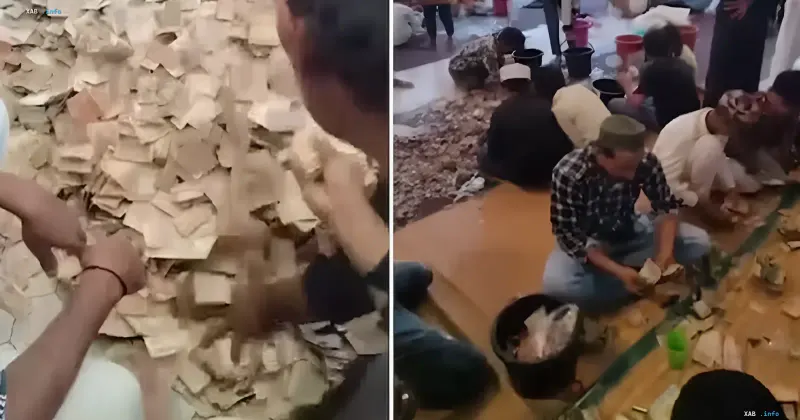
The passing of an elderly woman from the Indian town of Mandya, Karnataka, has shocked her relatives and local residents. For four decades, she led the life of a beggar, daily asking for alms on streets and crossroads, and invariably positioning herself near the local mosque on Fridays. None of those around her, including close relatives who periodically visited and brought her food, had any inkling of the massive secret hidden behind the doors of her modest rented dwelling.
The Mysterious Locked Room and Sudden Demise
Nurunissa, also known to locals as Hoor and Noor, was one of six children in her family. She never married and for a long time shared a roof with her unmarried older sister. Following the latter's death about two years ago, the woman remained living alone. Her nephew and grandson noted that there was always one room in the house that the owner kept under a heavy lock and categorically let no one enter, preferring to talk with guests exclusively on the threshold. The tragic climax occurred when neighbors noticed her absence from her usual spot for two days.
Large-Scale Finds and Counting Process
Anxious townspeople entered the house and found the elderly woman unconscious, after which she was rushed to the hospital where doctors pronounced her dead. Real surprises awaited relatives and volunteers during the cleaning of the premises when that very secret room was opened. Inside, there were more than thirty sacks filled to the brim with thousands of coins and small denomination banknotes of 10, 20, and 50 rupees. Video footage of the sorting and counting process instantly spread across social media, sparking a massive resonance and numerous rumors about the deceased's fabulous fortune.
Contradictory Data
Despite the fact that the official count, which took two days of joint efforts by the family and mosque representatives, recorded a final amount of 840,000 rupees (8.4 lakhs), serious discrepancies emerged in the information space regarding the further fate of the funds. Some authoritative publications claim the money was handed over for safekeeping and distributed between her two brothers, while other sources insist on the family's plans to direct these savings toward charity and supporting needy relatives.
Expert Context and Social Conclusions
This unprecedented case vividly demonstrates the deep contrast between the external social vulnerability of marginalized population strata and their hidden internal resources. Over years of street begging, Nurunissa created a unique phenomenon of accumulation, which has become the subject of active discussion among sociologists and psychologists studying phenomena of extreme thrift and psychological trauma in lonely individuals.