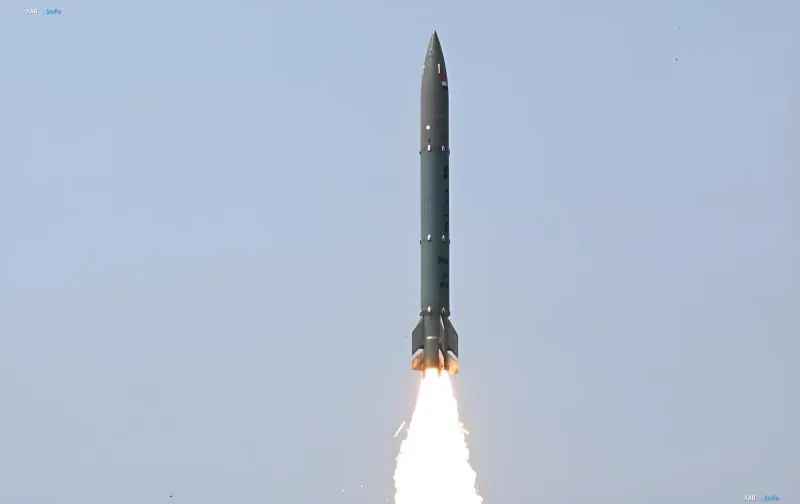
India's Defence Research and Development Organisation (DRDO) has successfully conducted flight tests of the indigenously developed Pralay quasi-ballistic missile. The launch took place off the coast of Odisha state, the Indian Ministry of Defence announced, citing a statement by Defence Minister Rajnath Singh. According to the department, the missile demonstrated its claimed performance, and all objectives set for the test were achieved.
Tests off the coast of Odisha
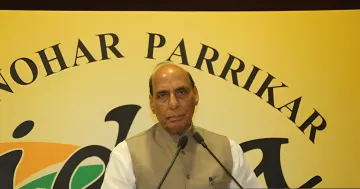
As clarified in the Defence Minister's message, the launch was carried out as part of user evaluation trials. "Successfully conducted flight tests of the Pralay missile—an indigenously developed system—off the coast of Odisha," Rajnath Singh stated. According to him, all set targets were successfully achieved, which is confirmed by data received from various tracking instruments at the test range. An official DRDO statement also noted that the test took place as part of customer evaluation tests and all envisaged tasks were completed, which was verified by recorded data.
Characteristics of the Pralay missile
Pralay is a solid-fuel surface-to-surface missile with a stated flight range of 150 to 500 kilometers. The system is equipped with a solid-propellant engine, a modern navigation system, and integrated onboard electronics. It is the combination of these elements that allows the missile to maintain controllability throughout its flight and precisely hit designated targets within the declared radius.
What makes Pralay "quasi-ballistic"
A key feature of quasi-ballistic missiles, which include Pralay, is the ability to travel along a lower trajectory than conventional ballistic missiles and to perform in-flight maneuvers. Such maneuverability makes it difficult for enemy air defense systems to detect and intercept the missile, increasing its combat effectiveness compared to classical ballistic systems with fixed trajectories.
Strategic context
The Indian Ministry of Defence emphasizes that the successful launch represents another important step in strengthening the country's own defense capabilities. The emphasis on "indigenous production" reflects the course toward developing domestic weapons and reducing dependence on foreign supplies. Thus, the Pralay tests fit into the broader context of building up India's missile-nuclear and defense capabilities, where the development and refinement of domestic systems are viewed as an element of strategic autonomy.