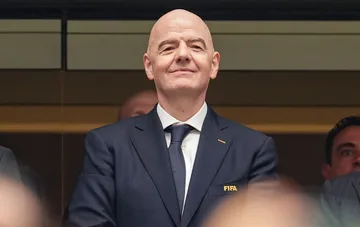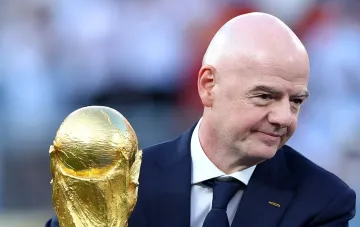
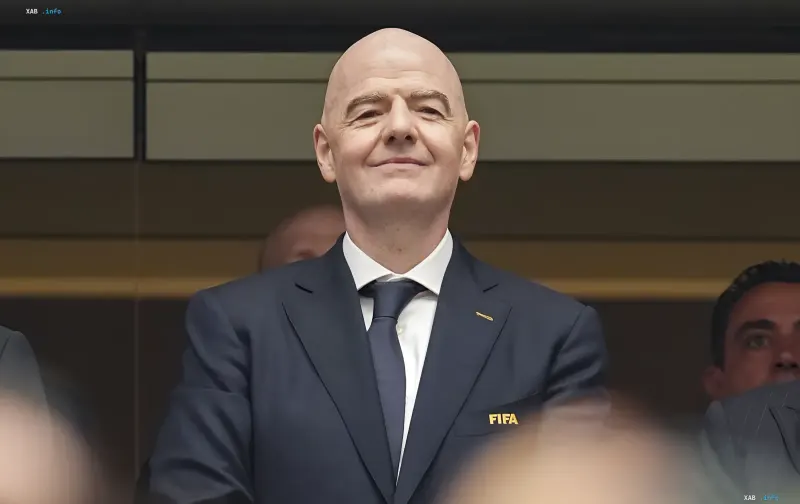
World football stands on the brink of the most radical change in its history. FIFA President Gianni Infantino has presented an ambitious plan that has already triggered a stormy reaction and harsh criticism from UEFA, national confederations, and prominent officials. The essence of the proposal is simple yet shocking: creating a separate commercial structure to manage World Cup rights, followed by the sale of a stake to private investors.
New FIFA Forward Enterprise Structure
At the heart of the reform is the creation of a new company — FIFA Forward Enterprise (FFE). This new business will take over the management of the organization's most valuable commercial assets. Once the structure is formed, FIFA intends to sell a minority stake in the company to private investors.
According to the organization's own estimates, the value of the new business could be around $20 billion. Selling a stake will allow the attraction of over $4 billion in investments. Infantino assures that sporting control will remain with FIFA, and investors will not influence decisions regarding the hosting of tournaments.
Financial "Bait" for Federations
The project has a very simple and effective "bait" for voting. Each of the 211 national federations could receive a one-time payment of about $20 million if they support the initiative. For smaller football nations, this is a huge sum that can be used for infrastructure development, youth football, or national championships. This is why Infantino expects to secure a majority of votes.
War with UEFA: "Football is not a commodity"
The Union of European Football Associations (UEFA) immediately subjected the idea to harsh criticism. The main argument from the Europeans is very simple: football is not a commodity that can be sold to investment funds. The UEFA statement included a phrase that quickly became the main quote of the entire discussion: "Football does not belong to FIFA. None of us owns football".
The European organization was also outraged by the procedure itself. According to UEFA, the majority of FIFA Council members were not even fully informed about the project before its presentation.
Trend towards Commercialization
Formally, FIFA is not selling the World Cup itself; it is granting the right to earn money from it. However, any private investor invests billions for only one goal — maximum profit. If they buy a stake in the business, it is logical to expect that this business will generate more revenue.
How can revenues be increased? More matches, more tournaments, more money. Recent years show a clear trend. During Infantino's tenure, the World Cup has already expanded from 32 to 48 teams. The Club World Cup has transformed into a major tournament with 32 teams. Simultaneously, talks regularly arise about more extensive reforms: holding the Club World Cup more frequently and possibly expanding the World Cup to 64 participants after the 2026 tournament.
Critics' Concerns
For business, this is logical: more matches mean more TV broadcasts, advertising contracts, ticket sales, and sponsorship money. But for football, this means an even greater number of games in the calendar, player burnout, and the gradual devaluation of the tournaments themselves.
Critics respond: even if legal control remains, economic pressure will not disappear. When a company is valued at $20 billion, its management inevitably starts thinking not only about football development but also about financial metrics. This, according to opponents, could change the logic of future decision-making.
Conclusion of a Decade of Reforms
Over the last ten years, Infantino has significantly changed international football. He expanded the World Cup, reformed the Club World Cup, increased the number of matches in the calendar, and raised FIFA's commercial revenues. Now he proposes to take the next step — attracting private capital to the most valuable football product.
This is why the current discussion is not just about selling a stake in a new company. It is about whether the World Cup will remain a sporting event existing primarily for the sake of football. Or will it increasingly become a business project where financial indicators gradually become no less (or even more) important than the game itself.