Intel has officially introduced a major update to its free utility for monitoring and deep analysis of gaming performance — PresentMon version 2.6.0. The primary technological achievement of this release is an unprecedented reduction in CPU load caused by the software itself, which is especially critical for modern resource-intensive games and mobile platforms.
Optimization and CPU Load Reduction
Thanks to a fundamental redesign of system event processing algorithms via the ETW (Event Tracing for Windows) mechanism, developers managed to reduce the utility's CPU resource consumption by up to 78%. This optimization ensures that background monitoring no longer distorts benchmark results, creating clean and highly reliable conditions for testing computer hardware.
New Game Experience Overlay and Expanded Telemetry
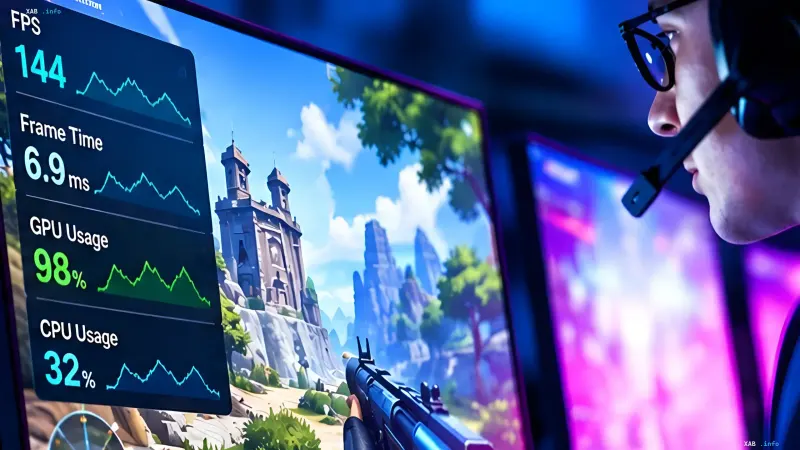
In addition to performance optimization, PresentMon 2.6.0 debuts a brand-new screen overlay preset called Game Experience. This tool focuses on displaying metrics that directly affect subjective gameplay fluidity and overall visual stability, rather than just basic frames-per-second counters. Furthermore, the utility can now clearly explain why certain metrics are unavailable in specific games.
Deep Analysis Tools for Enthusiasts
Optimization specialists and developers will appreciate the new deep monitoring features, including detailed tracking of PSO compilation in the DirectX 12 interface. The system now records the duration and frequency of such operations, assessing their impact on overall PC responsiveness. Improvements also affected simultaneous operation with multiple graphics adapters and frame output handling.
Contradictory Data
Despite the general technical consistency across industry sources, some foreign reviews emphasize varying degrees of efficiency in load reduction depending on specific processor architectures. While older multi-core desktop chips demonstrate the claimed peak savings of up to 78%, ultrabooks with limited thermal design power (TDP) may see actual CPU resource gains vary in a more modest range from 55% to 65%, which is still an outstanding result for a background utility.