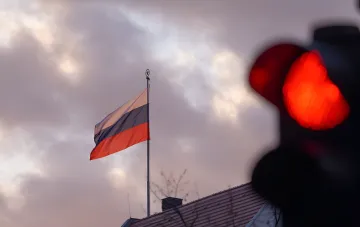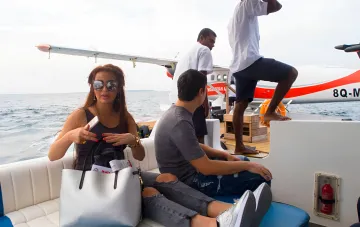
The market for investment citizenship is experiencing an unprecedented shift. Russians, facing the closure of traditional doors to Europe and the Caribbean, have sharply reoriented towards obtaining a second passport in island nations. The new favorites are Vanuatu and the tiny African Republic of São Tomé and Príncipe.
Frenzy Around Island Nations
Statistics from the first half of 2025 demonstrate an explosive growth in interest in these jurisdictions. The number of citizenship deals for Vanuatu among Russian citizens has tripled compared to the same period last year. No less impressive figures are recorded in São Tomé and Príncipe. The investment citizenship program there only launched at the end of 2025, but within six months, Russians concluded as many agreements there as in Vanuatu.
For such small territories, we are talking about dozens of issued passports, creating a real frenzy. The key factor in the success of these countries is the possibility of remote document processing. The entire process takes from two to four months, which is critical for those who cannot move freely around the world.
A Tool Against Sanctions, Not a Key to Europe
Experts emphasize that buyer motivation has changed. These passports do not grant the right of free entry to the USA or European Union countries. Their main value lies elsewhere: they significantly simplify the process of obtaining long-term visas and help lift the burden of sanctions from Russian businesses.
The trend is confirmed by a change in the goals of purchasing real estate. Currently, more than two-thirds of Russians (68%) purchase foreign real estate exclusively for the sake of residency status or citizenship. Just two years ago, this figure was only 42%. At the same time, interest in buying housing for actual residence is plummeting: in the first half of the year, it dropped by 23%, and by the end of 2025, the decline amounted to 38%.
Where the Money Is Going: Europe and Asia
Despite the boom in island programs, Europe remains the main direction for investments, accounting for 47% of all deals. Greece remains the absolute leader — the only EU country (besides Cyprus) where "golden visas" are still in effect.
Second place is held by Southeast Asia (24%), including Thailand and Indonesia. The Middle East holds the third position (7%), although demand for the UAE has dropped sharply by 40% against the backdrop of the war in Iran.
At the same time, traditional destinations are practically inaccessible. "Golden passport" programs in Caribbean countries (Grenada, Dominica, Antigua and Barbuda, Saint Lucia) have completely closed to Russians after the start of the full-scale war in Ukraine. Turkey, previously popular, sharply tightened the rules for issuing residence permits for investment from 2023. Turkey's share in the market has fallen to 5%, and obtaining citizenship has become practically impossible.
An Iron Curtain for Tourists
The narrowing of choices in the field of citizenship is directly related to the tightening of the visa regime. The European Commission continues to strengthen restrictions. If before the start of the invasion, Russians received about four million Schengen visas annually, in 2025 this figure decreased to approximately 500,000. Multiple-entry visas have been largely replaced by single-entry ones.
A number of countries have completely stopped accepting documents from Russian citizens. The list includes Poland, Lithuania, Latvia, Estonia, the Czech Republic, Denmark, Belgium, Finland, and the Netherlands. Other states have introduced complex requirements: Germany requires proof of a bank account in the EU, while Slovenia requires a valid flight ticket. Norway has banned entry to Russian tourists without necessity, and Cyprus has cancelled the simplified visa regime and introduced full payment of the consular fee.
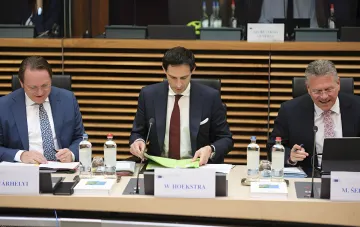
The situation is exacerbated by political pressure. Recently, Polish ministers Radosław Sikorski and Marcin Kerwiński supported an initiative by 11 countries demanding that the European Commission further strengthen control over the issuance of Schengen visas to Russians. Under these conditions, the search for alternative jurisdictions becomes a matter not of luxury, but of necessity for Russian citizens.