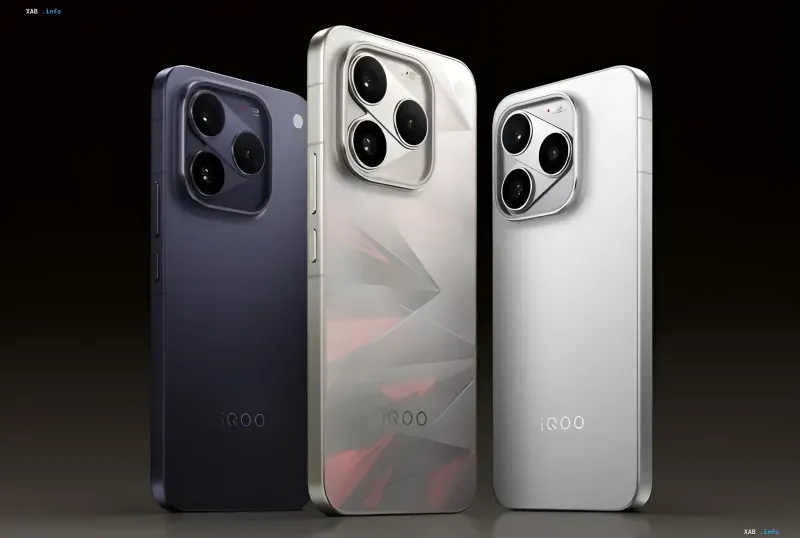
iQOO has introduced the iQOO 16 smartphone in China, positioning it as a high-performance successor to last year's iQOO 15 model. The new flagship is powered by the advanced Snapdragon 8 Elite Gen 6 Extreme processor, the proprietary iQOO Q4 gaming chip, and a record-breaking battery capacity.
Display and Performance
The iQOO 16 features a 6.85-inch Samsung M16 AMOLED display with a resolution of 3168 × 1440 pixels and a 165 Hz refresh rate. The screen supports an instant touch sampling rate of up to 5000 Hz, a global brightness of 2800 nits, and a peak local brightness of 10,000 nits. At the core of the device is the flagship Snapdragon 8 Elite Extreme Gen 6 processor, built on TSMC's 2nm process and operating at frequencies up to 5.01 GHz, paired with LPDDR5X Ultra Pro RAM and UFS 4.1 storage.
Battery Life and Camera Capabilities
The 8400 mAh battery utilizes fifth-generation silicon-anode technology and supports 100W wired charging as well as 40W wireless charging. The rear camera setup includes a 50MP primary sensor (OmniVision OV50Q) with optical image stabilization, a 50MP periscope telephoto lens (Sony LYTIA 600) with OIS, and a 50MP ultrawide camera, while the front features a 32MP selfie shooter.
Software and Pricing
The iQOO 16 runs Android 17 with the custom OriginOS 7 interface, offering advanced IP68 and IP69 dust and water resistance, an ultrasonic in-display fingerprint scanner, and modern wireless connectivity. Pricing in China starts at 5,999 yuan (approx. $900) for the base version and reaches 8,499 yuan (approx. $1,275) for the 1TB variant. Information regarding a global release has previously surfaced in the EEC database, though official international launch dates remain unannounced.
Controversial Data
While official specifications and major sources position the new device as an uncompromised flagship with cutting-edge screen and battery specifications, some independent reviews and preliminary reports spark discussions regarding the final availability of the global version. Official details on the international rollout timeline are currently absent despite EEC database listings, and various analysts debate the model's positioning as a relatively budget-friendly flagship against market competitors.