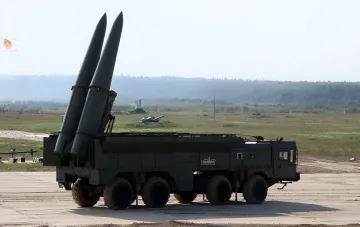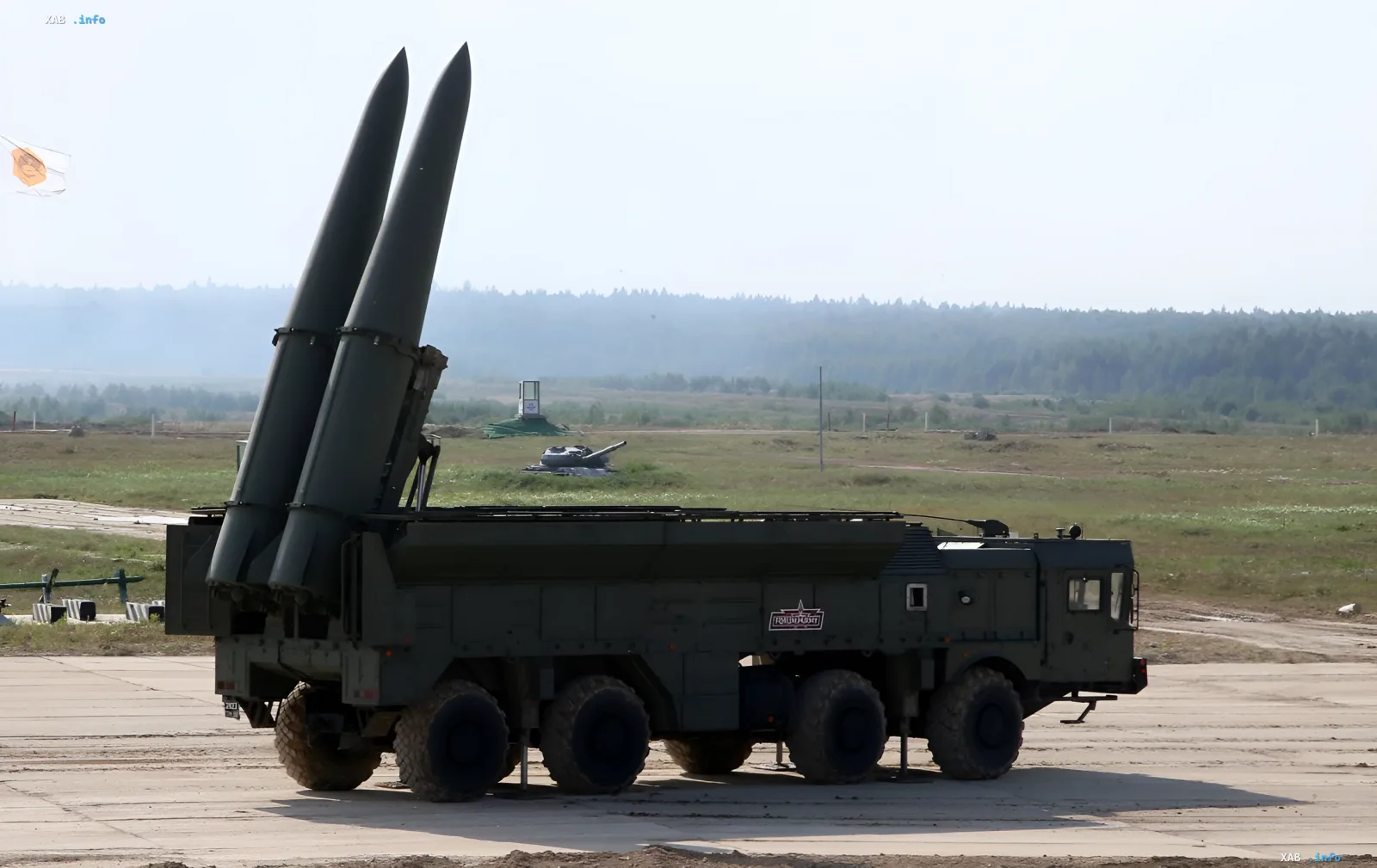
Aviation expert Konstantyn Kryvolap, in a comment to RBC-Ukraine, analyzed the current characteristics of the ballistic missiles of the Iskander system and assessed how the difficulty of intercepting them has changed since the appearance of modified versions. According to him, for years the calculations of Ukrainian military personnel were based on the range of the Iskander-M declared by Russia at 500 km, however, according to GUR data, the actual range of the standard 9M723 missile is around 390 km. At the same time, a case of using the 9M723-2 modification at a range of up to 550 km has been recorded. Kryvolap emphasized that no fundamental changes in the ballistics that would make the missile uninterceptable have occurred.
Real range versus declared range
The expert recalled that earlier information had appeared about tests of the Iskander-1000 missile with a range of up to 800 km, however, no confirmed cases of its combat use since December 24 have been recorded. According to Kryvolap's assessment, the missile's launch weight is 3,800–4,600 kg, its length is 7.3 meters, the body diameter is 920 mm, and the warhead mass is about 480 kg, although for strikes at a range of up to 550 km, several lighter variants of the warhead block may be used.
Iskander-1000 and preparation for FP-7
According to the expert, the absence of confirmed use of the Iskander-1000 rather indicates that Russia is preparing at a rapid pace a response to the appearance of Ukraine's FP-7 ballistic missiles, capable of striking Iskander launchers. In his opinion, this explains the interest in increasing the range and refining the guidance, rather than in the mass combat use of the new modification.
Vulnerability of launchers
Kryvolap noted that at a range of 390 km, an Iskander launcher striking Kyiv would have to be located in the Bryansk region, approximately 150 km from the border — at a distance where Ukrainian reconnaissance and strike drones are capable of detecting and destroying such targets. According to his data, over the past one and a half months, at least three launchers were hit, including the Bastion system in Crimea, which uses Oniks and Tsirkon missiles. Due to the threat from suicide drones, Russia, according to the expert, was forced to move some launches over the Kyiv region farther from the Bryansk region.
Interception: trajectory and Patriot
Regarding the interception itself, Kryvolap noted that the difficulty of shooting down the Iskander has not fundamentally changed: the missile flies on a quasi-ballistic trajectory at a medium altitude of about 50 km, is capable of maneuvering within 300–400 meters of the main trajectory, and withstands a load of 20–30. Patriot systems, according to him, usually begin tracking the target at a distance of about 100 km and attempt to capture it for destruction at around 25 km, and Ukrainian air defense, in particular PAC-3, successfully handles this in most cases.
Technical modifications and foreign components
Separately, the expert mentioned the Bora-M launcher, which differs from the basic model with more powerful rails and a reinforced structure due to a more powerful engine, however, there are no fundamentally new solutions here. The missile also receives an improved guidance system — optical correlation DSMAC seeker heads or radar heads resistant to electronic warfare effects, as well as faster processors based on foreign components from Germany, Switzerland, the USA, and Taiwan. Some technical solutions, according to Kryvolap, were borrowed by the Russians from the North Korean KN-23 missiles. Earlier, GUR revealed the design and manufacturers of the Iskander-K missile, naming Novator of the Almaz-Antey concern as the main developer of the cruise missiles of this system.
Contradictory data
There are inconsistencies in the statements of the parties and in the experts' assessments regarding key figures. On the one hand, Russia declares the range of the Iskander-M at 500 km and actively mentions tests of the Iskander-1000 with a range of up to 800 km. On the other hand, according to GUR data, the actual range of the standard 9M723 missile is about 390 km, and the confirmed use of the 9M723-2 modification has been recorded only at 550 km. Moreover, despite reports of tests of the Iskander-1000, no confirmed cases of its combat use since December 24 have been recorded, which casts doubt on the fact of its actual combat use. This is precisely why conclusions about the uninterceptability of the updated system remain controversial: according to Kryvolap's assessment, Ukrainian air defense as a whole successfully intercepts both standard and modified missiles.