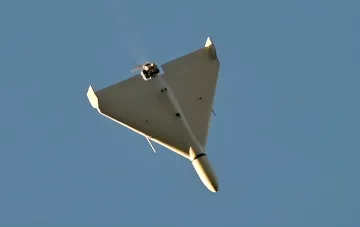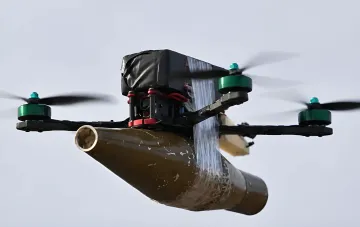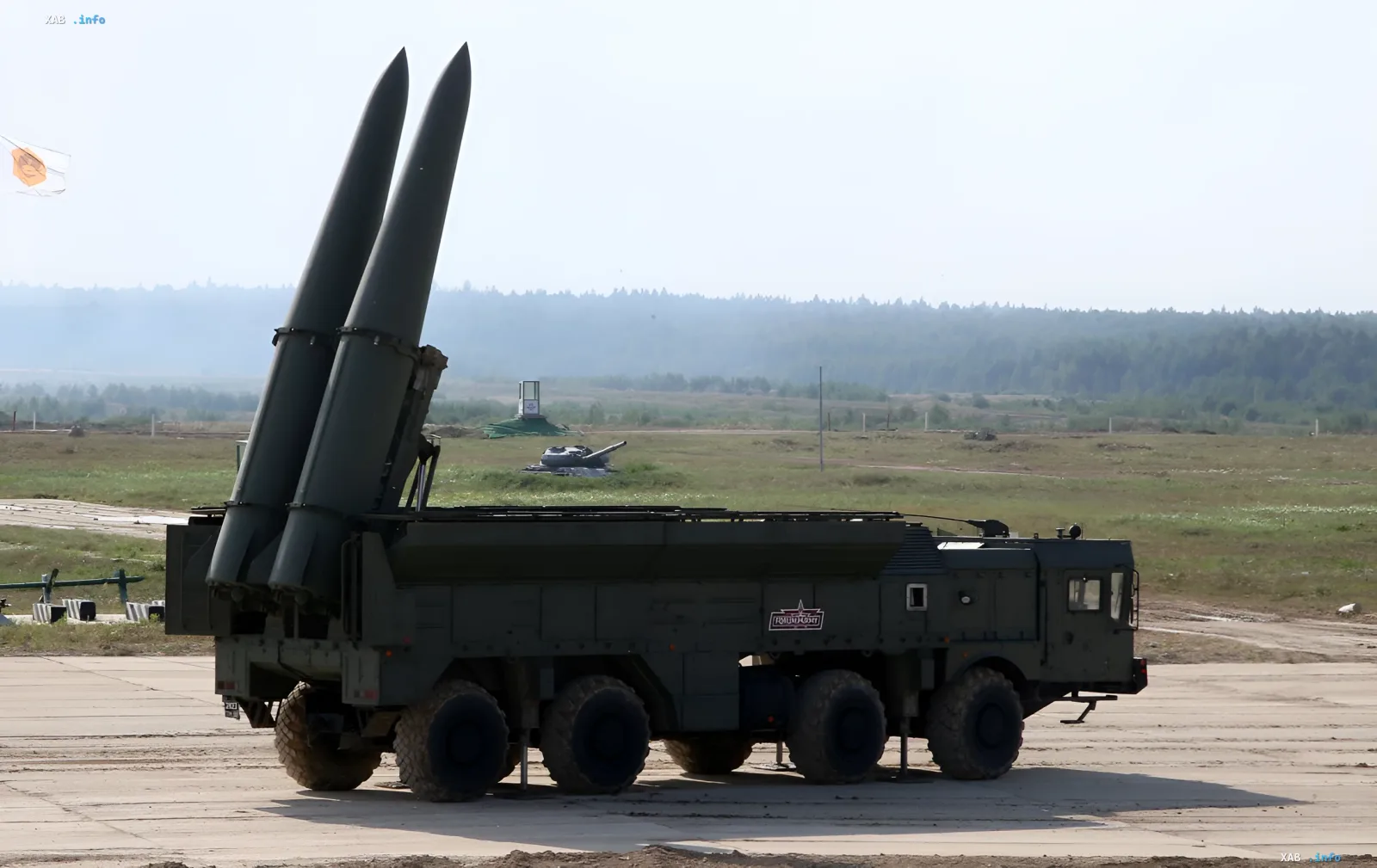
Ballistic and aeroballistic missiles, as well as jet-powered drones, pose a significantly harder challenge for electronic warfare (EW) systems than ordinary drones. This was explained in an interview with RBC-Ukraine by Tymofiy Yurkov, co-founder of Contra-Drone, a manufacturer of EW systems. In his words, the key difference lies in flight altitude: a ballistic missile locks onto its target at altitudes where most EW systems simply cannot reach, and the signal from navigation satellites arrives under more favorable conditions than for a low-flying UAV.
Ballistics: GNSS Vulnerability at High Altitude
Yurkov explained that ballistic missiles initially use the GNSS system for target guidance, which theoretically makes them vulnerable to jamming. In practice, however, it is extremely difficult to engage them: the flight altitude is such that the EW signal either does not reach them or is not powerful enough to create effective interference. The expert also noted that even a deviation of the missile from its intended course by 20–40 meters could allow the target to avoid a direct hit. The problem is compounded by the tactic of mass launches: Russia often directs five to six, and sometimes around ten, missiles at a single target, so even with dispersion, one or two of them are capable of striking the object.
Aeroballistics and Non-Ballistic Trajectories: Slightly Easier, but Still Difficult
According to Yurkov's assessment, the situation with missiles that have a non-ballistic trajectory is somewhat simpler. If a missile flies at an altitude of 2–6 km, jamming capable of deflecting it from its course can already be applied. Nevertheless, such missiles are significantly better protected against the effects of EW than ordinary UAVs, and their guidance error is usually smaller. This means that even partial jamming does not guarantee a complete disruption of the attack.
Guided Bombs: Linear Trajectory as a Factor, but Warhead Mass as a Risk
As for guided aerial bombs (GABs), the situation for EW systems looks somewhat more favorable. They have a lower flight altitude and a more linear trajectory, which can be calculated and met in a timely manner with jamming radiation directed at the corresponding section. "In most cases, timely response and timely jamming of GABs using EW prevents a direct hit on the target," Yurkov emphasized. However, he warned: GABs carry a substantial mass of explosive, so even a deviation of 20–30 meters does not always guarantee that the object will not be damaged or destroyed by the shock wave and fragments.
Tactics of GAB Use and the Role of Air Defense
The range of GAB use is significantly shorter than that of ballistic and aeroballistic missiles: for their release, a Russian aircraft needs to be approximately 40–50 km from the target. This creates a substantial risk for it due to the operation of Ukrainian air defense. As a result, the main targets for GABs remain frontline cities, where it is harder for Ukrainian forces to bring air defense systems close to the release zone. Thus, the effectiveness of EW against GABs largely depends on the timeliness of detection and the speed of the operators' reaction.
Context: Escalation and Adaptation
Yurkov's expert opinion fits into a broader context of adaptation by both sides of the conflict. Earlier, RBC-Ukraine reported on how interceptor drones hunt jet-powered "Shaheds" and why this task is becoming increasingly difficult as the speed of hostile UAVs grows, as well as on whether drone-missiles like the "Banderol," which in flight profile approach cruise missiles and jet drones, can be effectively shot down. The combination of these factors — increasing speeds, changing trajectories, mass launches — makes countering a multi-vector air threat one of the key challenges for Ukrainian defense in 2026.