Amid mass drone attacks, the question of protecting rear-area and frontline cities increasingly comes down not only to physically intercepting drones, but also to suppressing their navigation. In an RBC-Ukraine article, Contra-Drone co-founder Tymofiy Yurkov explained exactly how electronic warfare (EW) systems affect the ballistics of 'Shaheds,' 'Bandierol' drone-missiles, and cruise-guided aerial bombs (KABs), and why in the modern confrontation it is more important not to shoot down every target, but to deprive it of the ability to hit its programmed object precisely. In his words, EW can be compared to an 'invisible missile' within an air defense complex: it affects the target without physically destroying it.
Decoys and the 'Invisible Missile' of EW
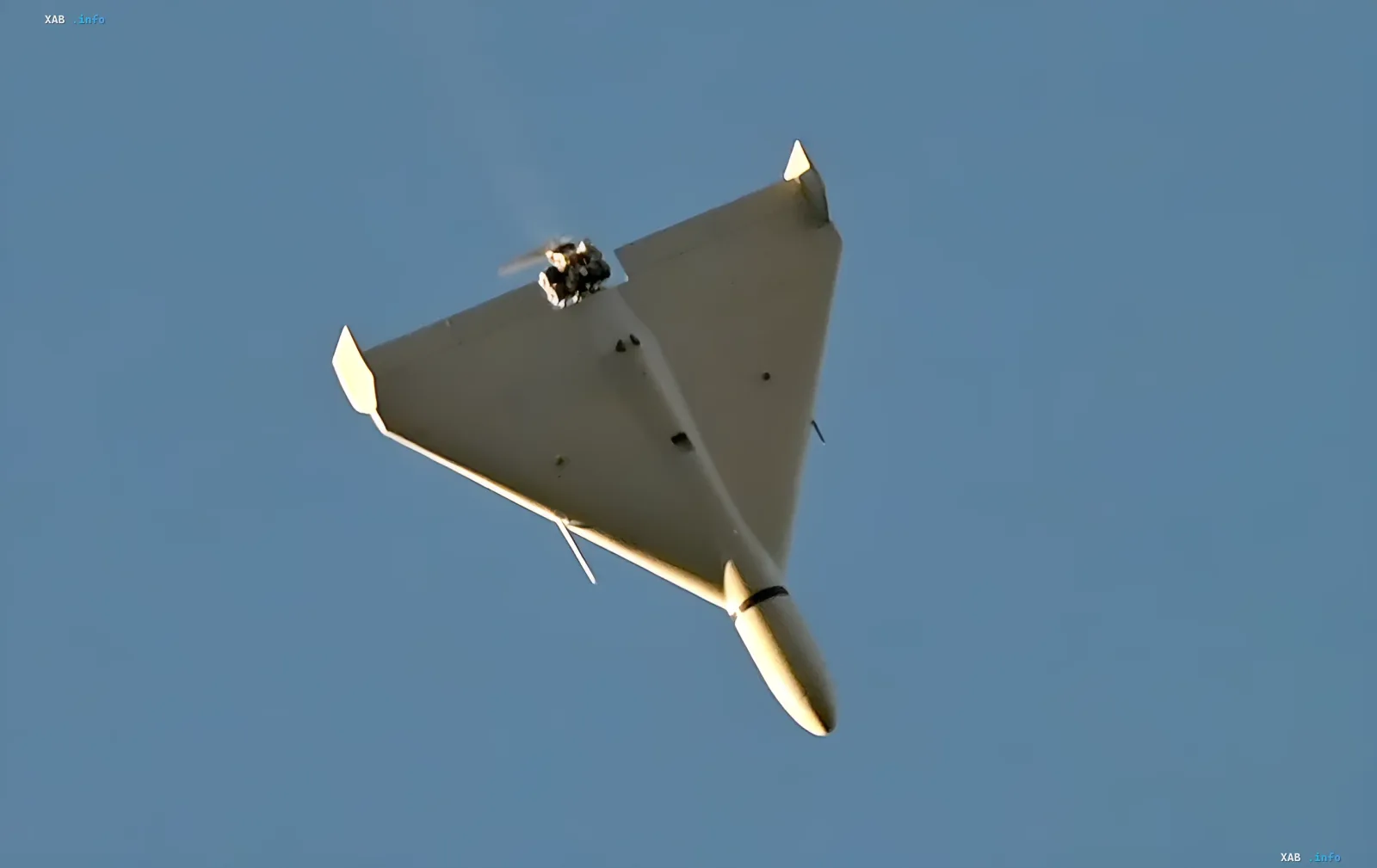
The key problem of mass attacks, according to Yurkov, is the large number of false targets. In his words, for every hundred real 'Shaheds' there may be up to 200 fake drones, used to distract Ukrainian air defense and expend expensive interceptors. At the same time, as the expert notes, such targets do not necessarily have to be destroyed: if they are equipped with a cheaper and less protected navigation system, they can simply be diverted from their programmed route using electronic countermeasures. 'They need to be identified, but not necessarily shot down. They can simply be diverted by the effective operation of EW systems,' Yurkov explained. Thus, even if conventional air defense cannot intercept all drones, EW can prevent them from reaching their target precisely.
Diversion Error and Dependence on Weather
The effectiveness of diversion depends directly on meteorological conditions. According to Yurkov, under the worst conditions the guidance error can be 200–300 meters, and in some cases reach 500–600 meters. Under favorable conditions, this figure drops to roughly 20–40 meters. This means that EW does not guarantee a 'zero' miss, but it significantly reduces the probability of hitting a critical object, turning a precision strike into a miss of hundreds of meters. That is precisely why, in the expert's view, navigation suppression has become a standalone and economically justified element of defense, rather than merely a supplement to physical interception.
Different Protection for Frontline and Major Cities
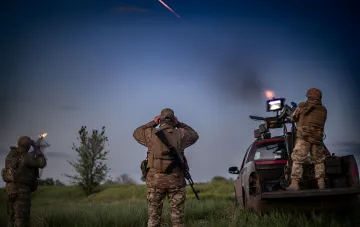
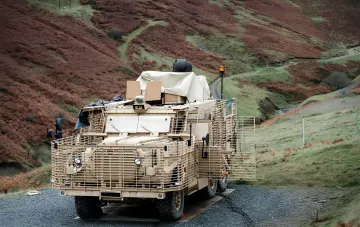
Yurkov emphasizes that the approach to protecting frontline cities and the major centers of central, southern, and western Ukraine must be fundamentally different. For the frontline belt, he proposes deploying a large number of small complexes, personal detectors, and electronic countermeasure systems for each unit of automotive and other military equipment, as well as separate long-range detection and suppression systems, so that drones lose the ability to carry out their mission still on the enemy side. 'These should be small complexes, but there must be a large number of them,' he noted. For major cities, by contrast, more powerful infrastructure that is well camouflaged from reconnaissance is acceptable, and, in his opinion, it is not sensible to equip every resident with a personal video-signal detector or to install a vehicle-mounted electronic countermeasure system on every car, since not all drone types can reach the central and western regions.
The Economics of War as a Defense Factor
The expert places separate emphasis on the economic logic of defense. Using many inexpensive, shorter-range radars complicates the enemy's choice of weapons for destroying them: employing a ballistic missile or a KAB against a cheap radar is economically unjustified. 'We need the economics of war to remain in our favor. Even if the enemy uses million-dollar missiles against EW systems that cost tens of thousands, or against a radar that costs one, two, or three hundred [thousand], the economics remain in our favor,' Yurkov says. Thus, the strategy is built on the principle that every enemy strike against defense assets costs them more than the potential effect of that strike.