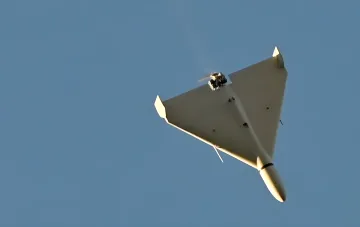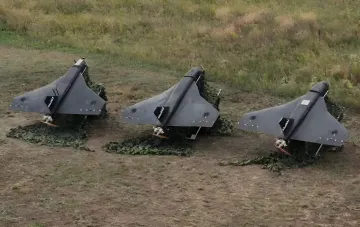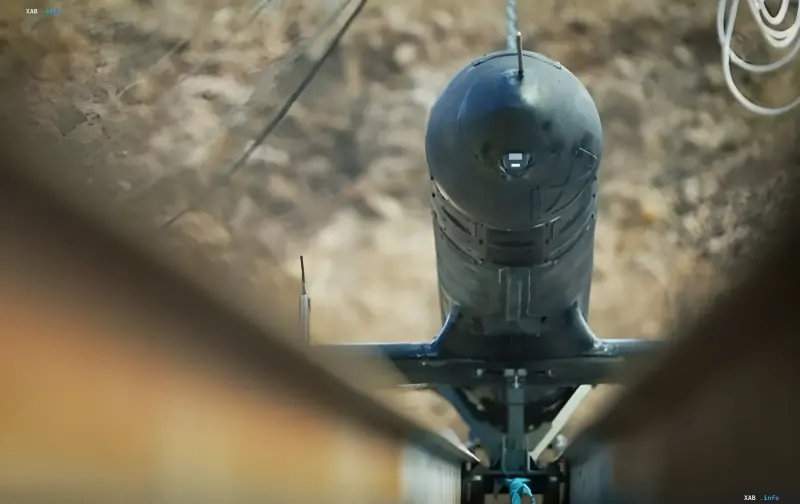
Serhii "Flash" Beskrestnov, an adviser to the President of Ukraine on defense technology development, previously announced the completion of a special operation to create a protective electronic warfare (EW) "dome" over Kyiv, which disrupts the mesh radio communications of remote-controlled jet-powered Shaheds. According to him, deploying the system required hundreds of locations with antennas and equipment across the city, involving major EW manufacturers, the General Staff, the Ministry of Defense, the Ministry of Internal Affairs, the National Security and Defense Council, and the President's Office. Aviation expert Anatoliy Khrapchynskyi, commenting on this step for RBC-Ukraine, called the creation of a distributed EW network of hundreds of points within the metropolis "a huge step forward and a correct engineering response to a new threat," but warned that in the technology war there is no "silver bullet" that could close the sky once and for all.
How the Dome Works and What It Actually Does
The essence of the threat targeted by the system is the enemy's use of MESH radio technology: a radio modem installed on board the drone allows an operator from Russian territory to coordinate flight and search for targets from a distance. The task of Ukrainian specialists was to deploy a continuous radio suppression field over the capital to block remote control channels. According to Khrapchynskyi's assessment, such a distributed architecture — consisting of hundreds of points across the metropolis — is an adequate engineering response to swarm and remotely piloted UAVs, because single stations are easily bypassed or suppressed, whereas a dense network creates a stable defense contour.
Why a "Blinded" Drone Does Not Fall On Its Own
The key limitation pointed out by the expert is that suppressing navigation channels or severing mesh radio communications does not destroy the target. The drone merely loses accuracy: it is "blinded," precise target acquisition is disrupted, and the number of deployment scenarios is reduced. At the same time, according to Khrapchynskyi, fifty or a hundred kilograms of explosives continue to fly by inertia at high speed even after the loss of communication and navigation. Therefore, he calls exclusively kinetic interception a guaranteed success — a situation where the target is turned into debris outside residential areas or critical infrastructure, rather than simply knocked off course.
A Unified Centric Air Defense System with Distributed Interception
According to the expert, Ukraine needs a unified networked (centric) air defense system with distributed interception, in which each element complements the others. Small tactical radars detect low-observable targets at ultra-low altitudes, acoustic sensors and reconnaissance complete the picture, EW systems knock the drone off course and disrupt swarm interaction, and the final blow is delivered by anti-aircraft interceptor drones, small-caliber artillery, or light missiles. Thus, the EW dome acts as one of the layers of a multi-tiered defense rather than a standalone solution: its effectiveness is maximized only when combined with kinetic interception means and a unified command and control system.
The Modernization Race: Contracts Needed "Today"
Khrapchynskyi stressed that one cannot limit oneself to merely catching up with the latest Russian modernization: defense tools must be chosen and contracted today for the threats the enemy will employ in six months. He concluded that "in this war, the one who wins is not the one who built the highest fence, but the one whose engineering thought and control system work one step faster than the enemy." In this context, the EW dome created over Kyiv should be viewed as an important but intermediate element of a broader program in which electronic suppression must be supported by physical interception and unified fire control.