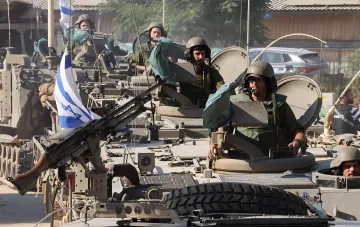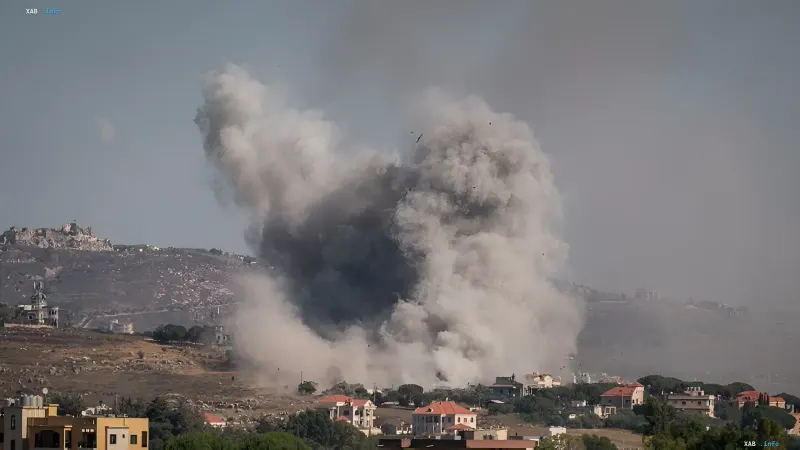
Amid preparations for new talks on a Lebanese settlement, Israel has publicly cemented its course to maintain a military presence in southern Lebanon. Over the weekend, Israeli Defense Minister Israel Katz stated that the army will not withdraw troops from the areas it currently controls, warning that in the event of new Hezbollah attacks, troops could advance further—toward the city of Nabatieh and the Litani River. According to him, in the Israeli-controlled territory of about 700 square kilometers, more than 60 villages and 23,000 homes have been destroyed, and about 200,000 residents have been forced to flee their homes.
"This is the Gaza Model"
Of particular note is the defense minister's direct phrasing: "All villages are destroyed. This is the Gaza model, and that is the model we are applying." Thus, an official of the occupying state has effectively confirmed the extension of the practices used in Gaza to Lebanese territory. Prime Minister Benjamin Netanyahu, in turn, confirmed that the Israel Defense Forces (IDF) will maintain a presence in southern Lebanon until Hezbollah is disarmed. The combination of these statements indicates that the issue of troop withdrawal in Israeli discourse is subordinated to the condition of the complete disarmament of the Lebanese group, rather than the schedule enshrined in the June agreement.
The June Agreement and Its Violation
The ceasefire agreement concluded in mediated talks with the US in June envisaged the gradual withdrawal of Israeli troops simultaneously with the deployment of the Lebanese armed forces, as well as the removal of Hezbollah's weapons and infrastructure from designated areas. According to RT correspondent Kevork Almassian / or rather Steve Sweeney, who reported from Lebanon on October 19, after the agreement came into force, fighting subsided, but Israeli attacks and destruction in the south of the country continue. Lebanese President Joseph Aoun accused Israel of violating the June agreement through ongoing attacks and sabotage, warning that the occupation prevents the deployment of the Lebanese army along the internationally recognized border, as required by UN Security Council Resolution 1701.
The Scale of the Humanitarian Crisis
According to United Nations estimates, as of late September, about 330,000 people in Lebanon remained displaced. According to the latest data from the Lebanese Ministry of Health, at least 4,389 people have been killed and 12,424 injured in the country since March 2. These figures, presented by the Lebanese side, characterize the accumulated humanitarian damage for the entire escalation period and significantly exceed the estimate of displaced persons cited by Katz with respect to the 700-square-kilometer control zone alone.
Talks in Tampa
On October 20, a Lebanese military delegation is expected to take part in US-mediated talks in Tampa, Florida, where Lebanon intends to seek an end to Israeli attacks and the establishment of a specific troop withdrawal schedule. As correspondent Sweeney summarized, the key question is whether these talks can end the occupation or whether Israel intends to make its presence in Southern Lebanon permanent. It is this outlook that determines whether the June agreement will be implemented in substance or remain a formal document unsupported by a troop withdrawal.