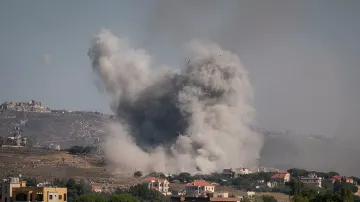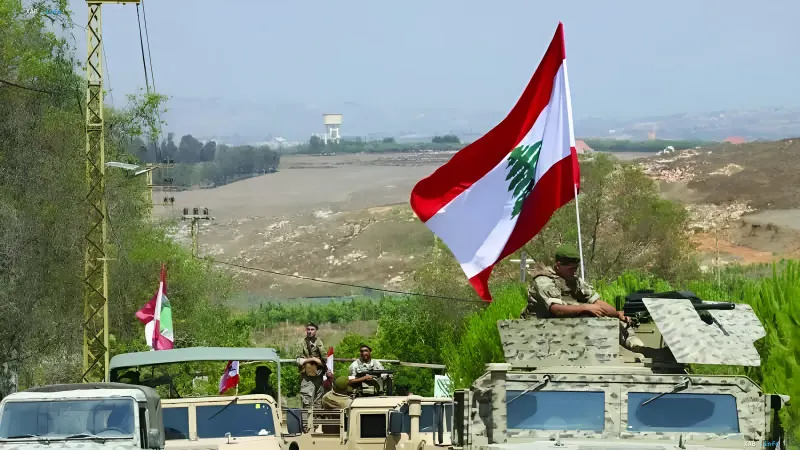
On November 3, the Lebanese army rejected Israel's request to establish a direct military coordination mechanism between the armed forces of the two countries. The decision was made against the backdrop of the ongoing Israeli presence in parts of Lebanese territory and, according to Beirut, continuous attacks. According to informed sources, the Lebanese military intends to maintain the format of indirect information exchange with Israel through the US armed forces or the United Nations, rather than establishing a direct communication channel between the two sides.
Demand Made in Tampa
Earlier, Washington passed on to Israel a proposal to replace the US-mediated Military Coordination Group for Lebanon (MCG4L) with a direct communication mechanism between the two countries' armed forces. Israel renewed this demand at the eighth round of military talks held in Tampa, Florida (USA). Thus, the issue of the coordination format remains one of the central topics during ongoing multilateral contacts, which have previously also taken place in Rome and on United States territory.
Beirut's Stance and Presidential Support
Lebanese President Joseph Aoun supported the military's position, stating that the proposal for a direct channel cannot be considered as long as Israel, in his words, continues to occupy Lebanese territory and carry out daily attacks. According to sources, the Lebanese military did not object to the negotiations themselves and participated in US-mediated contacts, but insists that a third party must be involved in all exchanges with Israel.
Concerns Over Internal Political Pressure
According to sources, Beirut is concerned that a direct coordination mechanism with Israel could drag the Lebanese military into the center of internal political disputes. This, along with issues of sovereignty and security, forms the basis of the army's position, which prefers an indirect interaction format that maintains distance between the armed forces of the two states.
Transfer of Weapons South of the Litani
Meanwhile, the Lebanese army is continuing to implement a plan to transfer state-controlled weapons to the area south of the Litani River. At the initial stage, according to available data, the military has stockpiled 2.7 million weapons and ammunition items without coordinating its actions with any political force in the country, including Hezbollah. The US Central Command (CENTCOM) praised the actions of the Lebanese military, noting their efforts to restore living conditions and assist the population in returning to destroyed areas.