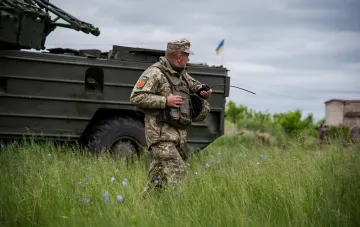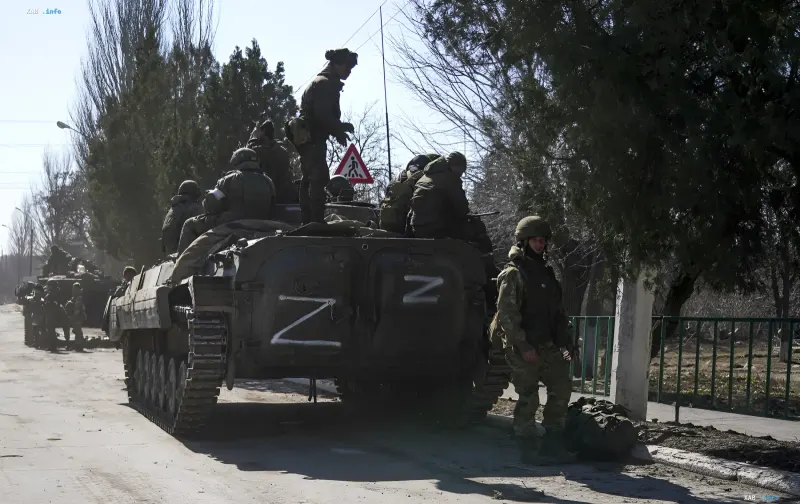
Russian forces have significantly intensified mechanized assaults in the Donetsk region, focusing their main efforts on two sectors—the Dobropillia and Kostiantynivka directions. According to RBC-Ukraine, this is stated in the latest report from the Institute for the Study of War (ISW). Analysts note that the enemy is increasingly using tanks, infantry fighting vehicles (IFVs), and light equipment in attempts to breach Ukrainian defenses, taking advantage of autumn weather conditions that reduce the effectiveness of reconnaissance and attack drones.
Mechanized Offensive Near Khruzske
According to ISW analysts, on November 13, Russian forces conducted a mechanized assault toward the village of Khruzske, located northeast of Dobropillia. A Ukrainian military source and an OSINT channel reported that the attack involved three tanks, three infantry fighting vehicles, and over ten light transport vehicles. According to the commander of a Ukrainian regiment operating in the Dobropillia sector, the assault was repelled: on November 14, he reported the destruction of seven transport vehicles and three all-terrain vehicles, as well as the fact that about 30 Russian soldiers were killed or wounded. The report likely referred to the attack toward Khruzske.
Activity in the Kostiantynivka Sector
Another mechanized assault was recorded in the direction of Druzhkivka: geolocated footage from November 11 shows the invaders using several IFVs and light transport vehicles. The same footage shows destroyed Russian IFVs near Nova Poltavka, a settlement southwest of Kostiantynivka, approximately 10 kilometers behind the Russian front lines. Analysts assess that the ability of Ukrainian forces to strike equipment at such a distance from the frontline indicates a significant depth of the impact zone in this sector.
Autumn Conditions as a Tactical Factor
The ISW notes that Russian forces are attempting to utilize autumn weather conditions to advance: fog, strong wind, and rain reduce the effectiveness of Ukrainian reconnaissance and strike drones. According to analysts, this allows the enemy to move equipment closer to the frontline, deploy infantry, and attempt to breach defenses. At the same time, according to the report, Ukrainian forces are destroying Russian equipment as it approaches forward positions. Ukrainian soldiers operating in the sector had been warning of enemy preparations for mechanized attacks since mid-September—including the commander of the 1st Brigade of the National Guard of Ukraine "Azov," Brigadier General Denys Prokopenko.
Scale of Offensive Actions
The priority of these two sectors for the Russian command is also confirmed by data from the General Staff of the Armed Forces of Ukraine. According to Ukrainian command, on November 13 and 14, Russian forces carried out 47 attacks in the Pokrovsk direction, which includes the Dobropillia sector—the highest number of assaults there since the beginning of November. During the same period, 11 more attacks were recorded in the Kostiantynivka direction. In total, since the beginning of October, about 80% of all Russian offensive actions against the Ukrainian "fortress belt" have occurred in the directions of Dobropillia and Kostiantynivka, which, according to ISW analysts, confirms the special strategic importance of this section of the front for the Russian military command.
Risk Under the Guise of a Ceasefire
The ISW also suggests that Russian forces could use a temporary ceasefire in the broader Kostiantynivka direction to safely bring heavy equipment closer to the front line and avoid Ukrainian drone strikes. On November 14, the institute warned that the Kremlin might use the ceasefire proposal in Kostiantynivka to accumulate forces and prepare for a new offensive toward Druzhkivka. Previously, on November 5, analysts reported high Russian activity in the Kostiantynivka-Druzhkivka direction: 24 assaults occurred there in two days.