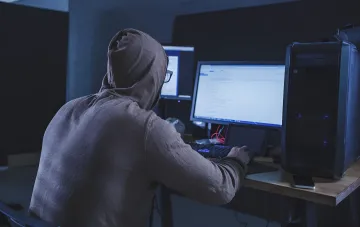
According to a recent study by mUp Research, the main tools of Italian scammers have become fake call centers and phishing emails that explicitly name their victims. The goal of the attack is to steal personal data, drain bank accounts, or force victims to transfer funds on their own. As a pretext, the perpetrators report alleged "contract violations," such as overdue utility payments, creating a sense of urgency and the need to act immediately.
Deception methods: from calls to messengers
Most often, scammers pose as employees of electricity or gas supply companies. They pressure victims with threats of immediate service disconnection and send fake messages through popular apps — Zalo, WhatsApp, as well as via SMS. As a result, victims make payments through unofficial channels that effectively go straight into the scammers' pockets, or they disclose personal information. A separate branch of the scheme is linked to home-delivery sellers and individuals posing as major suppliers like Enel Energia: customers are tricked into signing contracts for "cheap" but fraudulent electricity or gas supplies, while the perpetrators receive real money.
Who is at risk
Notably, people aged 35 to 44 are hit hardest by such schemes — this age group most often becomes a victim. According to experts, the key psychological lever here is the desire to save money: an initially attractive offer easily lures the consumer into a trap. Luigi Gabriele, president of the non-profit organization Consumerismo, emphasized in an interview with ilsole24ore that fraudulent schemes are becoming increasingly sophisticated and deliberately exploit the most financially difficult periods — including families' need to save amid energy supply disruptions and rising prices.
Contradictory data
Different figures appear in public statements that at first glance look inconsistent. The headline of several publications states that "more than 2.9 million people" became victims of electricity bill payment fraud. At the same time, Facile.it CEO Maurizio Pescarini works with a different baseline figure: according to him, in 2023 there were 4 million victims, and in the following year the number of such cases dropped by 27%. Mathematically, these data are consistent: a 27% decrease from 4 million gives approximately 2.9 million, meaning the figures refer to different reference years rather than mutually exclusive estimates. Nevertheless, the exact counting methodology and the period to which each figure relates are not fully disclosed in the primary materials, which should be taken into account when interpreting them.
Authorities' response and new rules
To combat this type of fraud, Italian authorities have tightened regulation. Starting in 2025, a simple phone call is no longer sufficient to conclude a contract for electricity or gas supply: the customer must confirm receipt of a written document with the full terms of the contract — either in paper form or on another reliable information medium. In August 2025, the Italian telecommunications regulatory authority (Agcom) also began blocking calls from abroad in which signs of fraud were detected; according to preliminary data, 43 million such calls were filtered and blocked. Experts additionally advise consumers to verify the identity of the persons receiving payments, not to hand over cash to uninvited "guests" going door to door, and not to disclose supply point codes (POD/PDR) to unverified individuals.
Global context
The Italian case fits into a broader global trend. According to Cybersecurity Ventures, the projected damage from cybercrime worldwide by 2026 will reach approximately 10.8 trillion dollars, while fraudulent schemes are becoming increasingly sophisticated and complex. This underscores that even when individual indicators decline in a specific country, the problem remains systemic and requires a combination of technological measures, regulatory restrictions, and improved financial literacy among consumers.