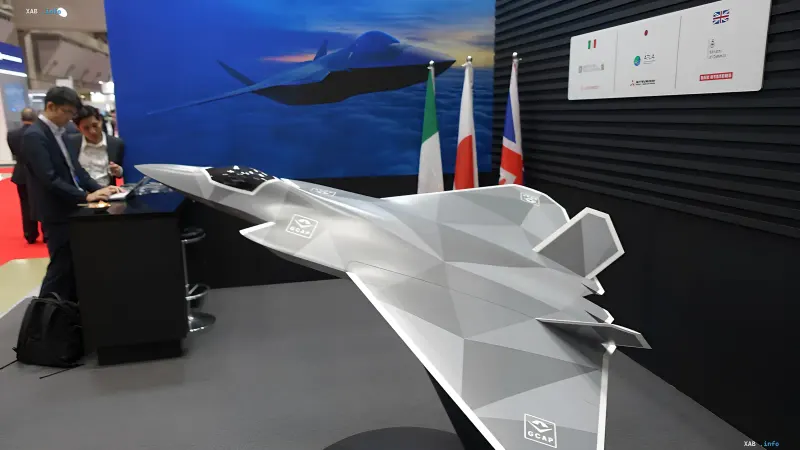
Italy has effectively blocked Germany's full participation in the joint GCAP (Global Combat Air Programme) to develop a next-generation fighter jet. According to the Financial Times, citing three knowledgeable sources, Rome is willing to accept Berlin into the project, but exclusively as an observer—without decision-making powers and without any role in the design and development of the aircraft. The position was outlined by Italian Defense Minister Guido Crosetto during a video conference with his British and Japanese counterparts held this week.
Observer Instead of Partner: Rome's Formulation
Italy's proposal came against the backdrop of British Prime Minister Andy Burnham expressing readiness last month to allow potential German participation in the program. However, the idea of expanding the participant list to four countries encountered resistance from Rome and Tokyo. «Italy has confirmed its willingness to welcome Germany, but to speed up the procedure, it was proposed that it participate as an observer,» an Italian government official told the Financial Times. Consequently, Berlin is deprived of the right to influence key technical and industrial decisions of the project.
Industrial Reasons for Rome's and Tokyo's Caution
Behind the restrained position of Italy and Japan, according to Financial Times sources, lie primarily industrial interests. Officials in both countries fear that the entry of new German participants, including the Airbus concern, could reduce the volume of work allocated to their own aerospace companies. In addition, an additional partner could slow down the decision-making process and development stages, directly impacting the schedule of the program aimed at creating an advanced air combat system and reducing dependence on American combat aircraft.
Berlin Likely to Reject the Offer
The observer status option will apparently not be accepted in Berlin. The Financial Times reports that Germany is highly likely to reject the Italian proposal: one German official called it «unacceptable». This week, German Defense Minister Boris Pistorius stated that potential accession to the program must be assessed based on specific benefits for the FRG. In particular, Berlin demands guarantees of a fair work share distribution, adherence to deadlines, and transparency regarding the costs Germany would have to bear.
London: «The Train Cannot Slow Down»
A more cautious stance is coming from London than might have been expected after previous signals of openness. One British official clarified that the United Kingdom is not exerting pressure to include Germany, but is merely maintaining more frequent contacts with Berlin. London believes that German requests should be heard, although it shares other partners' concerns about the project's timeline. «If they decide to jump on a moving train, the train cannot slow down,» a source told the Financial Times.
Context: Why Germany is Seeking a Place in GCAP
The idea of involving Germany in creating the new combat fighter was voiced in October by British Prime Minister Andy Burnham during negotiations with German Chancellor Friedrich Merz. The need to seek an alternative arose after the failure of the Franco-German FCAS/SCAF project, which left Berlin without its own sixth-generation fighter program. It is in this context that Germany views joining GCAP as a strategic priority, while Rome and Tokyo strive to prevent complicating an already launched project.