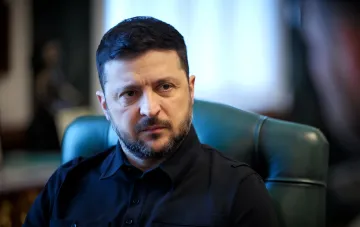
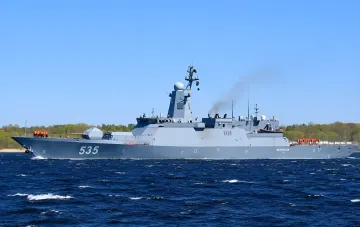
On November 27, 2026, Italian Prime Minister Giorgia Meloni held a telephone conversation with Ukrainian President Volodymyr Zelenskyy, during which she expressed the Italian government's concern over the Ukrainian forces' operation in the port of Benghazi. According to RBC-Ukraine, citing a statement by the Italian government and Bloomberg, Rome believes that the strike on Russian ships in Libya violated the country's sovereignty and created a risk of spreading the conflict to the Mediterranean Sea. During the conversation, Zelenskyy confirmed that the operation had been carried out without prior coordination with European partners and promised to ensure a full exchange of information and constant direct communication with Rome.
“Violation of Sovereignty” and Regional Risk
The Italian government's statement emphasizes that the operation “violated Libya's sovereignty and creates a risk of spreading the conflict to the Mediterranean Sea.” According to the Italian side, Meloni stressed that Italy continues to support Ukraine on its path to a just and lasting peace, but this support does not mean agreement to steps that jeopardize the security of Italy and the entire region. Thus, Rome is not formally severing relations with Kyiv, but is setting a clear condition: future operations affecting regional security must be agreed upon in advance.
Acknowledgment of Lack of Coordination and Contradiction with Previous Statements
Zelenskyy confirmed that the recent operation in Libya was carried out without prior coordination with European partners. This statement contrasts with his earlier remarks in a BBC interview, where he stated that Ukraine does not conduct such operations without consulting partners, without specifying which ones. Italian Defense Minister Guido Crosetto, according to Italian media, stated before the leaders' conversation that Zelenskyy had “lied” about the strike in Libya and had previously summoned the Ukrainian military attaché for explanations. According to Bloomberg, the leaders' conversation was tense, and after the attack, the once-warm relations between Kyiv and Rome noticeably cooled.
Political Context in Italy
Bloomberg reminds readers that Meloni is up for reelection next year. Parts of her coalition and opposition hold positions considered pro-Russian, and the potential approach of war to Italy via Libya creates additional political risks for the prime minister. This explains why Rome is reacting to the Benghazi operation with heightened severity: for the Italian government, a strike on Russian targets in the Mediterranean Sea may be perceived by voters as a factor bringing the conflict closer to their own shores.
Libya's Reaction and Kyiv's Position
Following the strike, the Libyan Foreign Ministry demanded official explanations from Kyiv and condemned any foreign military operations on the country's territory. In response, the Ukrainian Foreign Ministry stressed that Ukraine is not shifting the war anywhere and respects Libya's sovereignty, while the strikes are directed solely against Russian armed aggression. At the same time, not all allies criticized Kyiv: France supported Ukraine after the attacks on Russian ships near Libya and in the Baltic Sea, demonstrating a split in the positions of European capitals on this issue.
Unconfirmed Details
The Italian newspaper Il Foglio, citing government sources, reported that Zelenskyy apologized to Meloni during the conversation. This has not been officially confirmed by either the Italian or Ukrainian leadership. Thus, the key facts—the conversation itself, Rome's criticism, and Kyiv's acknowledgment of the operation's lack of coordination—are confirmed, while details regarding the tone of the conversation and the presence of an apology remain the subject of reports by individual publications without official comment from the parties.