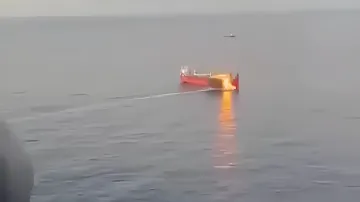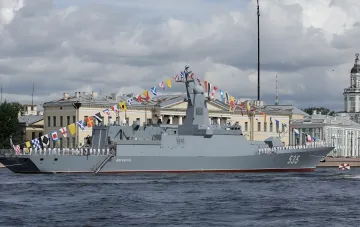
Over the weekend, Ukraine struck a Russian warship and a cargo vessel in Libya, including in the area of Benghazi, thousands of kilometers from the front line. For Kyiv, this is, as it states, lawful self-defense, but in Rome, the event caused acute concern: the strikes took place in a former Italian colony, a few hundred kilometers from Italy's shores, and could destabilize an already fragile Libya. Against the backdrop of possible national elections as early as this spring, the incident risks provoking a political backlash in one of Ukraine's key allied countries.
Rome Was Not Warned in Advance
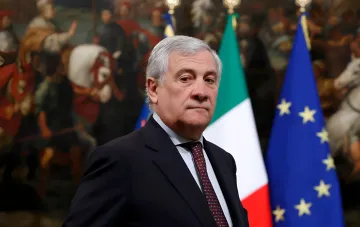
Italian Foreign Minister Antonio Tajani stated that the continuation of the war between Russia and Ukraine "just a few hundred kilometers from Italy" is alarming, especially given Rome's work on stability in Libya, and emphasized that Italy had not been notified of the attack in advance. On Tuesday, Tajani held a phone conversation with his Ukrainian counterpart Andrii Sybiha. A statement from the Italian Foreign Ministry stressed that it is "vital" for Rome to prevent the conflict with Russia from spreading to the Mediterranean Sea, as well as "necessary to respect Libya's sovereignty" and work toward its stability, unity, and sovereignty.
Pressure Within the Coalition and Society
The stance of Prime Minister Giorgia Meloni, a strong supporter of Kyiv, puts her at odds with both part of her own ruling coalition and the opposition. Matteo Salvini, leader of the right-wing League — a pro-Kremlin junior partner in the coalition who opposes further military aid to Ukraine — stated that "it makes no sense" if military support for Kyiv "leads to wars and the sinking of ships around the world." In the summer, former Prime Minister Giuseppe Conte, leader of the populist Five Star Movement, questioned further military aid if a center-left coalition wins the next elections, and the right-wing opposition party National Future, led by Roberto Vannacci, also opposes military support for Ukraine. Public sentiment is also wary: according to a YouGov poll conducted earlier this year, only 32% of Italians care about Ukraine defeating Russia — one of the lowest figures among major Western European countries.
Libya as the "Most Important Foreign Policy Document"
For Italy, Libya is a special topic: it is a former colony, and its potential collapse threatens once again with a wave of migration across the Mediterranean Sea. "For Italy, Libya is the most important foreign policy document, because everything that concerns Libya concerns Italy," said Lia Quartapelle, a center-left Democratic Party lawmaker and vice-chair of the parliamentary committee on foreign and European affairs. Arturo Varvelli, senior policy fellow at the European Council on Foreign Relations, noted that Russia and its allies in Libya could weaponize migration against the country. At the same time, Italy remains a relatively modest donor to Kyiv: according to provided data, military aid amounts to about €3 billion, boosted by a new €800 million package — noticeably less than that of Germany or Northern European countries.
Kyiv Stands Its Ground, Greece Also on Guard
Despite the alarm in Rome and Athens, Ukraine defends its right to strike Russian vessels, even when moored in Benghazi. "Ukraine is defending itself against the armed aggression of the Russian Federation. Our actions constitute the exercise of the inherent right to self-defense," Ukrainian Foreign Ministry spokesperson Heorhii Tykhyi told journalists on Tuesday, adding that Kyiv "has every full right" to strike legitimate military targets of the aggressor, including Russian warships and cargo vessels. Expert Alessandro Marrone, who heads the defense, security, and space program at the Rome-based International Affairs Institute (IAI), believes that military aid is "unlikely to be substantially affected by Ukrainian strikes." Concern is not limited to Italy: according to a senior Greek government official, Athens fears the war in Ukraine could open a new front in the eastern Mediterranean and plans to discuss the matter with "like-minded partners" in the near future.