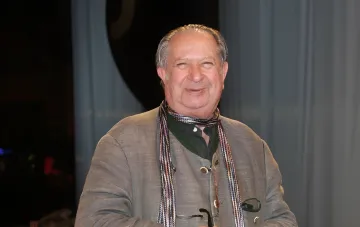

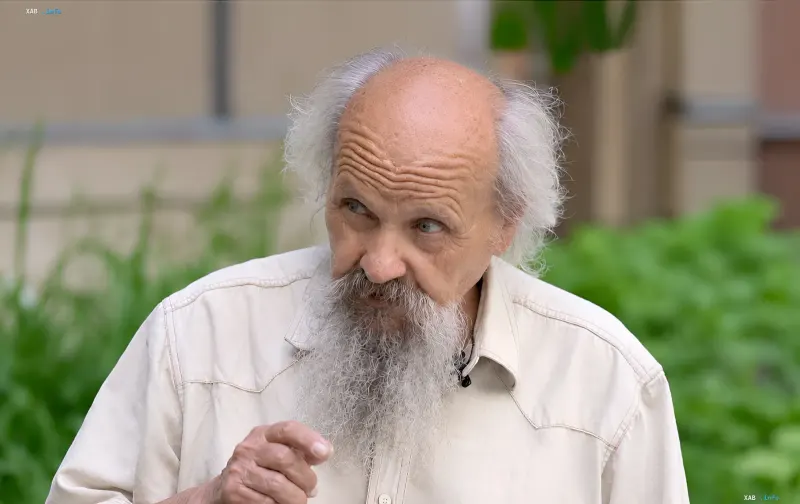
Ukrainian poet Ivan Semenenko passed away on November 3, 2026, at the age of 90. This was reported by the Ukrainian Book Institute, which also noted that the date and location of the poet's funeral will be announced later. Semenenko was a representative of the so-called Lavra School of Poetry, a creative community that formed around the film studio of the Theater Arts Institute on the territory of the Kyiv-Pechersk Lavra. His biography—marked by childhood famine, an attempted escape from the country, a ten-year sentence in labor camps, and years of KGB surveillance—exemplifies the fate of a dissident poet in the Soviet era.
Childhood in the Post-War Famine
The future poet was born on September 11, 1936, in the Kyiv region. In his childhood, he survived the post-war famine and poverty, which, according to colleagues and biographers, largely shaped the tone of his early work. Semenenko studied at the Faculty of French Philology of the Kyiv Institute of Foreign Languages. It was there that he became interested in Western European modernism, began reading classical literature in the original, and writing vers libre—poetry without rhyme or strict meter, which was an innovative approach for Ukrainian poetry at the time.
Escape, Camps, and Sentence
At the age of 16, Ivan Semenenko attempted to escape the USSR to join the Ukrainian diaspora in Canada. The young man was detained in Georgia and subsequently sentenced to ten years in political labor camps. He was released in 1956. Already in 1957, his poem «Do Vitchyzny» was published in the newspaper «Dekada», but afterwards other publishing houses refused to print his works, accusing the author of «bourgeois nationalism». The poet was monitored by the KGB.
The Unprinted Poet
For some time, Semenenko worked as a teacher, but due to the anti-communist nature of his work, he struggled to find stable employment. In the early 1980s, he took a job as a firefighter at the film studio of the Theater Arts Institute, located on the grounds of the Kyiv-Pechersk Lavra. There he grew close to Mykola Vorobiov and Oleh Lysheha; their artistic circle later came to be known as the Lavra School of Poetry. It was within this group that a circle of poets focused on experimental language and Western European modernism took shape.
Legacy and Collections
Ivan Semenenko's collections include «Svyatom prokushenyy prostir», «Obshyry z horla predka», «Daruyemo tak vitru molotok», «Arkhipelahy — Atoly», and «Nerozryvne sontse». The poet was a member of the National Writers' Union of Ukraine. In 2016, his poems were included in the «Anthology of 20th-Century Ukrainian Poetry» compiled by Ivan Malkovych. Selected works were published in the journals «Suchasnist» and «Svitovyd», as well as on the website of the art magazine «Artania». Thus, even under conditions of long-term censorship and intelligence surveillance, Semenenko preserved and expanded his readership, cementing his name in the history of 20th-century Ukrainian poetry.