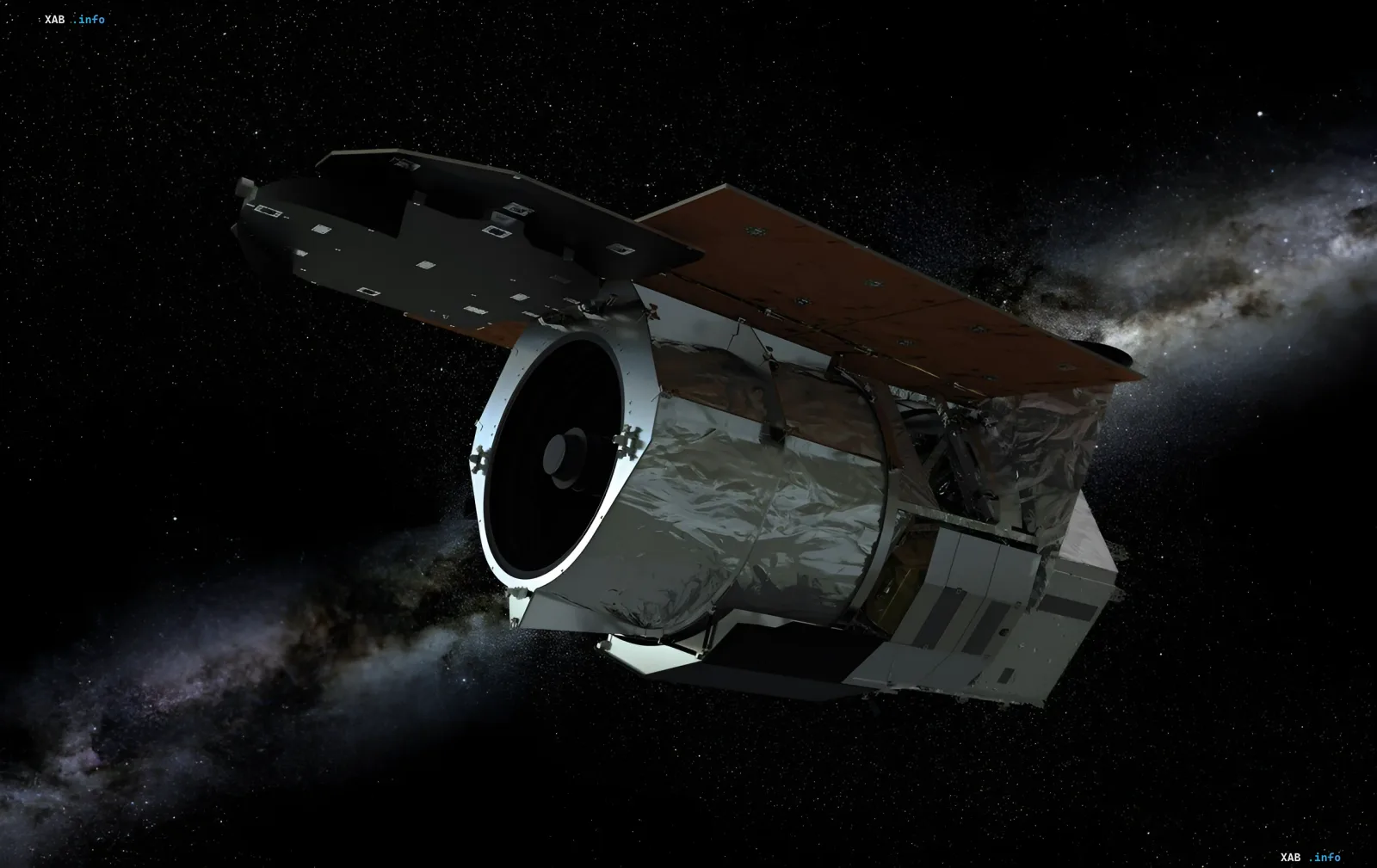
In August 2026, the astronomical community marks another breakthrough in the study of distant worlds. The James Webb Space Telescope (JWST) has detected traces of semi-heavy water (HDO) in the atmosphere of the exoplanet WASP-39 b for the first time. This discovery, the details of which were published on the arXiv preprint server, fundamentally changes our understanding of the chemical composition of distant planets and provides new tools for the search for life beyond the Solar System.
Unique Discovery in the Atmosphere of a 'Hot Jupiter'
The subject of the study was the planet WASP-39 b, also known by the poetic name 'Bochaprince'. It is a typical representative of the 'Hot Jupiter' class — gas giants orbiting at an extremely close distance from their star. The distance to the star for WASP-39 b is significantly less than that of Mercury from the Sun, leading to extreme heating: temperatures on the day side reach 1000 °C. It is in this hellish atmosphere, where normal conditions for the existence of water are impossible, that the 'James Webb' detected molecules of semi-heavy water.
What is semi-heavy water and why is it important?
Semi-heavy water (HDO) differs from the water we are used to (H₂O) in that one of the hydrogen atoms is replaced by its heavy isotope — deuterium. Deuterium contains an additional neutron in the nucleus, making the molecule heavier. On Earth, such water is found in insignificant quantities, but its concentration in space serves as an important indicator of the formation history of celestial bodies. The detection of HDO at a distance of trillions of kilometers was made possible thanks to the unprecedented sensitivity of the JWST instruments.
Contradictory Data: Two Versions of Origin
Astronomers have not yet reached a consensus on how exactly semi-heavy water ended up in the atmosphere of WASP-39 b. The concentration of deuterium on this planet turned out to be several times higher than that of the gas giants in our system (Jupiter and Saturn) and more closely resembles the indicators of ancient comets. This has given rise to two competing hypotheses:
The first version is 'Extreme Evaporation'. Proponents of this theory believe that over billions of years, the scorching heat of the star evaporated the light ordinary water, leaving behind the heavier and more stable molecules of semi-heavy water in the atmosphere.
The second version is 'Cosmic Migration'. According to it, the planet could have formed far from the star, in a cold zone where deuterium-rich ice naturally accumulates. Then the planet migrated closer to the star, preserving its chemical 'fingerprint' of the past.
Technological Breakthrough for the Search for Life
Although WASP-39 b itself is uninhabitable due to extreme temperatures, the value of the discovery lies in demonstrating the capabilities of the technology. The telescope has proven that it is capable of pinpointing the composition of isotopes at gigantic distances. Having tested this methodology on gas giants, astronomers will be able to apply it to the study of rocky planets similar to Earth. This will be a key step in the search for truly habitable worlds, where the presence of certain isotopes may indicate the presence of water and, potentially, life.