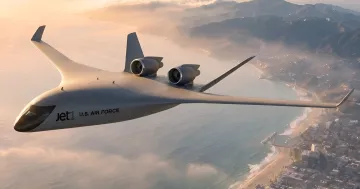
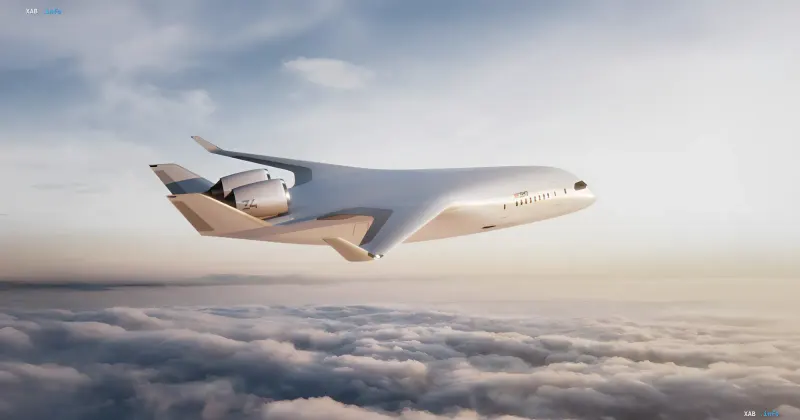
The aviation industry is preparing for a technological breakthrough that could radically change the perception of long-haul flights. Japanese carrier Japan Airlines (JAL) has officially announced a strategic partnership with American company JetZero. The goal of this ambitious project is to create a next-generation passenger aircraft featuring a futuristic design and revolutionary fuel efficiency.
Aerodynamics revolution: the 'flying wing' concept
The new project is based on abandoning the classic layout familiar to passengers for decades. Instead of a traditional 'tube-like' fuselage with attached wings, JetZero engineers propose the Z4 model, where the body and wings are combined into a single aerodynamic structure. This design, known as a 'flying wing,' not only gives the aircraft a look from science fiction films but is also the key to reducing air resistance.
According to JAL, published on July 21, the visualization of the future airliner demonstrates smooth lines and a lack of protruding elements typical of modern jet aircraft. While details of the interior layout remain a secret, the exterior appearance of the Z4 is already generating keen interest among aviation enthusiasts and industry experts.
Fuel savings and range
The main trump card of the new airliner is its eco-friendliness and economy. The integrated design allows for a fuel consumption reduction of 30–50% compared to commercial aircraft currently in operation. This solution directly addresses global challenges to reduce the aviation carbon footprint.
The technical specifications of the Z4 look impressive for a medium-sized airliner:
- Capacity: approximately 250 passengers.
- Range: approximately 9,260 kilometers without landing.
- Planned debut: early 2030s.
Such a range opens up the possibility of servicing direct long-haul routes, including flights between Tokyo and the US West Coast. This means that in the future, passengers will be able to make transoceanic flights on an airliner that requires significantly fewer resources.
Passenger comfort and infrastructure readiness
JetZero claims that the new aircraft layout brings benefits not only to airlines but also to passengers themselves. It is expected that the boarding and deplaning process will become more efficient, and the overall travel experience will be improved. At the same time, developers emphasize that the Z4 is designed with existing airport infrastructure in mind. This means that no expensive reconstruction of runways or terminals will be required to operate the new airliner, which will significantly simplify its introduction into commercial service.
The cooperation between JAL and JetZero marks an important step towards updating the global fleet. If plans are realized on schedule, by the early 2030s, the skies over the ocean may be adorned with aircraft that today look only like bold concepts.