Historic Breakthrough: $3 Billion for a Blended Wing Aircraft
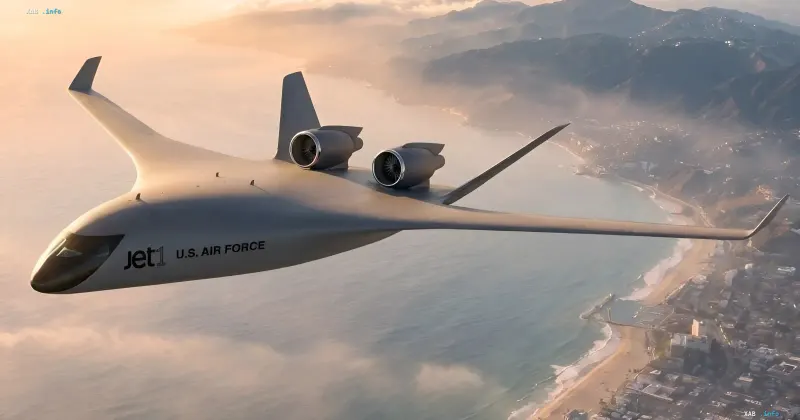
On August 12, 2026, the aviation industry marks a key milestone in the development of long-haul transport technology. American company JetZero has officially confirmed receiving a credit agreement worth $3 billion from the U.S. Export-Import Bank (US EximBank). These funds will be directed towards the implementation of the ambitious Z4 project — the world's first commercial aircraft with an integrated wing structure. Unlike traditional biplanes, the Z4 features a shape resembling a manta ray, with a V-tail and no classic fuselage, a design engineers call a "blended wing body."
Technical Specifications and Fuel Efficiency
The Z4 project is designed to carry 250 passengers over distances exceeding 8,000 km. The innovative aerodynamic scheme allows lift to be generated across the entire wingspan, significantly reducing air resistance. According to the developers' calculations, this will ensure a fuel saving of 30–50% compared to modern jetliners. The aircraft is designed for flights at altitudes above 12,000 meters, which is approximately 3,050 meters higher than the standard cruising level, further contributing to efficiency. Meanwhile, the cruising speed will be around Mach 0.8 (almost 1,000 km/h).
Radical Interior Transformation
Inside the Z4, passengers await a completely new travel experience. Traditional windows are completely excluded from the design; their function is taken over by high-resolution digital screens transmitting the outside view in real-time. High-speed Starlink Wi-Fi is provided for communication and entertainment. The cabin is divided into four spacious aisles, radically changing passenger movement logistics. Instead of standard rows of seats, individual seats are installed, each equipped with a personal overhead baggage compartment. The waiting area with restrooms is moved to a separate space, ensuring maximum comfort.
Partners and Skeptics: The Battle for the Future of Aviation
The success of the project is supported not only by financing but also by the interest of major market players. About 20 airlines have joined the development of the Z4, including Delta, United, Alaska, Gulf Air, and Japan Airlines. However, despite investor optimism, skeptics point to a number of critical issues. Experts express concerns about overloads during the maneuvering of such a non-standard apparatus, as well as the complexity of evacuating passengers in an emergency due to the presence of four aisles and the lack of traditional portholes. Furthermore, the question remains open as to whether such a design can avoid problems with motion sickness and pressure fluctuations in the cabin.
Roadmap: From Prototype to Serial Production
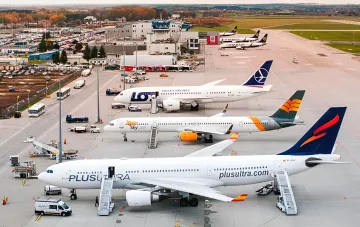
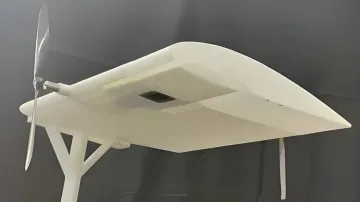
The development and production center in Greensboro (North Carolina) has already successfully completed testing of a reduced-scale model of the aircraft. According to the current schedule, testing of the full-scale prototype is planned for the end of 2027. If everything goes according to plan, the start of commercial operation is expected in the early 2030s. Although the Z4 will initially use conventional jet fuel, the aircraft's architecture is designed with a future transition to hydrogen engines in mind. Key tasks for the immediate stage remain obtaining certification from the Federal Aviation Administration (FAA) and integration with existing airport infrastructure without the need for expensive reconstruction.