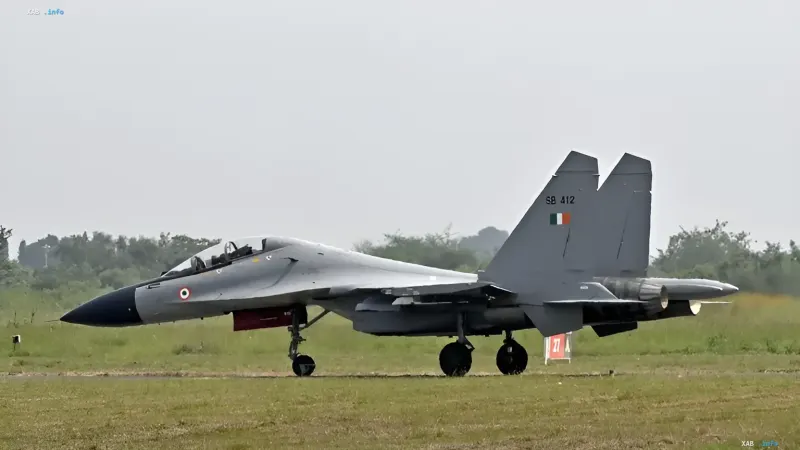
In August 2026, the Indian state-owned corporation Hindustan Aeronautics Limited (HAL) announced the resumption of production of multi-role Su-30MKI fighters at its plant in Nashik. This decision was a response to the need to maintain the number of combat aircraft in the Indian Air Force (IAF), which form the backbone of the country's air power. The new contract provides for the production of 12 aircraft worth $1.3 billion.
Strategic significance of the contract and localization
The decision to resume the assembly of Su-30MKI is of strategic importance for the Indian aviation industry. The plant in Nashik, where these machines were previously produced under license, was temporarily halted in 2020–2021 after the completion of deliveries under the previous contract. Now production is restarting, but with an important condition of localization: more than 50% of the components of the new aircraft will be produced directly in India. This aligns with the country's long-term policy of import substitution and the development of its own defense industry.
The new fighters do not simply duplicate old models — they will be integrated with upgrade packages known as "Super Sukhoi". This means that the machines will receive updated avionics systems, improved radars, and modern electronic warfare means, which will allow them to effectively counter threats of a new generation.
Su-30MKI fleet: from 2002 to the present
The first Su-30MKI entered service with the Indian Air Force in 2002. This variant was specially developed for Indian requirements and included Indian avionics systems, as well as subsystems supplied by France and Israel. Over the years, India has actively modernized the avionics and electronic systems of the Su-30MKI, which has allowed the aircraft to expand its capabilities and increase combat effectiveness.
Currently, the Indian Air Force operates about 260 Su-30MKI aircraft. These machines are a key element of the country's air defense and are actively used to perform various tasks, including providing air support for strike groups. In particular, the Su-30MKI played an important role in last year's armed clash with Pakistan, which India called Operation "Sindur".
Contradictory data
The initial report, which served as the basis for this article, contained a critical factual error: it stated that about 260 Su-30MKI aircraft are operated by the Israeli Air Force. This statement is incorrect. In fact, Israel does not have Su-30MKI fighters in its fleet. The discussion concerns exclusively the Indian Air Force, which is the largest operator of this type in the world.
Furthermore, there are discrepancies regarding the exact amount of the contract and its objectives. Some sources indicate that the new aircraft are intended solely to replace those lost in accidents over the past years. Others emphasize that the contract is also aimed at maintaining squadron numbers until the arrival of new Tejas Mk1A and Mk2 fighters, which are at various stages of implementation.
BrahMos-A integration and combat use
One of the key achievements of the Su-30MKI program in India was the integration of the BrahMos-A missile — an air-launched version of the supersonic cruise missile developed jointly by Russia and India. The Indian Air Force has already successfully tested this missile from the Su-30MKI, which has significantly expanded their strike capabilities.
During Operation "Sindur", Su-30MKI launched BrahMos missiles targeted at strategic airbases and command centers in Pakistan. This demonstrated the high efficiency of the complex and the ability of the Indian Air Force to deliver pinpoint strikes on important enemy targets.
The future of the Su-30MKI in India
Despite the fact that India is actively developing its own fighter projects, such as Tejas and AMCA, the Su-30MKI will remain in service for a long time. The "Super Sukhoi" modernization program and the production of new machines at the HAL plant in Nashik indicate that this aircraft will continue to play a key role in ensuring India's national security.
Thus, the resumption of Su-30MKI production is not just a technical decision, but a strategic step aimed at strengthening the country's defense capabilities and developing its own aviation industry.